
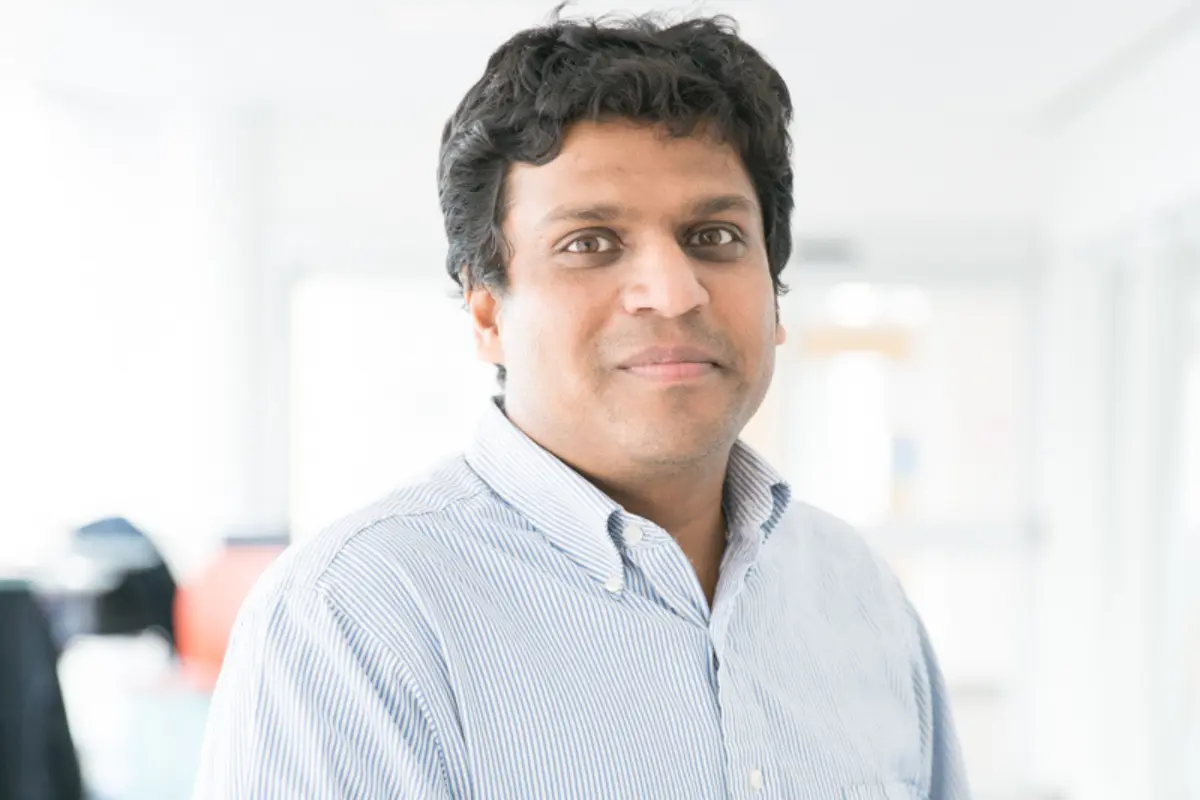
The story of Yuvraj Agarwal begins in Kanpur, India—a city where curiosity met creativity at an early age. His educational journey started at Little Folks pre-school, where he was famously known for mastering the art of distracting an entire classroom. Even then, leadership and influence came naturally.
He continued his schooling at Seth Anandram Jaipuria School, where academic discipline met intellectual exploration.
He pursued his Bachelor’s degree in Electrical Engineering at Pune University, where his fascination with systems thinking deepened. Determined to push further, he moved to the United States, earning an M.S. in Information and Computer Science from the University of California, Irvine, and later a Ph.D. in Computer Engineering from the University of California, San Diego.
Each step sharpened his belief that the future of computing lies in understanding both the hardware beneath and the software above.
Yuvraj Agarwal: The Carnegie Mellon Chapter – Systems That Matter
At Carnegie Mellon, Yuvraj Agarwal found the perfect ecosystem to turn bold ideas into deployable systems. He serves in the Software and Societal Systems Department (S3D), is affiliated with the Human-Computer Interaction Institute (HCII), and collaborates with Electrical and Computer Engineering (ECE) by courtesy. He is also a member of CyLab Security and Privacy Institute.
His research sits at the intersection of:
-
Systems and Networking
-
Embedded Systems
-
Green Computing
-
Mobile Computing
-
Smart Buildings
-
Internet-of-Things (IoT)
-
Security and Privacy
What distinguishes Yuvraj Agarwal from many researchers is his commitment to deployment. His lab doesn’t stop at publishing papers in top conferences like MobiSys, SenSys, IPSN, NSDI, USENIX, Oakland, BuildSys, and CHI. SynergyLabs builds systems that operate at scale.
Several of his innovations have been deployed across the UC San Diego and Carnegie Mellon campuses. His privacy tools have been downloaded and used by hundreds of thousands of individuals. For him, research without societal impact is incomplete.
Making the Internet of Things Safer
One of the most transformative chapters in the career of Yuvraj Agarwal has been his work on IoT security and privacy labeling.
As smart cameras, voice assistants, and connected home devices flood the market, consumers face a troubling reality: they lack clear information about how secure these devices really are.
Recognizing this gap, Yuvraj Agarwal and his collaborators developed a layered cybersecurity labeling system—similar in concept to nutrition labels on food packaging. These labels offer transparent, scannable information about:
-
Data collection practices
-
Security protections
-
Duration of software updates
-
Privacy safeguards
This work earned him the prestigious Norm Hardy Prize in 2025 from the Foresight Institute, shared with colleagues Pardis Emami-Naeini and Lorrie Faith Cranor. More importantly, it influenced national policy, contributing to the launch of the U.S. Cyber Trust Mark—an initiative designed to help consumers identify secure connected devices.
For Yuvraj Agarwal, this wasn’t just a technical achievement. It was a societal intervention.
He understood something critical: usability is security. If ordinary families cannot understand security, then security fails.
Energy Efficiency: The Invisible Revolution
Long before “green tech” became a buzzword, Yuvraj Agarwal was already working on energy-efficient systems.
His research in smart buildings and embedded systems demonstrates how hardware insights can dramatically reduce energy waste. By carefully analyzing how systems operate at the lowest levels, his team designs smarter control systems that reduce power consumption without sacrificing performance.
From campus-scale deployments to IoT devices, his work proves that sustainability is not about compromise—it’s about smarter design.
In an era facing climate urgency, this focus on energy-efficient computing is not just academic—it is essential.
Yuvraj Agarwal: Privacy Tools That Empower Users
Yuvraj Agarwal also developed privacy systems such as ProtectMyPrivacy, designed to give users more transparency and control over mobile data access.
These tools were adopted by hundreds of thousands of users and significantly influenced industry thinking around mobile privacy.
His philosophy is clear:
Technology should empower individuals, not exploit them.
By blending deep systems knowledge with human-centered design, he bridges the gap between technical rigor and everyday usability.