
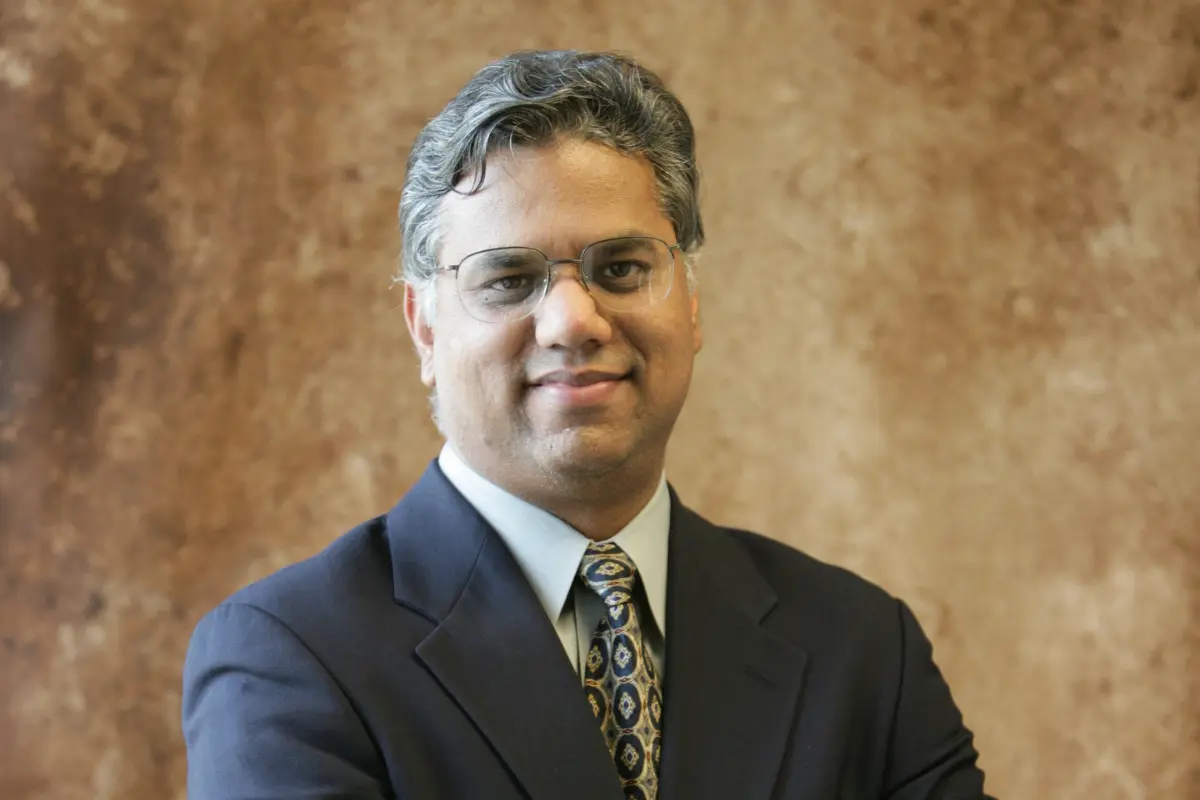
In an age defined by intelligent machines, rapid technological leaps, and the urgency for smarter manufacturing, Satyandra Gupta stands tall as one of the world’s most influential thought leaders in robotic automation. His journey—from a young engineering student in India to an internationally celebrated scholar, inventor, and mentor—reveals how curiosity, perseverance, and a relentless passion for discovery can rewrite the boundaries of possibility.
Today, Dr. Gupta is known globally not only for his breakthrough research but also for his commitment to redefining how humans collaborate with intelligent systems. His work holds profound significance for the future of industries, education, and society itself.
Satyandra Gupta: A Lifelong Curiosity That Sparked a Global Impact
Great innovators often begin with simple questions. For Satyandra Gupta, the driving question was: How can machines think, move, and make decisions like humans—yet better?
This question guided him through an exceptional academic journey:
-
Bachelor’s Degree – University of Roorkee (now IIT Roorkee)
-
Master’s Degree – IIT Delhi
-
Ph.D. in Mechanical Engineering – University of Maryland, College Park
Each step strengthened his fascination with robotics, particularly the interplay of engineering, physics, and intelligent decision-making. This passion soon evolved into a career that would shape the next generation of smart manufacturing and autonomous systems.
Building a Legacy Across the World’s Most Respected Institutions
Early Career at Carnegie Mellon University
In 1995, Satyandra Gupta began his professional journey at the Robotics Institute of Carnegie Mellon University—a place synonymous with innovation. As a Research Scientist, he explored emerging frontiers in automation and computational design, laying the foundation for his lifelong work in physics-aware decision-making.
University of Maryland: A Transformative Chapter
In 1998, he joined the University of Maryland, College Park as an Assistant Professor. His leadership quickly became evident.
By 2010, he became the Founding Director of the Maryland Robotics Center, steering it into one of the world’s leading robotics research hubs.
During this period, he led groundbreaking projects, published extensively, and mentored future scientists, helping shape the landscape of modern robotics research.
National Science Foundation & National Leadership
From 2012 to 2014, Dr. Gupta served as Program Director for the National Robotics Initiative at the National Science Foundation (NSF). His decisions influenced national research priorities, funding, and long-term strategies for robotics innovation across the United States.
In 2015, he was appointed to the Defense Science Board Task Force on Autonomy, contributing to national-level strategies for autonomous systems in defense and security.
The University of Southern California: Engineering the Future
In 2016, he joined the University of Southern California (USC), where he currently holds the prestigious Smith International Professorship of Mechanical Engineering. He also serves as the Founding Director of the Center for Advanced Manufacturing at the USC Viterbi School of Engineering.
His role at USC reflects his vision of future-ready manufacturing—one that blends robotics, AI, human-machine interaction, and digital design.
Satyandra Gupta: Revolutionary Creations: From RoboRaven to RoboSAM
Some scientists publish. Others invent. Satyandra Gupta does both—exceptionally.
RoboRaven: A Robotic Bird That Shocked the World
One of his most famous breakthroughs, RoboRaven, became a global sensation.
RoboRaven was the first robotic bird capable of:
-
Independent wing control
-
Outdoor flight
-
Complex aerobatic maneuvers
It blurred the lines between biology and robotics, demonstrating what happens when engineering brilliance meets audacious imagination. RoboRaven was featured widely in global media, including Forbes, Smithsonian Magazine, and The Economist.
RoboSAM: The World’s First Self-Aware Robotic Assistant for Manufacturing
Equally revolutionary was RoboSAM, a robotic assistant capable of:
-
Assessing its own confidence in performing a task
-
Requesting human help when necessary
-
Adapting intelligently in real manufacturing conditions
RoboSAM signaled a major step toward human-centered automation—systems designed not to replace humans, but to learn from them, collaborate with them, and make work safer and more efficient.
Research Focus: Engineering Intelligence into Machines
At the core of Satyandra Gupta’s work is the belief that machines should understand the physics of the world they operate in. His research focuses on physics-aware decision-making, especially in:
-
Robotics
-
Manufacturing Automation
-
Computer-Aided Design (CAD)
-
Smart Factories
-
Human-centered automation
His decision-making frameworks combine:
-
heuristic-driven search
-
non-linear optimization
-
real-time computational efficiency
These foundations have shaped robots that not only act intelligently but think intelligently.
Books, Publications, and Influence on Global Thought
Dr. Gupta has authored:
-
350+ scientific articles
-
Books such as
-
Integrated Product and Process Design and Development
-
Training in Virtual Environments
-
He holds multiple U.S. patents and shares his unconventional insights through his blog, Pursuit of Unorthodox Ideas, inspiring a global audience to step beyond conventional thinking.
His editorial roles include:
-
Editor, Journal of Computing and Information Science in Engineering (ASME)
-
Editor-in-Chief, Advanced Manufacturing Book Series (World Scientific Publishing)
Through these roles, he continues shaping the academic and practical discourse in automation and robotics.
Awards and Honors: A Testament to Excellence
The accomplishments of Satyandra Gupta have earned him some of the most prestigious honors in science and engineering, such as:
-
PECASE Award (2001) – The highest U.S. honor for early-career scientists
-
ASME Fellow (2007)
-
SME Fellow
-
IEEE Fellow (2020) for advances in manufacturing automation decision-making
-
Kos Ishii-Toshiba Award (2011)
-
ASME Excellence in Research Award (2013)
-
Distinguished Alumnus Award – IIT Roorkee (2014)
-
Named among the Top 20 Most Influential Professors in Smart Manufacturing (2020)
-
ASME CIE Division Lifetime Achievement Award (2024)
-
SME Eli Whitney Productivity Award (2025)
-
ASME William T. Ennor Manufacturing Technology Award (2025)