
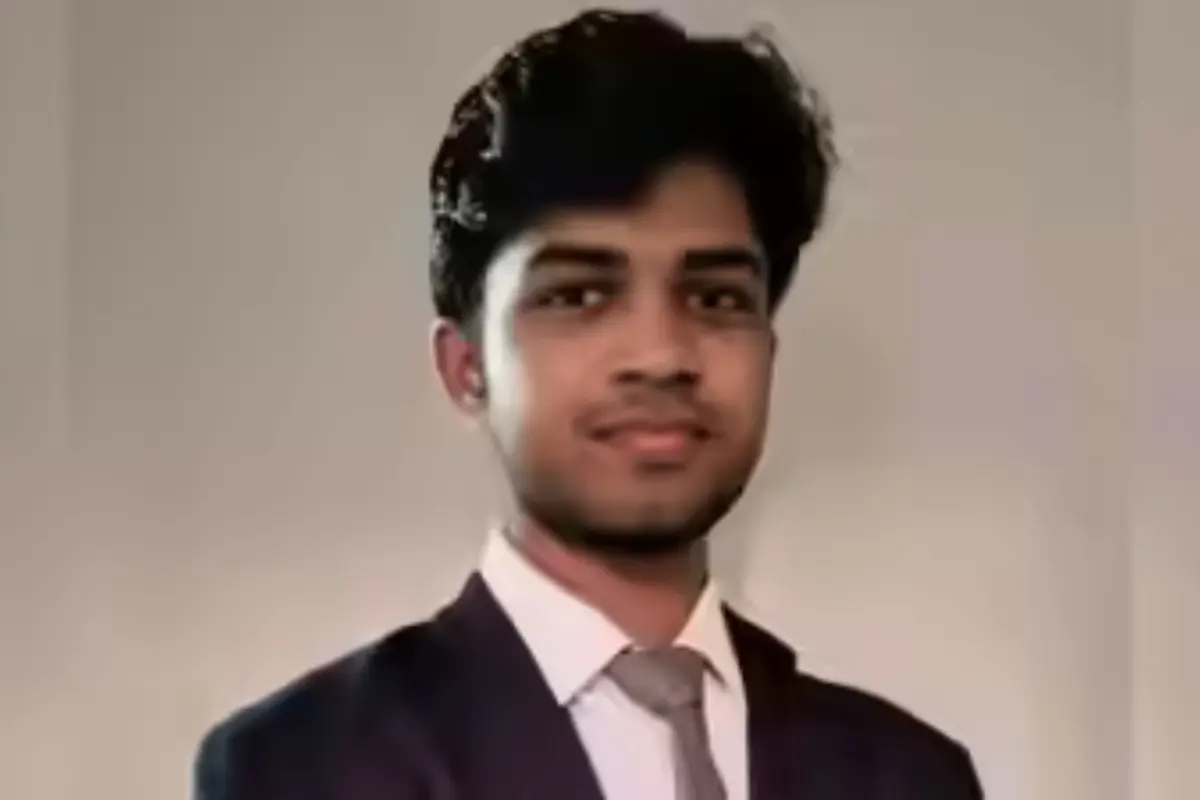
The tragic death of Saketh Sreenivasaiah, a 22-year-old Indian graduate student at the University of California, Berkeley, has sent shockwaves through both the Indian and international student communities. After being reported missing on February 9, Saketh Sreenivasaiah was found dead six days later in Lake Anza, California, following an extensive citywide search.
Authorities confirmed that a dive team recovered his body around 2 pm on Saturday from Lake Anza, located near the Berkeley Hills and close to Tilden Regional Park. The discovery marked a heartbreaking end to days of anxiety, hope, and relentless search efforts involving law enforcement agencies and community volunteers.
Saketh Sreenivasaiah: Disappearance and Search Efforts
Saketh Sreenivasaiah, originally from Karnataka, had last been seen approximately one kilometre away from the Berkeley campus. His sudden disappearance prompted authorities to classify him as an at-risk missing person. A large-scale search operation was launched around Lake Anza and the Berkeley Hills areas.
Investigators later discovered his backpack near a residential area close to Tilden Regional Park. The bag contained his passport and laptop, intensifying concerns about his safety and triggering expanded search operations. Community members rallied together online, with discussions on platforms like Reddit helping coordinate volunteer efforts and share updates.
The Indian Consulate in San Francisco confirmed the recovery of Saketh Sreenivasaiah’s body and assured full support to facilitate the swift repatriation of his remains to India. In an official statement, the consulate extended heartfelt condolences to his grieving family and pledged all necessary assistance during this profoundly difficult time.
A Promising Academic Journey
Saketh Sreenivasaiah was pursuing a Master of Science degree in Chemical and Biomolecular Engineering at UC Berkeley under an F-1 student visa. Before moving to the United States, he completed his undergraduate studies at the prestigious Indian Institute of Technology Madras. He was also an alumnus of Sri Vani Education Centre in Bengaluru.
Friends and peers described him as intelligent, humble, witty, and fiercely loyal. Standing six feet one inch tall, with short black hair and brown eyes, he left a lasting impression on everyone who knew him.
Beyond academics, Saketh Sreenivasaiah was among six co-inventors credited with a patent for a “microchannel cooling system for hyperloop and a method thereof,” according to his professional profile. The innovation reflected his technical brilliance and forward-thinking approach to engineering challenges.
Roommate’s Emotional Account
In a deeply emotional LinkedIn post, his roommate Baneet Singh revealed troubling changes in Saketh Sreenivasaiah’s behaviour in the weeks leading up to his disappearance. According to Singh, Saketh had been eating very little and withdrawing socially.
“Life as an international student is tough, man,” Singh wrote, urging people to check in on friends and loved ones studying abroad. He described a moment when Saketh returned from class wearing a bathrobe and said, “I’ve stopped caring, man. I’m cold and don’t care what anyone thinks of me. I don’t care about anything.”
At the time, the comment was dismissed as a joke. In hindsight, it carried painful weight.
Singh also stated that he was coordinating with authorities to help Saketh Sreenivasaiah’s family travel to the United States on an emergency visa following the tragic discovery.
Saketh Sreenivasaiah: Safety of Indian Students Abroad
The death of Saketh Sreenivasaiah has reignited concerns over the well-being and mental health of Indian students overseas. In a recent discussion in the Lok Sabha, Member of Parliament Asaduddin Owaisi raised questions about the safety of Indian students studying abroad.
Responding to such concerns, the Ministry of External Affairs highlighted its ongoing efforts to support students through regular contact, pre-orientation sessions, and advisories. However, logistical challenges remain significant.
Indian travellers often face long waiting periods for US B1/B2 visitor visas, with interview appointment backlogs in major Indian consulates stretching up to a year. These delays can complicate urgent travel for family emergencies.