
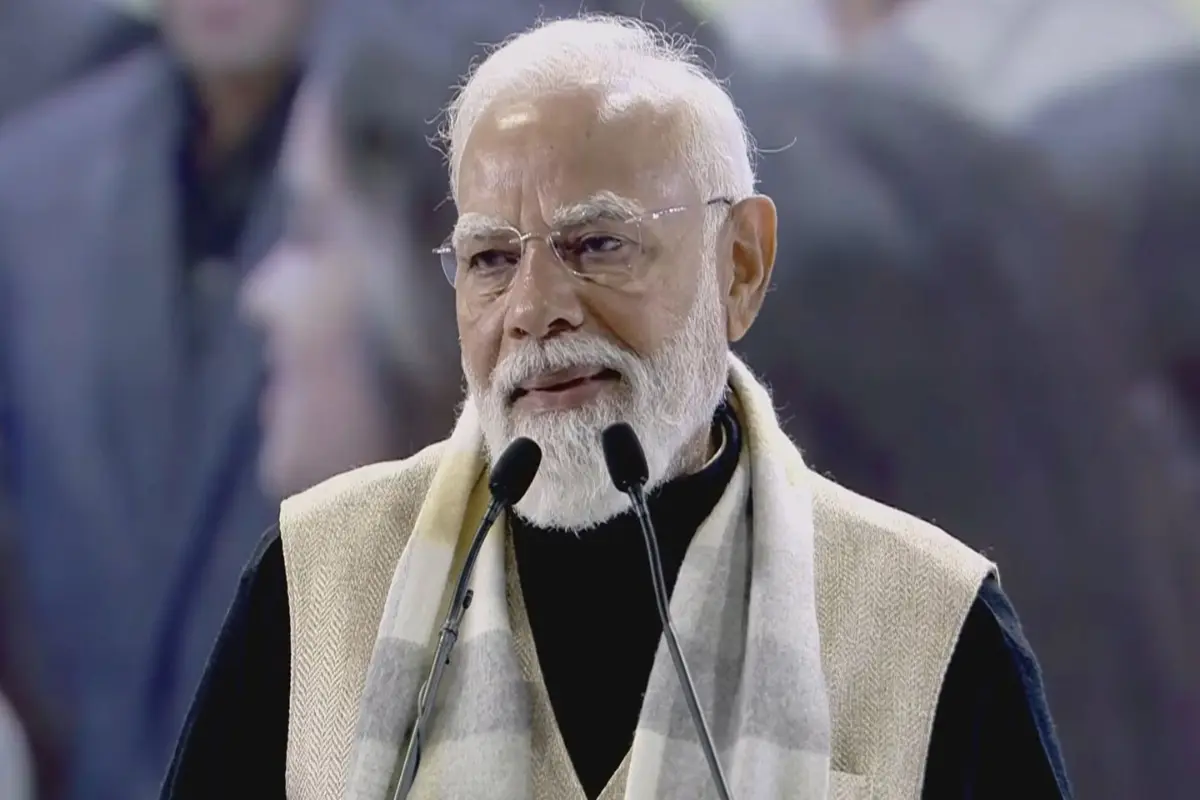
PM Modi Unveils Vision for Viksit Bharat by 2035
PM Modi Reform Priorities Emphasise Structural Change and Ease of Governance
PM Modi on Sunday unveiled an ambitious roadmap for the next decade, asserting that his government’s reform journey has moved beyond incremental adjustments to deliver what he described as a “systemic transformation” benefiting millions of ordinary Indians.
In an interview with Press Trust of India, the Prime Minister outlined what he called a decisive shift from piecemeal changes to deep-rooted reforms aimed at steering the country toward the vision of Viksit Bharat—a fully developed India.
At the heart of the conversation were the Narendra Modi Reform Priorities, a three-pronged agenda that he believes will define India’s growth trajectory over the next 10 years: structural reforms, deeper innovation, and simplified governance.
PM Modi: From Incremental Change to Systemic Transformation
“Reform is the commitment of this government, something we have shown in letter and spirit,” PM Modi said, underlining that the administration’s approach is no longer confined to marginal adjustments. “We have moved from incremental adjustments to systemic transformation,” he added.
The Prime Minister indicated that rather than confining reforms to a narrow checklist, the government’s strategy is expansive and long-term. However, when pressed to identify three core priorities, he laid out a clear direction:
-
Structural reforms to boost competitiveness and productivity.
-
Deepened innovation across technology, manufacturing, and services.
-
Simplification of governance to enhance ease of living and ease of doing business.
These Narendra Modi Reform Priorities, he suggested, are designed to strengthen India’s economic foundations for decades to come.
Digital Leadership Powered by UPI
A significant portion of the Prime Minister’s remarks focused on India’s digital transformation. Highlighting the global recognition of the country’s digital public infrastructure, he pointed to the rise of the Unified Payments Interface (UPI), describing it as a testament to reform-driven innovation.
“India is a digital leader in the world made possible by fundamental reforms in how people transact via the UPI platform,” he said. The growth of digital transactions, he argued, reflects not just technological advancement but policy clarity and execution discipline.
PM Modi also emphasised the importance of data infrastructure in the coming decade. Inviting global investments, he said India is positioning itself as a hub for data storage and digital services. “Data centres will be a massive job creator for our youth; we invite the whole world’s data to reside in India,” he remarked, framing it as both an economic opportunity and a strategic move.
PM Modi: Historic Infrastructure Push
Calling infrastructure expansion the most extensive in India’s history, PM Modi stressed that projects are being designed with future readiness in mind. From highways and rail corridors to logistics networks and urban infrastructure, he said the focus is on long-term capacity rather than short-term optics.
He described productive capital expenditure as a defining feature of his government’s fiscal philosophy. Referring to the latest Union Budget, he said it avoided short-term populism and instead prioritised record capital outlays to generate employment and strengthen sustainable growth.
According to the Prime Minister, this disciplined spending approach aligns directly with the Narendra Modi Reform Priorities and is central to preparing India for sustained expansion over the next quarter-century.
Export Growth and Global Integration
On the trade front, PM Modi pointed to consistent growth in goods exports, stating that India has repeatedly surpassed earlier records in recent years. He attributed this to enhanced competitiveness and deeper global integration.
“Our national character has revealed itself even in challenging times; we are a bright growth spot in difficult global circumstances,” he said, underscoring India’s resilience amid global economic headwinds.
He also highlighted the role of Free Trade Agreements (FTAs), noting that they are strategically designed to expand market access for Micro, Small and Medium Enterprises (MSMEs). Sectors such as textiles, leather, chemicals, handicrafts, and gems are expected to benefit significantly from expanded trade opportunities.
Private Sector and Innovation: The Next Leap
Looking ahead, the Prime Minister made it clear that government reforms alone will not suffice to achieve Viksit Bharat. The next phase, he said, will depend heavily on bold private sector investments.
“The next leap to Viksit Bharat will depend on bold investment by the private sector in innovation, long-term capacity, and global competitiveness,” he stated.
Innovation, particularly in emerging technologies and high-value manufacturing, is expected to serve as the engine of the next growth cycle. By combining regulatory clarity with entrepreneurial energy, the government hopes to create a business environment that fosters risk-taking and long-term capital formation.
Women at the Core of Development
In a significant social dimension of his vision, PM Modi underlined the role of women in India’s development journey. “It is my conviction that women will play the most important role in creating Viksit Bharat,” he said.
From entrepreneurship to workforce participation and leadership roles, the Prime Minister indicated that empowering women will be central to unlocking India’s demographic dividend.