
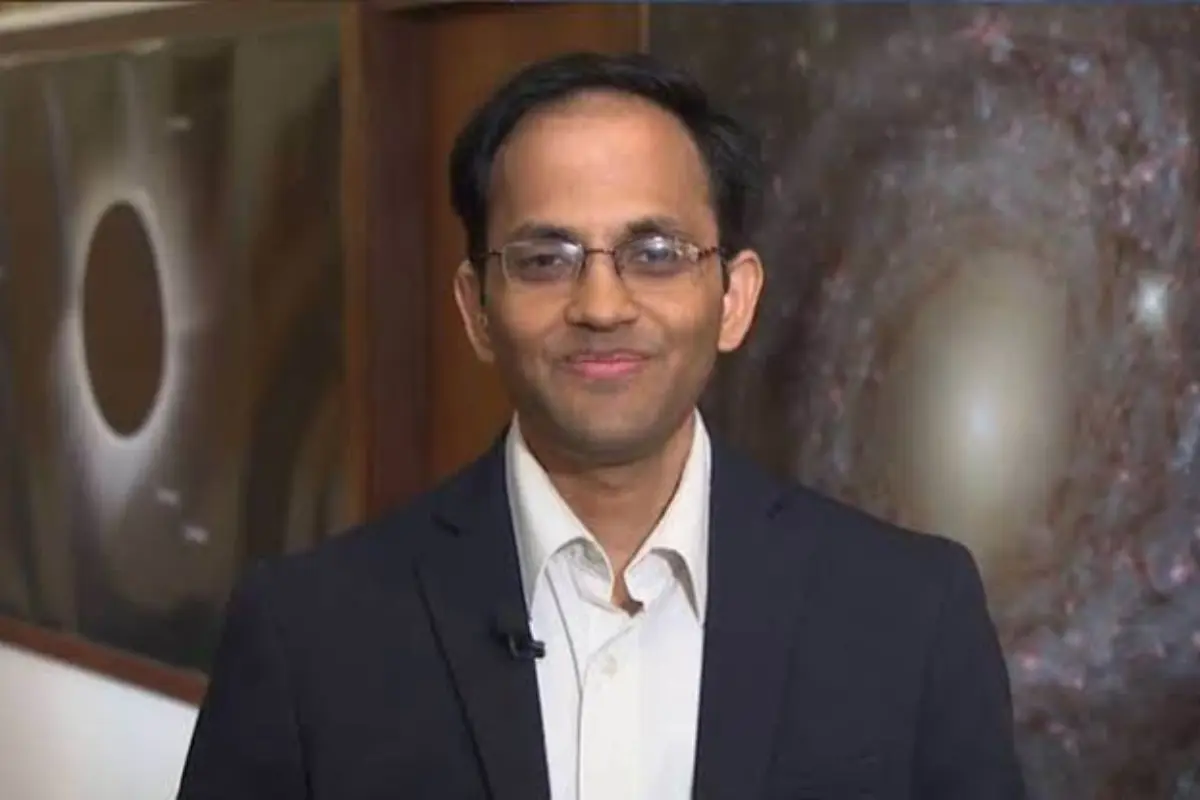
In a universe brimming with billions of stars and even more planets, there are only a few individuals capable of deciphering its deepest mysteries—and one such pioneer is Nikku Madhusudhan. An Indian-British astrophysicist whose name has become synonymous with cutting-edge exoplanetary science, Madhusudhan is more than a researcher; he is a visionary pushing the boundaries of humanity’s understanding of the cosmos.
Currently serving as Professor of Astrophysics and Exoplanetary Science at the University of Cambridge, Madhusudhan has become a guiding light in the exploration of distant planets, habitability, and the ever-elusive question: Are we alone in the universe?
Nikku Madhusudhan: From Varanasi to Cambridge – A Journey Fueled by Curiosity
Born in 1980 and hailing from India, Nikku Madhusudhan began his illustrious academic journey at the Indian Institute of Technology (IIT) BHU, where he earned his B.Tech. degree. Armed with dreams that stretched far beyond Earth’s skies, he moved to the United States to pursue his M.S. and Ph.D. at the Massachusetts Institute of Technology (MIT), under the mentorship of renowned exoplanet researcher Sara Seager.
It was during his Ph.D. that Madhusudhan made waves in the scientific community by developing a novel atmospheric retrieval technique—a method that extracts information about an exoplanet’s atmospheric composition by studying its light spectrum. This innovation laid the foundation for several groundbreaking discoveries in the years to come.
Trailblazing Discoveries in Exoplanetary Atmospheres
Madhusudhan’s career is a testament to fearless exploration and scientific precision. His 2011 publication in Nature, in which he proposed that the super-Earth 55 Cancri e could have a carbon-rich interior, challenged conventional planet formation models and introduced a new class of exoplanets to the world.
In 2014, he led a research team that made high-precision measurements of water content in the atmospheres of hot Jupiters, shaking the foundation of existing models. By consistently questioning established norms, he has not just contributed to science—he has reshaped it.
One of Madhusudhan’s most significant contributions is the introduction of the “Hycean planet”—a hypothesised type of exoplanet that could host liquid oceans under hydrogen-rich atmospheres. Unlike Earth-like planets, Hycean worlds could exist in a wider range of conditions, drastically expanding the scope of potentially habitable planets in the universe.
Nikku Madhusudhan: K2-18b and the Potential Signs of Life
The exoplanet K2-18b, located 120 light-years away, became the focal point of Madhusudhan’s most groundbreaking work. Using data from the James Webb Space Telescope, his team detected carbon-bearing molecules, and more recently, dimethyl sulfide (DMS) and dimethyl disulfide (DMDS)—gases that are often associated with biological activity on Earth.
This monumental discovery, reported in April 2025, is perhaps the strongest evidence yet of the possibility of life beyond our solar system. The implications are profound. For the first time, humanity has a scientific basis to suspect that life may not be unique to Earth, and Madhusudhan is at the center of that revelation.
A Career Decorated with Honors
Over the years, Nikku Madhusudhan has been recognized with numerous accolades for his contributions to astrophysics, including:
-
MERAC Prize in Theoretical Astrophysics (2019) – European Astronomical Society
-
Pilkington Prize for Excellence in Teaching (2019) – University of Cambridge
-
Young Scientist Medal (2016) – International Union for Pure and Applied Physics (IUPAP)
-
Vainu Bappu Gold Medal (2014) – Astronomical Society of India
-
YCAA Prize Fellowship (2011) – Yale University
These honors not only recognize his technical brilliance but also his ability to inspire and educate the next generation of astrophysicists.
From Scientist to Storyteller
What makes Nikku Madhusudhan truly exceptional is not just his academic prowess but his ability to communicate complex scientific ideas to the broader public. He regularly appears in media interviews, writes for popular science platforms, and gives lectures that leave audiences spellbound.
In doing so, he ignites a spark in young minds across the globe, especially in India, where his story serves as a powerful reminder that humble beginnings are no barrier to achieving greatness.
Also Read : UAE Visa-on-Arrival for Indian Nationals Expands