
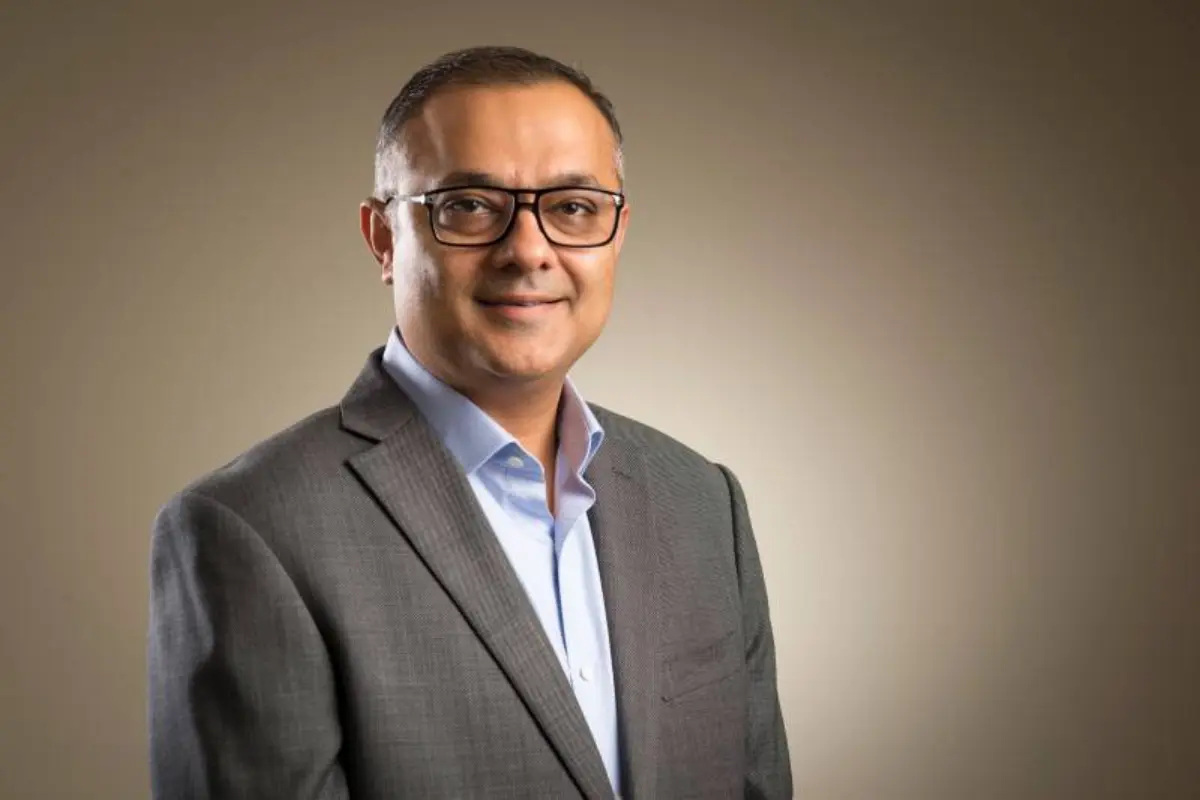
The story of Mohit Anand begins not in boardrooms, but in classrooms and laboratories. Armed with a Bachelor’s degree in Engineering (Production) from Panjab Engineering College, he developed a systems-driven mindset — analytical, structured, and execution-focused.
He later sharpened his business acumen with a Master’s in Management Studies (Marketing) from Jamnalal Bajaj Institute of Management Studies, one of India’s premier business schools. It was here that his passion for consumer behavior, brand building, and strategic growth took definitive shape.
Engineering gave him logic. Management gave him vision. Leadership would come next.
Mohit Anand: Fifteen Formative Years at Procter & Gamble
Mohit Anand’s professional ascent began at Procter & Gamble, where he spent 15 formative years mastering the art and science of brand management.
At P&G, he worked across multiple assignments spanning marketing and general management, including spearheading marketing initiatives across the Asia Pacific region. These were not merely functional roles; they were leadership incubators.
He learned how to:
-
Build brands that consumers trust.
-
Translate insight into innovation.
-
Drive profitability while protecting brand equity.
-
Lead cross-cultural teams in diverse markets.
These years cemented Mohit Anand’s reputation as a commercially sharp, insight-driven leader capable of scaling businesses with precision.
Global Leadership at Unilever: Scaling Iconic Brands
After P&G, Mohit Anand moved to Unilever — a transition that expanded his canvas from regional leadership to global influence.
As Global Vice President, based in London, he spearheaded a high-potential, future-focused water purification category — a role that demanded both innovation and long-term sustainability thinking. Clean water is not merely a category; it is a social imperative. Under his leadership, the business aligned commercial growth with meaningful consumer impact.
He also led the transformation and growth agenda for Lipton, the world’s No. 1 tea brand with a presence in over 110 countries. Managing such a global powerhouse required strategic clarity, operational discipline, and deep consumer understanding across geographies.
In the refreshments category, Mohit Anand drove operations across South Asia and Africa for:
-
Wall’s
-
Magnum
-
Brooke Bond
-
Taj Mahal
Under his leadership, these brands achieved record growth and strengthened market share — proof of his ability to blend strategy with flawless execution.
Mohit Anand: Transforming Kellogg India – Nourishing a Nation
In July 2017, Mohit Anand joined Kellogg as Managing Director, India & South Asia. It marked a defining chapter in his journey.
As the chief architect of performance at Kellogg India, his purpose was clear: nourish India through nutritious foods. But ambition alone does not transform categories — leadership does.
Mohit Anand expanded Kellogg’s footprint beyond breakfast, accelerating entry into the snacks space and adapting global portfolios to Indian tastes. He focused on:
-
Localization of innovation.
-
Strengthening distribution networks.
-
Building consumer trust in nutrition-led offerings.
-
Driving operational excellence.
His impact extended beyond India. He later took on roles as:
-
General Manager, Snacks (Asia Pacific, Middle East & Africa), based in Singapore.
-
Leader of the Chicago-based Frozen Foods business.
During his 8.5-year tenure with what became Kellanova, Mohit Anand demonstrated an uncommon ability to lead diverse categories — from cereals to snacks to frozen foods — while delivering sustainable growth.
A New Chapter: Leading Campbell’s $4.2 Billion Snacks Portfolio
In February 2026, Mohit Anand transitioned to a landmark global role: Executive Vice President and President, Snacks at The Campbell’s Company.
Reporting directly to CEO Mick Beekhuizen, he assumed leadership of a $4.2 billion snacks portfolio featuring category-leading brands such as:
-
Goldfish
-
Pepperidge Farm
-
Snyder’s of Hanover
-
Lance
-
Kettle Brand
-
Cape Cod
-
Snack Factory
-
Late July
His mandate: drive long-term growth, expand margins, and return the division to sustainable momentum.