
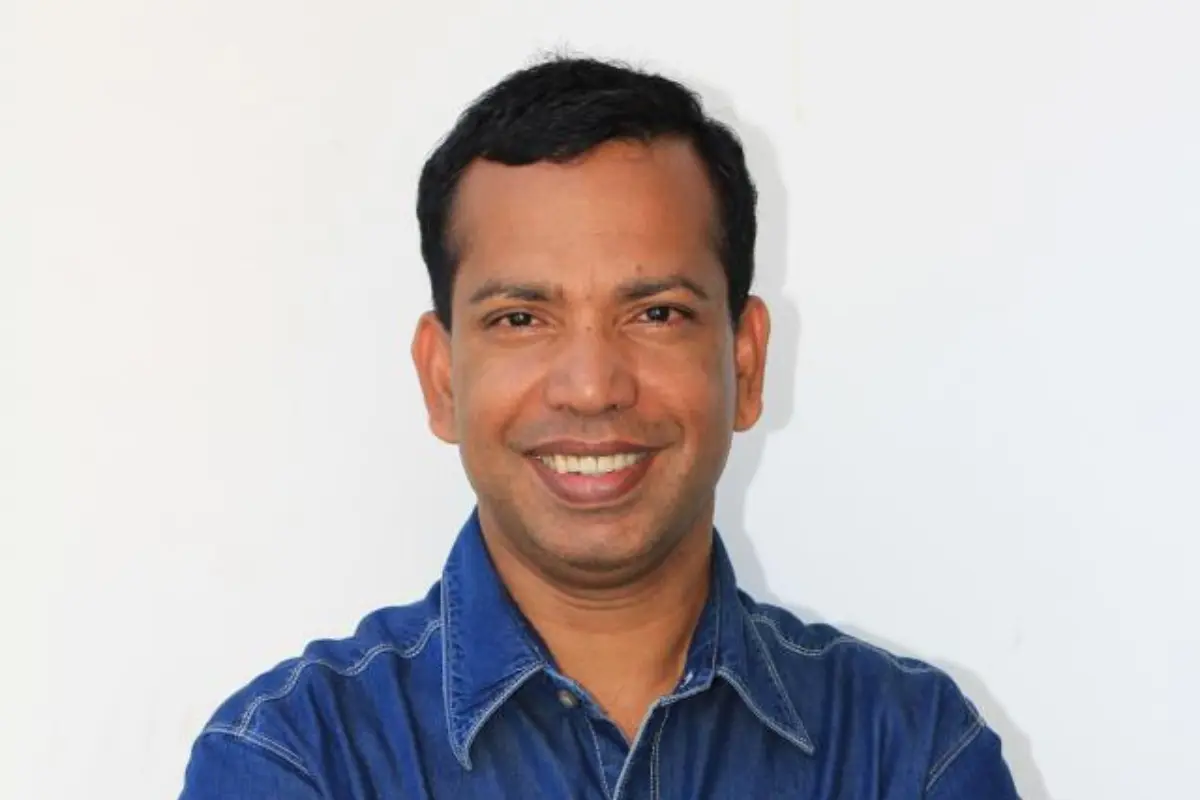
In the vibrant heart of the Indian Ocean lies the island of Réunion—a cultural mosaic of Africa, Europe, and Asia. Among its most remarkable sons is Jean-Régis Ramsamy, born on April 16, 1966, in Saint-André, whose life and work have become a profound testament to cultural revival, diasporic connection, and journalistic integrity.
As a respected reporter, historian, and writer, Jean-Régis Ramsamy has spent decades documenting forgotten stories, unearthing ancestral roots, and restoring pride to a community long underrepresented. It is not just a personal journey—it is a legacy that resonates with thousands of Indo-Reunionese seeking to understand who they are and where they come from.
Jean-Régis Ramsamy: Reviving Ancestral Legacy with Passion and Purpose
Jean-Régis Ramsamy was not born into privilege or fame—his strength lies in the richness of his heritage. The son of Antonin Ramsamy, the last known Reunionese jeweller of the Vishwakarma or Patair Tamil line, Jean-Régis grew up with stories of India echoing through his family home.
His ancestral name, Nadarassin, was given in honor of his great-grandfather Ramsamy Nadarassin, an Indian jeweller who arrived in Réunion around 1890. But those were just fragments of a greater story. Determined to connect the dots, he launched a painstaking research project that led him across continents and deep into the archives of identity.
What he found in Pondicherry—his long-lost Pavadé Patair relatives—became more than a genealogical triumph. It was a cultural renaissance. Jean-Régis Ramsamy’s rediscovery of his roots inspired a wave of Indo-Reunionese to embark on similar journeys. Suddenly, the forgotten names etched on old ships’ manifests began to breathe again, thanks to one man’s relentless pursuit of truth and belonging.
An Unwavering Climb Through Journalism and Academia
Jean-Régis RamsamyJean-Régis Ramsamy’s academic and journalistic careers mirror his character: persevering, versatile, and unafraid to challenge the status quo. In 1988, he began studying Tamil at the University of La Réunion but would not complete his language license. Instead, life’s twists led him to the world of broadcasting—first with Labuse Radio and then freelancing for Journal de L’île. The media world did not immediately open its arms, but he never gave up.
In 1989, Jean-Régis covered the historic visit of Pope Jean-Paul II and French Prime Minister Michel Rocard to Réunion. That same year, he reported on the deportation of infamous mercenary Bob Denard. By 1991, he was in the eye of the Chaudron riots, covering the civil unrest for Korail Radio and Le Mauricien. These pivotal stories earned him recognition, finally landing him a permanent role at RFO (now Réunion Première), where his voice and vision helped shape public discourse.
Academically, Jean-Régis Ramsamy pursued a trailblazing path. After returning to university in 2000, he earned a string of qualifications, culminating in a Doctorate of Contemporary History in 2012 under the mentorship of renowned professor Sudel Fuma. His doctoral work reflected his lifelong mission—merging history with lived experience, fact with feeling, identity with documentation.
Jean-Régis Ramsamy: Books That Illuminate Forgotten Histories
Few writers in the Indian Ocean region have given as much scholarly attention to Indo-Tamil heritage as Jean-Régis Ramsamy. His 1999 publication, La Galaxie des noms malbars, became a cornerstone of ethno-historical research, mapping the dispersion and transformation of Tamil surnames across Mauritius, South Africa, and France’s overseas territories.
With Nalgon, le bal tamoul à La Réunion, he brought to light the tradition of Tamil “bal” dance, sparking cultural interest in France and beyond. These works are more than books—they are cultural lifelines. His research has been referenced by institutions as prestigious as Johns Hopkins University, and his work continues to be cited in academic discourse surrounding migration, identity, and memory.
Forging Global Connections Through the Indian Diaspora
Beyond books and broadcasts, Jean-Régis Ramsamy has built a bridge between Réunion and the broader Indian diaspora. In 2007, alongside Christian Vittori and others, he co-founded the Organisation for Diaspora Initiatives (ODI) in Réunion. Although its roots lie in India’s Jawaharlal Nehru University, ODI Réunion is proudly autonomous, focusing on local identity while fostering global scholarship.
From hosting photo exhibitions of Indian indentured labourers in Chennai (2009) to organising international symposiums under the auspices of the University of La Réunion (2012), Ramsamy’s ODI has become a hub for cultural diplomacy. Students and researchers alike now find a platform where Indo-Reunionese voices are no longer echoes—they are amplified.
His stature rose to global prominence when India honoured him with the Pravasi Bharatiya Samman on January 9, 2021. As a delegate speaker at Pravasi Bharatiya Divas, Jean-Régis has represented Réunion in New Delhi, South Africa (2010), Mauritius (2012), and Guadeloupe (2013), acting as a cultural ambassador for a people too long overlooked.
Also Read : Dasarath Chetty: A Visionary Leader in Sociology and Human Empowerment