
India QS World University Rankings 2026: Record 54 Indian Institutions Make the Cut
India QS World University Rankings 2026: Nation Emerges as G20's Fastest-Rising Education Power
In a landmark moment for Indian academia, the India QS World University Rankings 2026 edition has spotlighted 54 Indian institutions — a remarkable jump from 46 in 2025 and a mere 11 in 2014. This 390% surge within a decade cements India’s position as the fastest-growing higher education system among G20 countries and the fourth most represented nation globally, trailing only the United States (192), the United Kingdom (90), and Mainland China (72).
The inclusion of eight new Indian universities in the 2026 list — more than any other country — is not just a statistical milestone but a powerful indicator of India’s evolving academic ecosystem. These new entrants, predominantly private institutions, reflect the growing synergy between innovation, quality, and global competitiveness in India’s educational sector.
India QS World University Rankings 2026: Rising Stars in Global Education
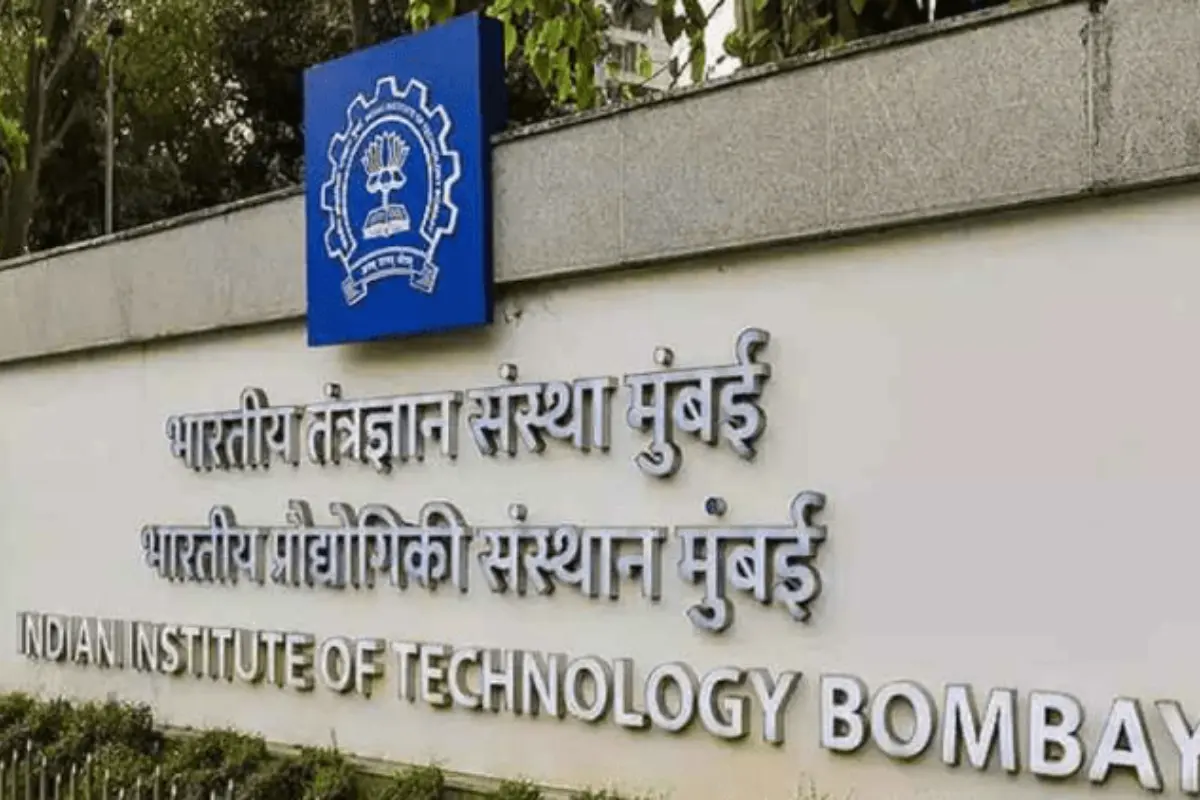
The 2026 edition saw three Indian institutes break into the global top 200 — IIT Delhi (123rd), IIT Bombay (129th), and IIT Madras (180th). Notably, IIT Delhi reached its best-ever global position, moving up from 197 in 2024 and 150 in 2025, underpinned by strong showings in Employer Reputation (50th globally) and Citations per Faculty (86th). IIT Madras made a dramatic leap of 47 places to enter the top 200 for the first time, a significant testament to its academic and research prowess.
In total, 11 Indian institutions secured a spot in the top 500 — nine of them centrally funded, and one state-run, Anna University (465th). Delhi University (328th) remains the top-performing traditional university outside the IIT ecosystem.
QS Methodology: What Shapes Global University Rankings
The QS World University Rankings 2026 deployed a refined methodology that evaluates institutions across five key dimensions:
-
Research and Discovery (50%)
Measured through Academic Reputation and Citations per Faculty. -
Employability and Outcomes (20%)
Assessed by Employer Reputation and Employment Outcomes. -
Learning Experience (10%)
Evaluates the academic environment and faculty support. -
Global Engagement (15%)
Analyses the presence of international students, faculty, and collaborations. -
Sustainability (5%)
Introduced in 2024 to assess contributions to environmental and social goals.
India excelled particularly in Employer Reputation, with an average score of 24.9, outshining countries like China, France, and Finland. This suggests a global acknowledgement of Indian graduates’ competence and employability. Furthermore, India achieved an impressive 43.7 in Citations per Faculty, ahead of established research giants like the U.S., U.K., and Germany.
Private Institutions in India QS World University Rankings: Quietly Redefining the Landscape
While centrally funded institutes still dominate the top ranks, private universities now comprise 40% of India’s total representation. Significantly, seven of the eight new entrants in 2026 are private institutions — a paradigm shift that speaks to the democratisation of academic excellence.
These emerging institutions are not only scaling the QS rankings ladder but are also raising the bar in research quality, pedagogy, and industry collaboration, showing that global-level education is no longer the exclusive domain of public universities in India.
Areas Needing Attention: Internationalisation and Faculty Ratio
Despite the glowing achievements, India continues to face structural challenges in two key areas:
-
International Students Ratio: A staggering 78% of Indian universities saw a decline in this metric, and none feature in the global top 500 in terms of attracting foreign students. This reflects systemic barriers such as visa policies, lack of global marketing, and insufficient international outreach.
-
Faculty-Student Ratio: Most Indian universities struggle with this parameter. O. P. Jindal Global University is a rare outlier, ranking among the global top 350 in this category. Improving this ratio remains essential to elevate the overall learning experience.
Sustainability: A Growing Strength
India is emerging as a serious contender in the sustainability metrics introduced in 2024. Indian universities outperform both China and Brazil in Environmental Sustainability, Knowledge Exchange, and ESG Research, though they still trail behind countries like South Africa in holistic impact. The rising focus on green campuses, sustainable research, and societal engagement signals a promising trajectory.
Also Read : Iran: Over 1,000 Indians Evacuated as Tehran Temporarily Opens Airspace