
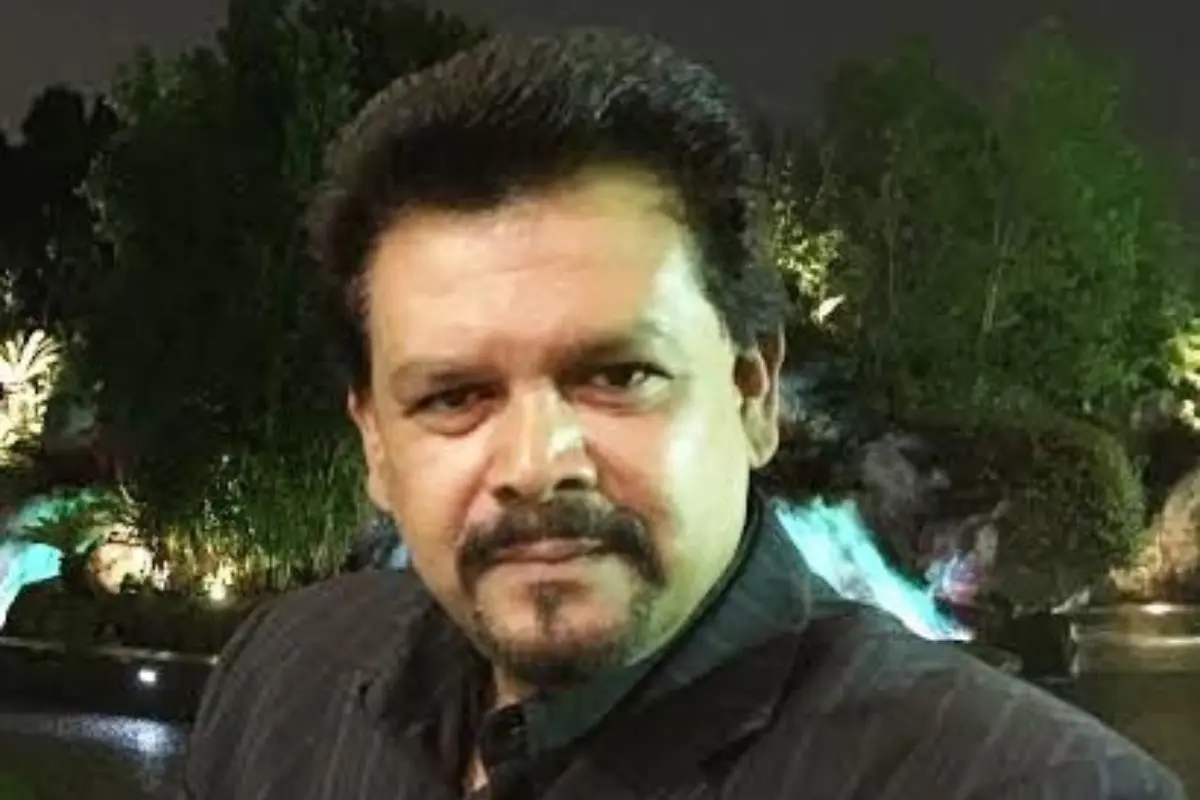
In an era where identity often gets lost in displacement, Dr Satish Rai stands as a radiant beacon of cultural reclamation and community empowerment. His life, which has spanned continents and professions, is more than a personal narrative—it is a powerful mission to preserve, restore, and celebrate the forgotten histories of the Indian Girmitiyas. With roots in Fiji, deep connections in India, and a present anchored in Australia, Dr Satish Rai’s odyssey is an awe-inspiring story of resilience, self-discovery, and transformative leadership.
Dr Satish Rai: From the Sugarcane Fields of Fiji to Global Platforms
Born in Fiji, Dr Satish Rai’s formative years were shaped by the multi-layered experiences of a country defined by colonial legacies and cultural complexities. His early education at the University of the South Pacific and the Fiji School of Medicine set him on a trajectory of lifelong learning. But it wasn’t until the political upheaval of the 1987 coups in Fiji—witnessed from afar in London—that Rai experienced a profound internal shift.
As tanks rolled through Suva on television screens, he came to a painful realization: the land of his birth no longer felt like home. This moment triggered a soul-searching journey that led him to question not just his nationality but his roots, his ancestry, and the stories of those who came before him.
The British Chapter: Policing, Politics, and Public Service
Migrating to the UK in 1980, Dr Satish Rai wore many hats: a dedicated Metropolitan Police officer from 1982 to 1987, a race equality activist, and eventually a politician—elected as a councillor in the London Borough of Greenwich (1990–1994).
Dr Satish Rai delved into issues of social justice, earning a BA (Hons) degree in Sociology and further pursuing an MA in Social Policy at Goldsmiths College, University of London. His work as Principal Race Equality Officer for a London Borough Council reflected his unwavering commitment to dismantling institutional racism and advocating for marginalized communities.
The Australian Dream of Dr Satish Rai: Cultural Scholarship and Creative Arts
In 1995, Rai migrated to Australia, carrying with him a wealth of experience and a fire to make a lasting impact. Dr Satish Rai completed an MA in Communication and Cultural Studies at the University of Western Sydney in 1997 and later earned a Doctor of Creative Arts in 2011. His doctoral project, a documentary-drama titled In Exile at Home – A Fiji Indian Story, was more than an academic pursuit—it was a cinematic homage to his Girmitiya ancestors.
This film chronicled the heartbreak of exile, the longing for identity, and the fragmented sense of belonging that many descendants of indentured laborers continue to experience. Through visual storytelling, Dr Satish Rai gave voice to generations silenced by history.
Discovering Roots: A Mission of Ancestral Reconnection
For Rai, the Girmitiya story was not just academic—it was intensely personal. Between 1994 and 2001, he traveled to India three times in search of his ancestral village. Despite initial failures, his perseverance led him to Balrampur (Utraula) in 2004, the home of his paternal grandmother. He would later also uncover his maternal grandfather’s roots in Lakhimpur, Uttar Pradesh.
Frustrated by the difficulty of this process, he wrote a paper titled “Discover Your Indian Roots”. He sent it to both the Indian federal government and the state government of Uttar Pradesh. In 2000, turning frustration into innovation, Dr Satish Rai launched the Discover Your Indian Roots Project—a self-funded, grassroots initiative to assist other diaspora Indians in tracing their origins.
Through painstaking efforts, he helped numerous individuals obtain their ancestors’ immigration passes and led them, sometimes in person, through the labyrinth of Uttar Pradesh and Rajasthan in pursuit of their heritage.
Building a Girmitiya Movement: Global Recognition and Legacy
As a torchbearer of the Girmitiya identity, Dr Rai’s work has grown into a global movement. He initiated the first Girmit Divas in Sydney in the early 2000s, and later spearheaded similar events through the International Girmit Congress and International Girmit Association.
In 2016, his work gained official recognition when the Government of Uttar Pradesh invited him to its inaugural UP Pravasi Divas in Agra. It was at his insistence that the conference held a dedicated session on Tracing Your Roots/Girmitiya—a historic moment that marked the first time the issue was given a formal platform in India.
As the international coordinator of the International Girmit Association, Dr Satish Rai works with diaspora leaders in the USA, the Netherlands, and the UK. His focus today includes organising global events to commemorate the 100th anniversary of the abolition of the Indian indenture system and producing a powerful feature film on its abolition.
Also Read : India QS World University Rankings 2026: Record 54 Indian Institutions Make the Cut