
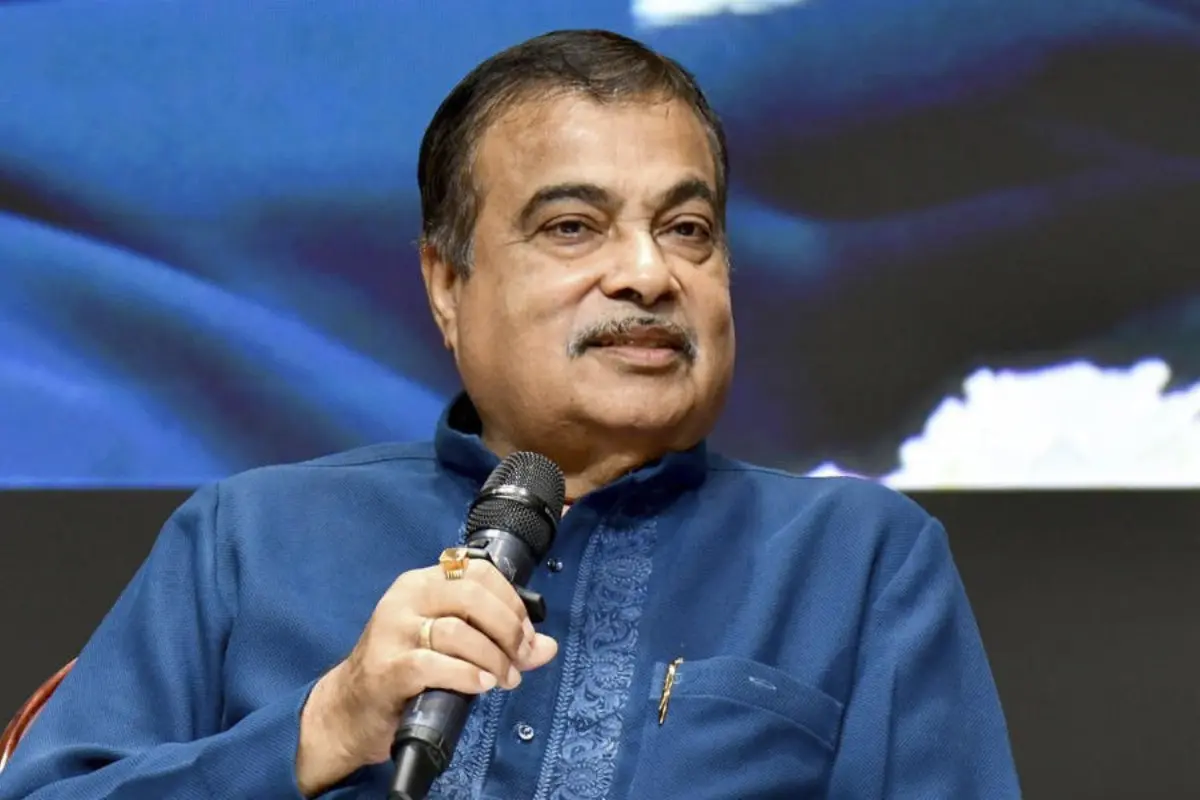
India Aims to be the No.1 Automobile Maker in 5 Years
From Third to First: Gadkari’s Plan to Make India a Global Automobile Hub
At the prestigious International Value Summit 2025, India’s road transport and highways minister Nitin Gadkari laid out an ambitious blueprint to establish India as a global automobile hub, ushering in a new era of innovation, green mobility, and world-class infrastructure.
Speaking to an audience of global industry leaders, Gadkari revealed that India has now surpassed Japan to become the world’s third-largest automobile market, with the government setting its sights on claiming the No. 1 position within the next five years. “All major global automobile brands are now present in India, and their approach has evolved from merely assembling vehicles to exporting them from India to international markets,” he said.
Driving India’s Rise as a Global Automobile Hub
Gadkari emphasized that India’s two-wheeler sector alone now exports more than 50% of its production — a symbol of the country’s expanding global reach. This export-driven growth, he said, is a key pillar of the plan to transform India into a global automobile hub that can rival the traditional manufacturing strongholds of Germany, Japan, and United States.
The minister stressed that India’s automobile sector is no longer about low-cost production alone but is evolving into a centre of design, R&D, and innovation. “India’s time has come. The world is looking at us not just as a market, but as a powerhouse of automotive excellence,” he declared.
Leading the Global Transition to Green Mobility
Gadkari also underlined India’s growing leadership in clean mobility, spanning electric vehicles, hydrogen fuel, and other alternative fuels. “We have already launched hydrogen-powered trucks, and pilot projects are underway across ten routes,” he announced, adding that the government has disbursed ₹600 crore in grants to accelerate hydrogen infrastructure development.
Support from industry giants such as Tata Motors, Ashok Leyland, Reliance Industries, and Indian Oil Corporation has been instrumental in this push. Trials are also ongoing for innovative fuels like isobutanol and bio-bitumen, part of the government’s broader strategy to reduce India’s annual fuel import bill of ₹22 lakh crore.
“Green mobility will be the cornerstone of India’s rise as a global automobile hub,” Gadkari said, reiterating that India aims to set global benchmarks in sustainable transportation technologies.
Transforming Infrastructure to Power Mobility Growth
Gadkari showcased the rapid transformation of India’s road infrastructure, which now constitutes the world’s second-largest road network. Citing dramatic reductions in travel time — such as the cut from three hours to just 35 minutes between Panipat and Indira Gandhi International Airport — he said such projects are setting new benchmarks in efficiency.
Flagship projects like the Chennai–Bengaluru Expressway and the ₹23,000-crore Bengaluru Ring Road are expected to redefine regional connectivity and ease urban congestion, further boosting India’s appeal as a global automobile hub.
Building Sustainable Roads: From Waste to Wealth
In a striking example of innovation, Gadkari revealed that more than 80 lakh tonnes of waste from the Ghazipur landfill have already been used for road construction, lowering the infamous garbage mountain’s height by seven metres. He also announced successful trials of bio-bitumen derived from rice straw — a breakthrough that performs better than petroleum-based bitumen and helps curb stubble burning.
“Our vision is clear — roads that are sustainable, resilient, and built from the very waste that once choked our cities,” he said.
Call for Global Collaboration
Gadkari urged international investors and innovators to join India’s infrastructure revolution. “We do not have a resource problem. Our roads are monetized, and our revenue is strong. What we need is your innovation, your technology, and your cooperation,” he said, inviting partnerships in precast road construction, tunnel engineering, hydrogen transport systems, and circular economy solutions.
At a separate event, the Panchjanya Infra Confluence 2025, Gadkari revealed the ministry’s plans to introduce amphibious seaplanes, ropeways, and air buses as part of an aggressive push into futuristic transport technologies.
“India has the capability to become a world leader in new mobility systems,” he declared, reinforcing his ministry’s vision to enhance the ease of living and build truly world-class infrastructure.
Also Read : Kevan Parekh: The Visionary CFO Powering Apple Inc.