
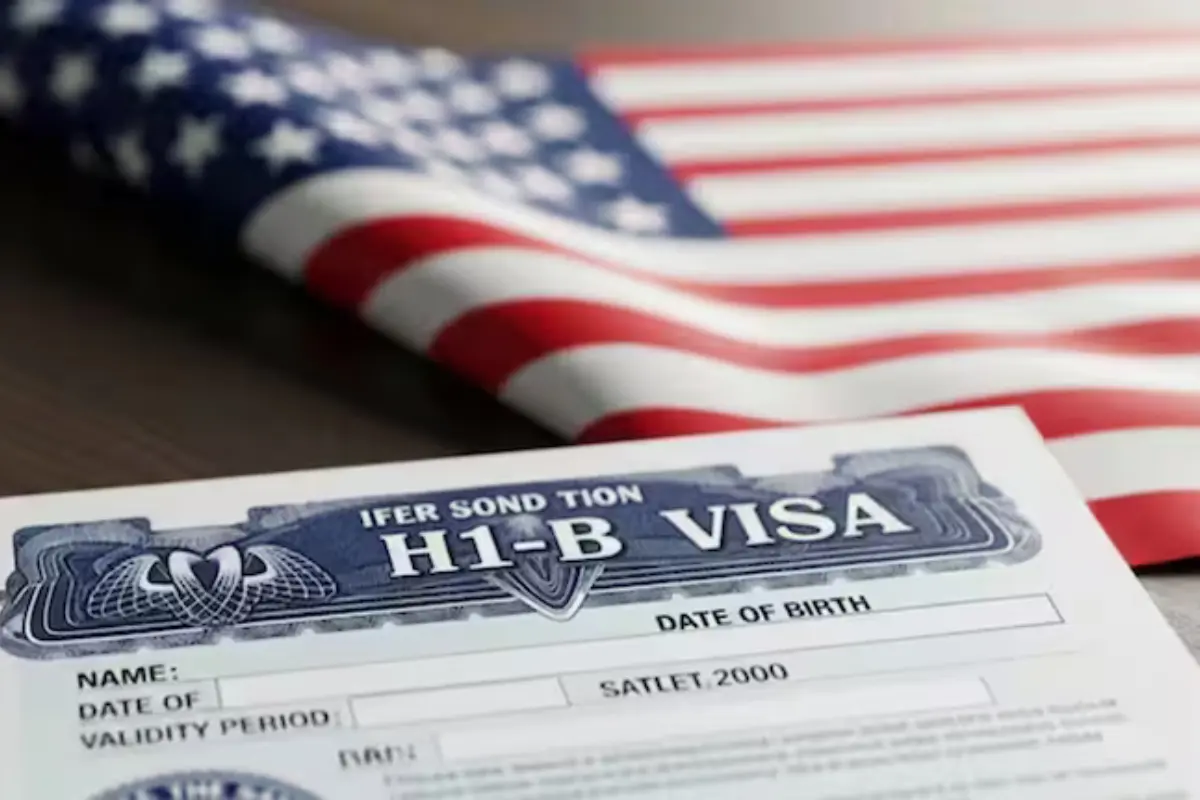
H-1B Visa: Trump’s Crackdown Could Cost IT Giants Billions
Trump’s $100,000 H-1B Visa Fee Puts TCS and Infosys in the Firing Line
The Trump H-1B visa fee impact on Indian IT firms is emerging as a defining challenge for the global technology outsourcing industry. A sweeping immigration crackdown proposed by US President Donald Trump—centered on a staggering $100,000 fee for new H-1B workers recruited from abroad—is poised to hit Indian IT giants like Tata Consultancy Services (TCS), Infosys, and Cognizant Technology Solutions the hardest.
According to an in-depth Bloomberg News analysis, international staffing firms that act as bridges between global talent and US companies would bear the brunt of the financial burden. For Indian IT services providers that rely heavily on overseas recruitment, the proposed fee marks the most restrictive policy yet in America’s long-running debate over skilled foreign labor.
Why the $100,000 H-1B Visa Fee Changes Everything
The H-1B programme has long been the primary gateway for skilled foreign professionals—most holding at least a bachelor’s degree—to enter the US workforce. Every year, 85,000 visas are issued, with technology and IT services companies accounting for the lion’s share.
Under Trump’s proposal, companies hiring fresh H-1B workers from outside the US would be forced to pay an unprecedented $100,000 per visa. This single policy move could reshape global hiring economics overnight.
While critics from both major US political parties argue that the programme undercuts American workers, employers are legally required to pay prevailing industry wages, and entry-level H-1B professionals typically earn above the US median salary. Despite this, the administration has framed the fee as a deterrent against what it views as misuse of the system.
Why TCS, Infosys and Cognizant Are Most Exposed
The Trump H-1B visa fee impact on Indian IT firms becomes especially clear when examining where new hires originate. Bloomberg’s data shows that over 40% of newly approved H-1B visas in the past four years were issued to applicants recruited directly from abroad, not to international graduates already living in the US.
For Indian IT majors, that percentage is even higher.
-
Infosys would have paid the $100,000 fee for more than 10,400 employees, accounting for over 93% of its new H-1B approvals between May 2020 and May 2024—pushing total visa-related costs beyond $1 billion.
-
TCS would have faced additional expenses for 6,500 workers, impacting 82% of its newly approved H-1B hires.
-
Cognizant would have incurred charges for over 5,600 employees, covering 89% of its new H-1B recruits.
Had the fee already been in place, each company would have absorbed hundreds of millions of dollars in additional costs—dramatically altering profit margins and pricing models.
H-1B Visa: Legal Battles and Industry Pushback
The proposed fee has triggered strong resistance. The US Chamber of Commerce, along with several US states, has launched legal challenges questioning the fee’s validity. A forthcoming court hearing will determine whether the measure is temporarily blocked or allowed to proceed.
Despite this uncertainty, companies are not waiting for a legal verdict.
“We’re already seeing changes in behaviour,” said immigration attorney Jonathan Wasden, who represents several IT employers. “The concern is that truly exceptional overseas talent may simply never get the opportunity.”
Hiring Shifts Already Underway
IT firms had previously benefited from an online H-1B lottery system introduced in 2020, which allowed registrations at minimal cost. This led to an explosion in applications, reaching 758,000 eligible registrations for fiscal year 2024.
However, US Department of Homeland Security officials under the Biden administration later flagged manipulation of the system by some consultancies, prompting tighter rules. The $100,000 fee is now being positioned as the ultimate filter.
White House spokesperson Taylor Rogers said the move would provide clarity for American businesses while preventing firms from “spamming the system and driving down wages.”
What the Future Holds for H-1B Visas
Even if courts intervene, analysts expect long-term changes. According to Steve Hall, Chief AI Officer at Information Services Group, the sector has already reduced new H-1B filings since 2024.
Instead, companies are accelerating offshore hiring, particularly in India, the largest source of H-1B talent.
“If you want access to the world’s best talent, you have to go where the talent is,” Hall said, predicting increased investment in India over the next five years.
Lawfully, a legal technology startup, forecasts that the combined impact of the fee and lottery reforms could reduce next year’s H-1B registrations by 30% to 50%.
How Major Companies Are Responding
Cognizant has downplayed the immediate impact. Spokesperson Jeff DeMarrais said the firm has already reduced its reliance on visas, using them selectively for niche roles.
Infosys echoed a similar sentiment, citing CEO Salil Parekh, who stated that the company’s limited visa sponsorship needs would ensure uninterrupted client services.
Meanwhile, IBM, which sourced 88% of its H-1B workers internationally, confirmed adjustments to its immigration strategy, emphasising flexibility in meeting evolving client demands.