
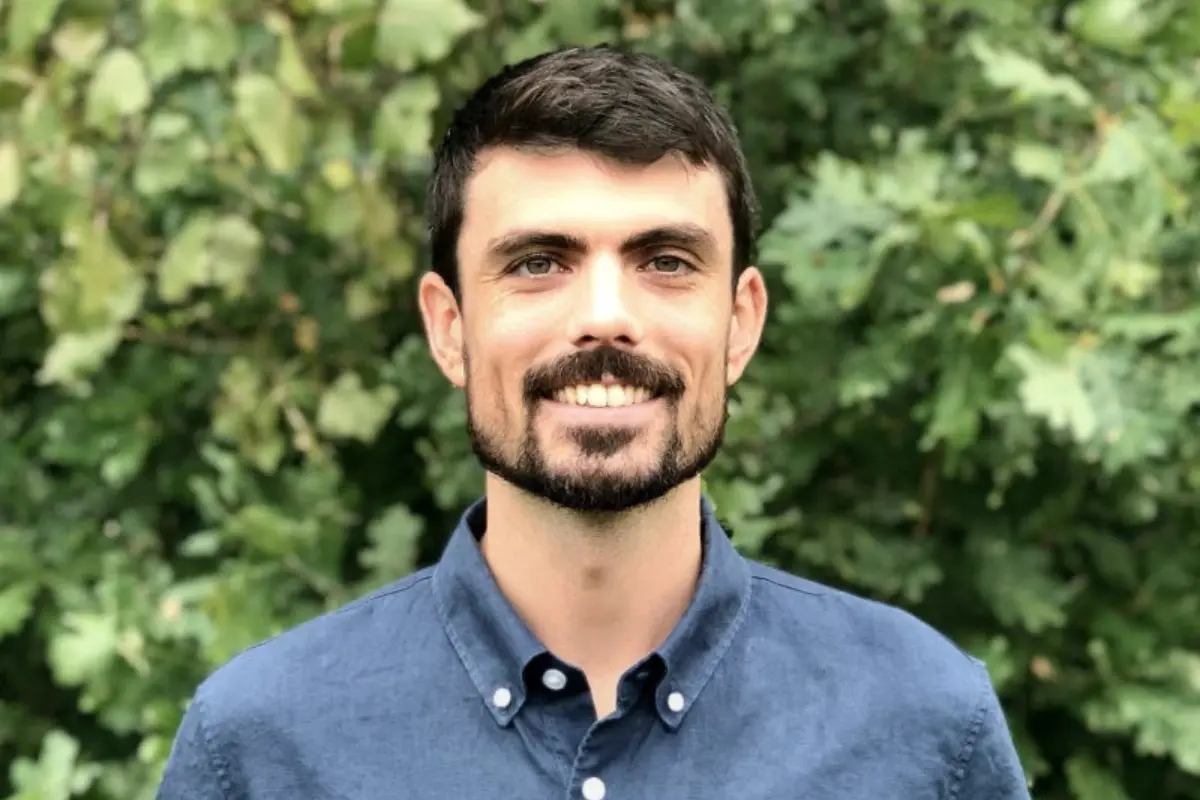
The intellectual journey of Gopal Penny began with a Bachelor of Science in Electrical Engineering from Virginia Tech, where he cultivated a strong analytical foundation. Driven by an expanding interest in environmental systems, he transitioned into Civil and Environmental Engineering at the University of California, Berkeley, earning both his Master’s and PhD degrees.
At Berkeley, his doctoral and postdoctoral research examined hydrological change in heavily managed agricultural landscapes across South Asia. His investigations into the Cauvery, Ganges, and Indus watersheds revealed the delicate interplay between infrastructure development, groundwater extraction, and ecological health. These formative experiences laid the groundwork for a career defined by interdisciplinary thinking and real-world impact.
Gopal Penny: Academic Leadership at the National University of Singapore
Before joining the Environmental Defense Fund, Gopal Penny served as an Assistant Professor in Geography at the National University of Singapore (NUS). There, he explored complex water-agriculture-infrastructure systems across South and Southeast Asia.
His work at NUS went beyond academic publication. He collaborated with regional stakeholders to understand how infrastructure decisions reshape agricultural livelihoods and environmental sustainability. This period sharpened his interest in coupled human-water systems—an approach that examines how policies, incentives, and community behavior influence long-term water security.
Environmental Defense Fund: A Mission to Balance Water for All
At EDF, Gopal Penny has emerged as a leading voice in climate-resilient water management for arid and semi-arid agricultural regions. His research focuses on identifying pathways to achieve agricultural water sustainability while protecting ecosystems and supporting local economies.
By integrating hydrological science, remote sensing, and social-ecological resilience frameworks, he works closely with policymakers, farmers, and environmental organizations. His goal is not only to produce data but also to create actionable strategies that enable communities to adapt to climate change.
Gopal Penny: California Leadership – Sustainable Groundwater and Landscape Transformation
Multibenefit Land Repurposing Program (MLRP)
One of the most innovative initiatives led by Gopal Penny is his work with California’s Multibenefit Land Repurposing Program. As agricultural land faces retirement due to water scarcity, his research explores how these landscapes can be transformed into wildlife habitats, groundwater recharge basins, or climate-resilient ecosystems.
This approach reframes land retirement not as a loss but as an opportunity to restore biodiversity, improve water storage, and create sustainable livelihoods.
Environmental Water Management Modeling
Another major project involves the development of an “Environmental Water Manager” modeling framework for California’s Sacramento Valley. This system helps decision-makers allocate dedicated environmental water resources—such as the reserved share in the Sites Reservoir—to respond dynamically to ecological needs.
By combining advanced modeling with policy insights, Gopal Penny is helping to shape adaptive water management strategies that protect both agriculture and fragile ecosystems.
Global Impact: Community-Driven Water Solutions in India
Groundwater Collectivization in Andhra Pradesh
Working with WELL Labs, Gopal Penny evaluates innovative community-led water governance programs. In Andhra Pradesh, farmers have formed water user associations that agree to share groundwater resources and limit new well drilling. His research measures how collective action can prevent aquifer depletion while strengthening rural livelihoods.
Recharge Pit Efficacy in Maharashtra
Another major focus examines the effectiveness of field-level recharge structures such as recharge pits. While widely promoted, his co-authored 2025 study found that individual pits often have limited large-scale groundwater impact compared to coordinated regional strategies. These insights are helping policymakers design more effective water interventions.
Arkavathy River Basin Research
Earlier award-winning work at UC Berkeley analyzed the Arkavathy River Basin near Bangalore. By identifying groundwater over-exploitation and in-stream obstructions as the primary drivers behind an 80 percent decline in river flow, Gopal Penny provided a blueprint for restoring regional hydrological balance.
Research Contributions and Publications: Science with Practical Consequences
The academic output of Gopal Penny reflects a deep commitment to bridging theory and practice. His 2025 publication in Frontiers in Water highlighted how landscape repurposing can catalyze a paradigm shift in water management. The study emphasized that integrating ecological restoration with agricultural adaptation can simultaneously improve biodiversity and water resilience.
His research on recharge pit efficacy further challenged conventional wisdom, emphasizing the need for scalable solutions rather than isolated interventions. Through such work, Gopal Penny has built a reputation as a scientist who prioritizes real-world outcomes over academic abstraction.