
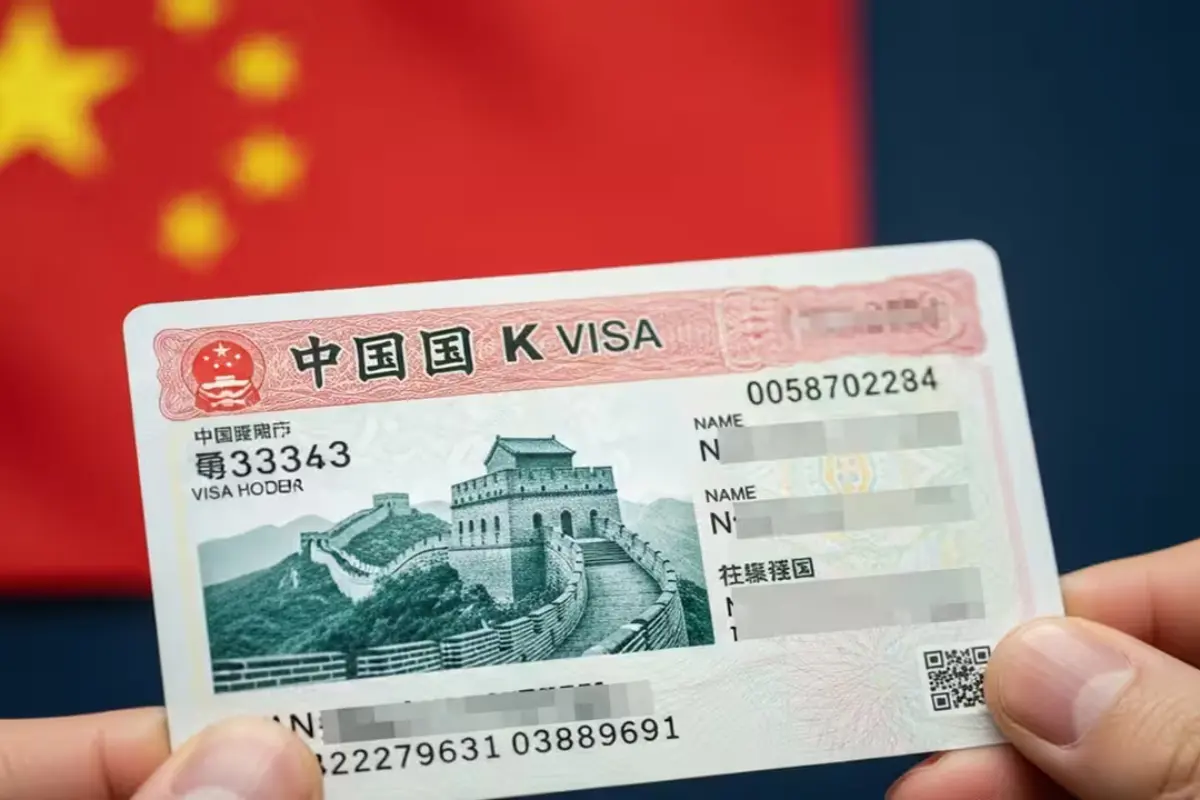
China K-Visa Sparks Public Backlash Amid Unemployment Crisis
Public Outcry Over China K-Visa Highlights Tensions Between Talent Attraction and Domestic Jobs
Beijing’s latest attempt to reshape its global talent strategy has sparked widespread debate at home. On October 1, 2025, China officially launched the new “K-visa” program, designed to attract young science and technology professionals from abroad. The initiative is being promoted as a powerful tool to fuel the country’s innovation drive, yet it has quickly ignited public anger in a nation where millions of educated youth are struggling to find jobs.
China K-Visa: A Bid to Compete with the US in Tech
Chinese officials have described the China K-visa as a forward-looking policy, signaling that Beijing is ready to welcome foreign researchers and engineers at a time when the United States is tightening its doors. President Donald Trump’s administration recently overhauled the H-1B visa program, slapping applicants with a $100,000 fee and restricting access for international students and skilled professionals.
Against that backdrop, China appears to be sending the opposite message: while Washington closes its borders, Beijing is opening them wider. Unlike the U.S. H1-B, the K-visa does not require applicants to secure an employer in China before applying, making it more flexible and appealing to global talent.
Social Media Outcry
The domestic response, however, has been anything but welcoming. Since its announcement, the China K-visa has dominated Chinese social media platforms, generating nearly half a billion views in just two days.
One viral comment captured the frustration of many:
“There are so many master’s degree holders here struggling to find jobs, and you are looking to bring in more talent from overseas?”
With China’s youth unemployment rate hovering near 19%, and a record 12.2 million college graduates entering a weak job market this year, resentment has boiled over. Critics argue that introducing a visa program for foreign professionals sends the wrong message to local jobseekers who are already under immense pressure.
China K-Visa: Rising Nationalism and Skepticism
Beyond economic anxieties, the backlash has also revealed a surge of nationalist and xenophobic sentiment online. Some commenters questioned whether the standards for applicants are too low, noting that a bachelor’s degree in STEM fields may not be stringent enough. Others warned of “endless consequences” if immigration policies expand.
In a strongly worded editorial, the Communist Party’s People’s Daily sought to calm the public mood, insisting that the K-visa is not an immigration pathway but a measure to “facilitate the work and life of young foreign talent in China.” The paper also pointed out that as other countries turn inward, China is seizing the opportunity to position itself as a global hub for innovation.
A Country Divided Over Talent Strategy
China has long aspired to rival the United States as a global technology powerhouse. Programs such as the R-visa for “high-level foreign experts” already exist, but the K-visa marks a shift toward younger, early-career talent—a move Beijing hopes will strengthen its research institutions and boost innovation in the face of U.S. export controls.
Yet the sharp backlash underscores the challenge of balancing these ambitions with the realities of a sluggish domestic economy. For many Chinese youth, the arrival of new foreign professionals feels less like an opportunity and more like a threat to already scarce jobs.
Also Read : Indian Student from Hyderabad Shot Dead During Night Shift