
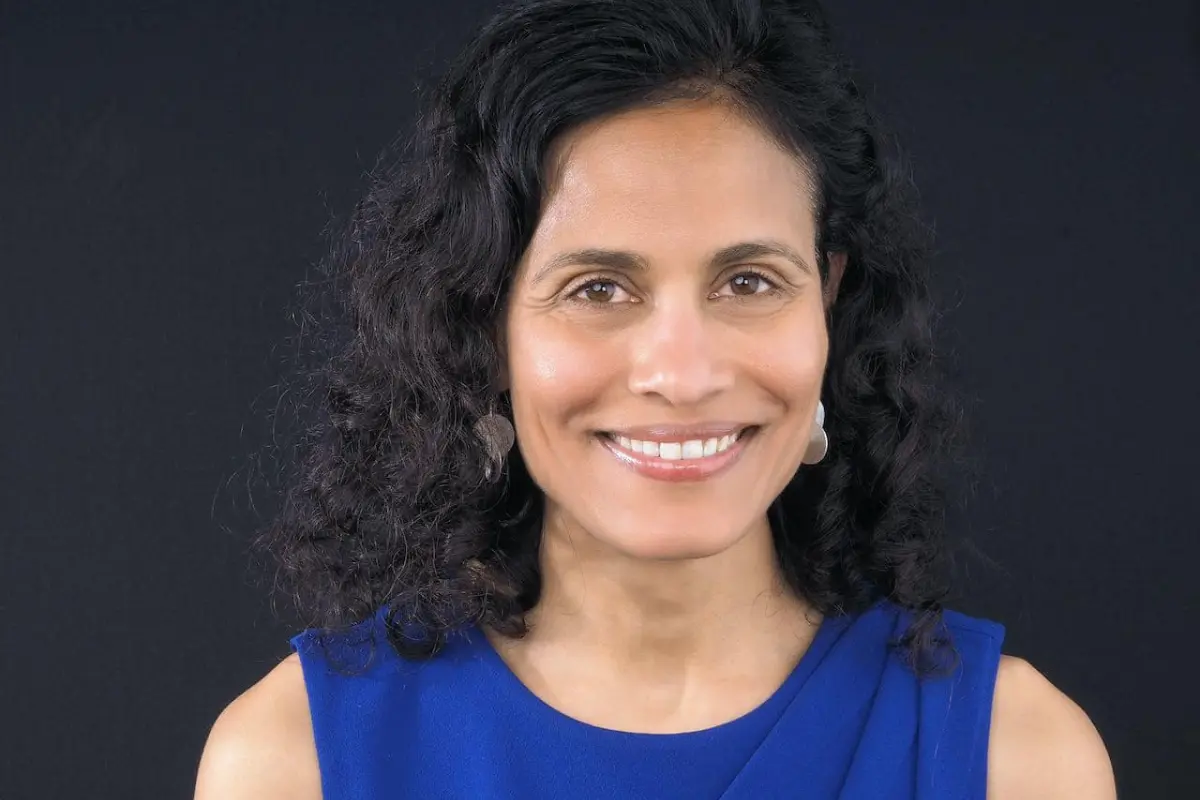
Born and raised partly in Halwara, India, Vandana Verma grew up in an environment shaped by discipline, exploration, and service. Her father, a pilot in the Indian Air Force, introduced her early to the idea that the sky was not a limit, but a beginning. Watching aircraft cut through clouds planted an early fascination with motion, control, and navigation—ideas that would later reappear in her work with planetary rovers.
Even as a child, Vandana Verma was drawn to understanding how things worked. Machines did not intimidate her; they invited questions. That mindset would become her greatest strength.
Academic Foundations of Vandana Verma: Building a Global Scientific Identity
Vandana Verma began her formal engineering journey at Punjab Engineering College, Chandigarh, earning a bachelor’s degree in electrical engineering. At a time when few women in India pursued advanced engineering careers, she distinguished herself through focus and technical depth.
Her ambitions soon took her across continents. At Carnegie Mellon University (CMU)—one of the world’s leading robotics institutions—she completed a master’s degree in robotics, followed by a PhD in 2005. Her doctoral research, “Tractable Particle Filters for Robot Fault Diagnosis,” addressed one of robotics’ most critical challenges: how machines detect, reason about, and recover from failures in unpredictable environments.
At CMU, Vandana Verma developed a defining research interest—robots operating in unknown, extreme, and hostile terrains. This theme would shape her entire career.
Learning from Earth’s Harshest Environments
Before sending robots to Mars, Vandana Verma tested them on Earth’s most unforgiving landscapes. She participated in a three-year astrobiology experimental station in Chile’s Atacama Desert, chosen for its uncanny resemblance to the Martian surface. She also deployed robotic systems in the Arctic and Antarctic, environments where isolation, cold, and uncertainty mirror extraterrestrial conditions.
These experiences reinforced a critical insight: autonomy is not a luxury in space—it is a necessity. Robots must think, adapt, and protect themselves when human intervention is delayed by millions of kilometres.
In parallel, Verma earned a pilot’s license, deepening her understanding of navigation, control systems, and situational awareness—skills that later proved invaluable in robotic operations.
Vandana Verma: From NASA Ames to a Revolutionary Breakthrough
Vandana Verma’s post-doctoral career began at NASA Ames Research Center, where she led robotics and autonomy research. It was here that she co-created one of the most influential technologies in modern space robotics: PLEXIL (Plan Execution Interchange Language).
Developed in 2006, PLEXIL is a formally verifiable, open-source programming language that allows spacecraft and robots to execute complex plans autonomously while remaining safe and predictable. Today, PLEXIL powers systems across NASA missions—including Mars rovers, the International Space Station, lunar prototypes, deep-space habitats, and autonomous satellite networks.
This contribution alone placed Vandana Verma among the world’s leading autonomy engineers.
Jet Propulsion Laboratory: Driving the Future of Mars Exploration
In 2007, Vandana Verma joined NASA’s Jet Propulsion Laboratory, where her career entered a historic phase. By 2008, she became part of the Mars rover operations team—an elite group responsible for commanding robotic explorers millions of kilometres away.
She has since worked on every major Mars rover mission:
-
Spirit
-
Opportunity
-
Curiosity
-
Perseverance
-
Ingenuity Helicopter
Operating a rover on Mars is nothing like driving on Earth. Commands can take up to 20 minutes to reach the rover, requiring meticulous planning, simulation, and teamwork. Engineers must live on Mars time, shifting their schedules by 40 minutes each day to align with the Martian sol.
As Vandana Verma once noted, teams darken windows, wear Mars watches, and restructure daily life—all to ensure robotic precision on another world.
Engineering Autonomy on Perseverance and Curiosity
As Chief Engineer of Robotic Operations for Mars 2020, Vandana Verma played a central role in enabling Perseverance’s advanced autonomy. Her work includes:
-
Onboard robotic arm collision detection
-
Autonomous robotic arm positioning
-
Autonomous science targeting (AEGIS)
-
Multi-mission onboard planning systems
-
Rapid flight software simulation frameworks
She also developed Surface Simulation (SSIM), a real-time flight software testing environment now used daily to verify commands for Curiosity and Perseverance.
Her technologies do not merely operate rovers—they allow them to think.
Leadership, Vision, and Mentorship
Today, Vandana Verma serves as a JPL Principal Engineer, Deputy Section Manager for Mobility & Robotics, and leader of the Autonomous Systems, Mobility and Robotic Systems Group. She has guided missions from early research through design, testing, launch, landing, and surface operations.
Beyond engineering, she is deeply committed to mentorship and science communication. Through JPL open houses, documentaries, and public talks, she inspires young minds—especially girls—to pursue careers in STEM.
Her message is simple yet powerful: curiosity belongs to everyone.
Vandana Verma: Awards and Recognition
Vandana Verma’s work has earned numerous NASA honours, including:
-
NASA Software of the Year Award
-
Multiple NASA Honors Awards for Mars rover teams
-
Mission-critical anomaly recovery awards
-
Autonomy and robotics excellence recognitions