
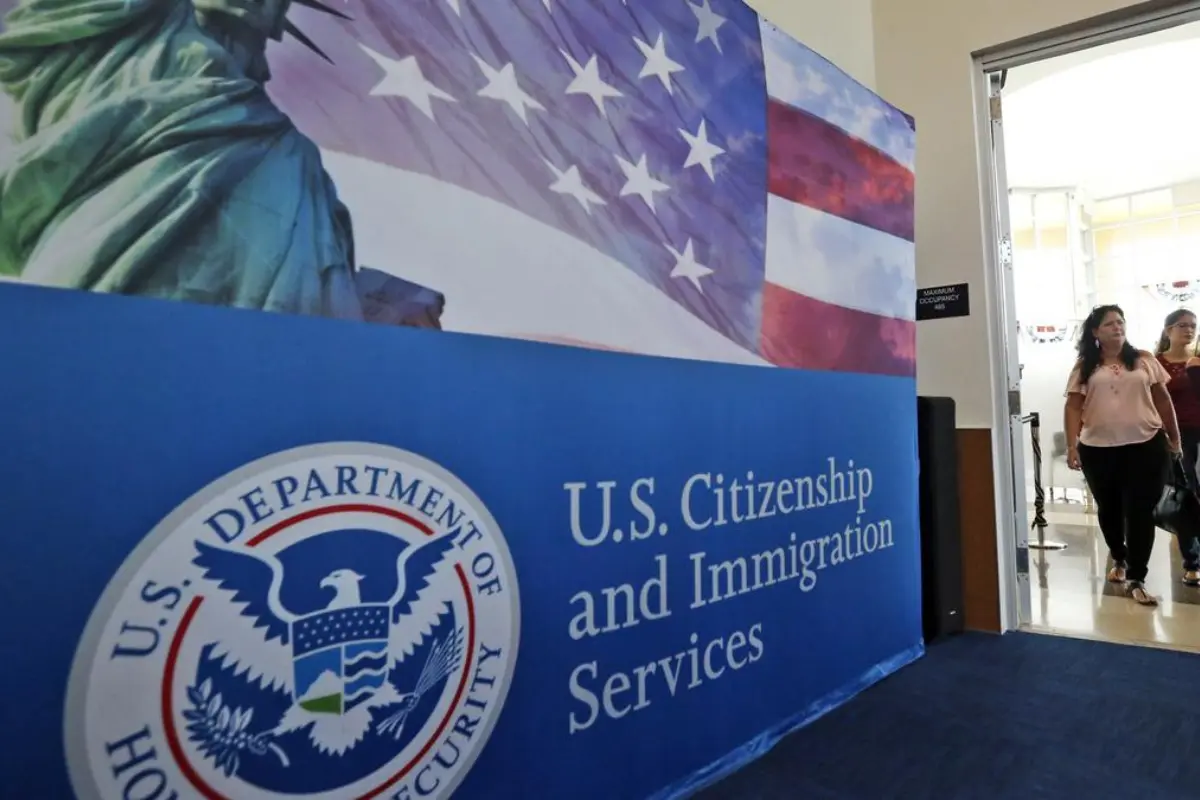
USCIS Confirms $100,000 H-1B Visa Fee Only for New Petitions
USCIS Issues Clarification: $100,000 H-1B Visa Fee Limited to New Applications Only
In a significant clarification welcomed by thousands of skilled foreign professionals and U.S. employers, the United States Citizenship and Immigration Services (USCIS) has confirmed that the recently announced $100,000 H-1B visa fee will not apply to petitions seeking a change of status or an extension of stay within the United States.
The move comes weeks after former U.S. President Donald Trump’s proclamation on September 19, 2025, which introduced a hefty one-time fee of $100,000 for new H-1B visa applications, drawing widespread concern from businesses, legal experts, and the international community.
According to the latest guidelines released by USCIS on Monday, the new fee applies only to fresh petitions filed for foreign workers who are outside the U.S. and do not hold a valid H-1B visa as of 12:01 a.m. EDT, September 21, 2025.
“The proclamation does not apply to any previously issued and currently valid H-1B visas or petitions submitted before September 21, 2025,” the USCIS statement read. “It also does not apply to petitions requesting an amendment, change of status, or extension of stay for individuals already inside the United States.”
USCIS: Relief for International Students and Existing Visa Holders
This clarification provides immense relief to international students on F-1 visas and employees on L-1 visas transitioning to H-1B status within the U.S. Without this exemption, many early-career professionals, especially from India, would have faced an unexpected financial hurdle when applying for their first work visa after graduation.
The USCIS has further clarified that current H-1B visa holders can continue traveling in and out of the United States without being affected by the proclamation. This assurance comes amid confusion and anxiety among visa holders who feared that even routine travel might trigger the new fee requirements.
Fee Applies to New Petitions Only
The $100,000 H-1B visa fee will still apply to new petitions filed for beneficiaries outside the country or to those whose petitions require consular processing, port of entry notification, or pre-flight inspection. The Trump administration has established a dedicated online portal for payment of the new fee, aiming to streamline the process for employers filing new H-1B petitions.
While no blanket exemptions have been announced, employers can request an exception in cases where a worker’s employment is deemed in the national interest and where no qualified American worker is available for the role.
USCIS: Legal Challenges Mount Over the $100,000 H-1B Visa Fee
The U.S. Chamber of Commerce has already filed a lawsuit challenging the legality of the proclamation, arguing that it violates the Immigration and Nationality Act (INA) and undermines existing provisions governing the H-1B programme. The chamber contends that such a fee could have a chilling effect on U.S. industries that rely on skilled international talent to fill crucial technology and innovation roles.
The lawsuit claims that the proclamation “overrides the statutory framework established by Congress” and could “inflict severe economic damage on sectors such as technology, healthcare, and research.”
Why It Matters to India
Indians have long been the largest beneficiaries of the H-1B visa programme, accounting for approximately 70% of all H-1B visa holders in the U.S. As of January 2025, data from advocacy group FWD.us, co-founded by Meta CEO Mark Zuckerberg, indicated there were 730,000 H-1B holders, with Indians comprising a majority of that population.
Indian IT companies continue to be among the biggest employers under the programme. Tata Consultancy Services (TCS) secured 5,505 H-1B approvals in 2025, second only to Amazon with 10,044 approvals, followed by Infosys (2,004), Wipro (1,523), and Tech Mahindra Americas (951).
For these firms, the $100,000 H-1B visa fee would have translated into substantial additional costs, potentially affecting hiring and project timelines. The latest USCIS clarification has therefore been seen as a strategic relief for ongoing projects and a stabilizing move for bilateral trade and tech relations between the U.S. and India.
Ongoing Uncertainty and Next Steps
Despite the clarification, questions remain about long-term policy direction under the Trump administration. Critics argue that such sudden visa-related policy shifts create instability and discourage foreign talent from choosing the United States as a destination for higher education and skilled employment.
Immigration analysts believe that while the fee exemption for extensions and status changes provides temporary relief, legal disputes and further administrative reviews are likely in the coming months.
Also Read : Sukanya Dutta: Strengthening Cross-Border Partnerships