
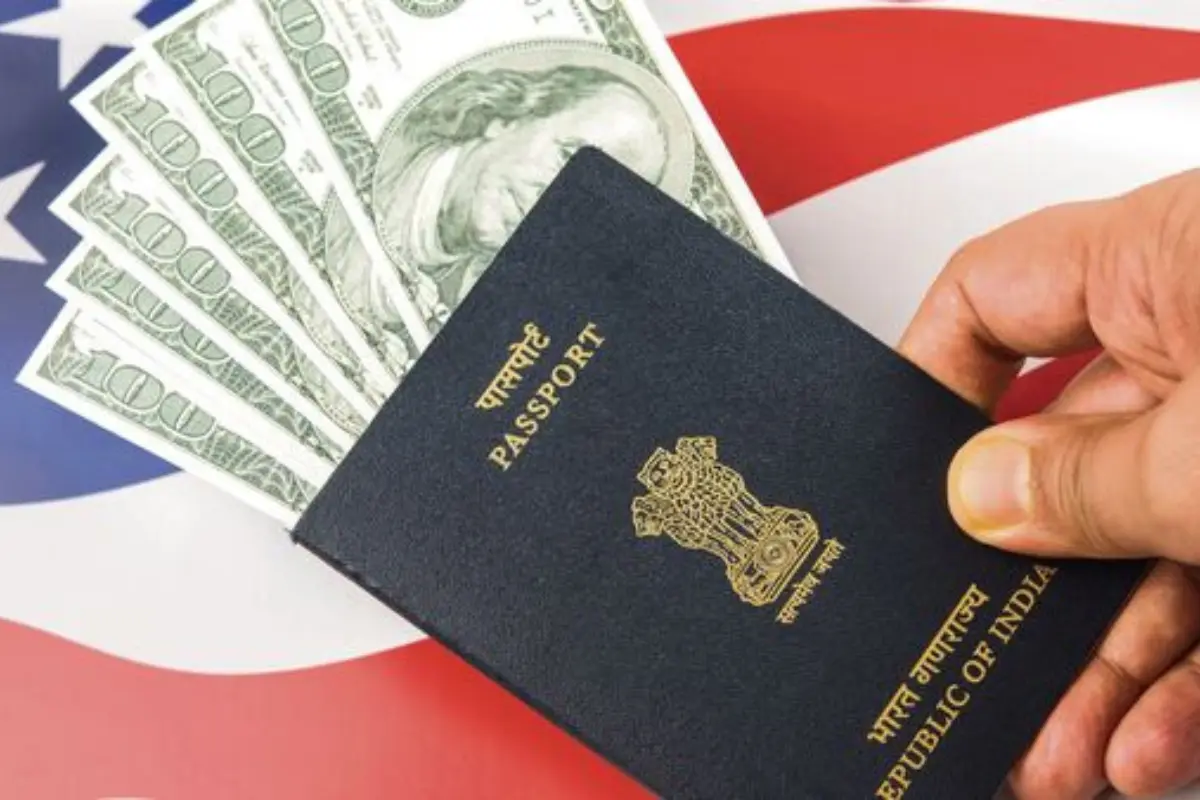
US Visa Integrity Fee to Raise Visa Costs for Indians
New $250 US Visa Integrity Fee to Hit Indian Tourists, Students, and H-1B Workers
In a sweeping immigration reform likely to reshape how Indians travel, study, or work in the United States, the newly introduced US Visa Integrity Fee is drawing sharp reactions from experts and stakeholders. Effective from 2026, this $250 surcharge will apply to nearly all non-immigrant visa categories, including B-1/B-2 (tourist/business), F and M (student), J (exchange), and H-1B (work) visas.
The US Visa Integrity Fee, part of President Donald Trump’s “One Big Beautiful Bill,” was signed into law on July 4 and enacted under the Omnibus Act. It aims to promote lawful compliance among visa holders while acting as a deterrent against overstays and misuse.
US Visa Integrity Fee: A Blow to Indian Aspirants and the Tech Industry
For Indian nationals, this change translates into a significant spike in visa expenses. The current cost of a US tourist or business visa is approximately $185 (₹15,855). With the new levies—$250 Visa Integrity Fee, $24 I-94 fee, and a $13 ESTA fee—the total visa expense is projected to soar to around $472 or ₹40,456, marking a 2.5-fold increase.
This has raised alarms among technology companies and aspiring Indian students. “The recently announced US Visa Integrity Fee will act as a deterrent for new classes of Indian students and travelers applying for a US visa,” said Keshav Singhania, Head – Private Client at Singhania & Co. “It’s crucial that applicants budget for the increased working capital requirement and ideally book their visa appointments before 2026,” he advised.
The fee could heavily affect Indian IT giants and multinational tech firms who rely on the H-1B visa to send skilled talent to the US. For them, each visa application just became significantly more expensive, potentially prompting a reevaluation of hiring strategies and visa sponsorships.
Security Deposit or Financial Burden?
While US authorities have labeled the US Visa Integrity Fee a refundable security deposit, critics argue that the refund process is rigorous and inaccessible for most. To qualify, visa holders must either:
-
Leave the United States within five days of their visa’s expiration without applying for an extension or a change in immigration status, or
-
Secure an approved adjustment to permanent residency before their I-94 record (the arrival/departure document issued by Customs and Border Protection) expires.
Even under these strict conditions, applicants must present extensive documentation to support their refund claim. If these criteria aren’t met, the $250 fee is forfeited to the US Treasury.
“For tourists, this may be manageable. But for students or H-1B professionals who may stay for years or go through multiple status adjustments, the refund could remain locked indefinitely,” Singhania added.
US Visa Integrity Fee: Annual Increase and No Waivers
The Visa Integrity Fee isn’t a one-time surcharge either. Starting in 2026, it will be revised annually based on the Consumer Price Index (CPI), effectively turning it into an inflation-linked recurring cost. Moreover, the surcharge will be mandatory regardless of an applicant’s financial background or nationality, with no waivers, except for diplomats under A and G categories.
Additional charges under the new visa framework include:
-
$24 I-94 fee for all non-immigrant visa holders,
-
$13 ESTA fee for Visa Waiver Programme travelers, and
-
$30 EVUS fee for Chinese nationals with 10-year B-1/B-2 visas.
Ripple Effects on Cultural and Educational Exchange
The timing of this reform could not be more critical. The US has traditionally been a favored destination for Indian students, drawing over 200,000 enrollees annually. With the cost of student visas also seeing a sharp rise, there are concerns that many meritorious students from low-income backgrounds may be discouraged from applying.
Likewise, cultural and academic exchanges under the J visa could see a dip, affecting bilateral ties and global collaboration.
Refund Process: A Long Road Ahead
The US State Department is expected to release detailed guidelines soon on the operational aspects of the Visa Integrity Fee refund. However, immigration experts suggest that until those rules are clear, applicants should not rely on the refund as a guaranteed return.
The possibility of reclaiming the surcharge hinges entirely on precise timing and strict legal compliance—factors that could be hard to manage for students transitioning to jobs or H-1B workers navigating green card processes.
Also Read : Balbir Singh BEM: A 55-Year Legacy of Bhangra