
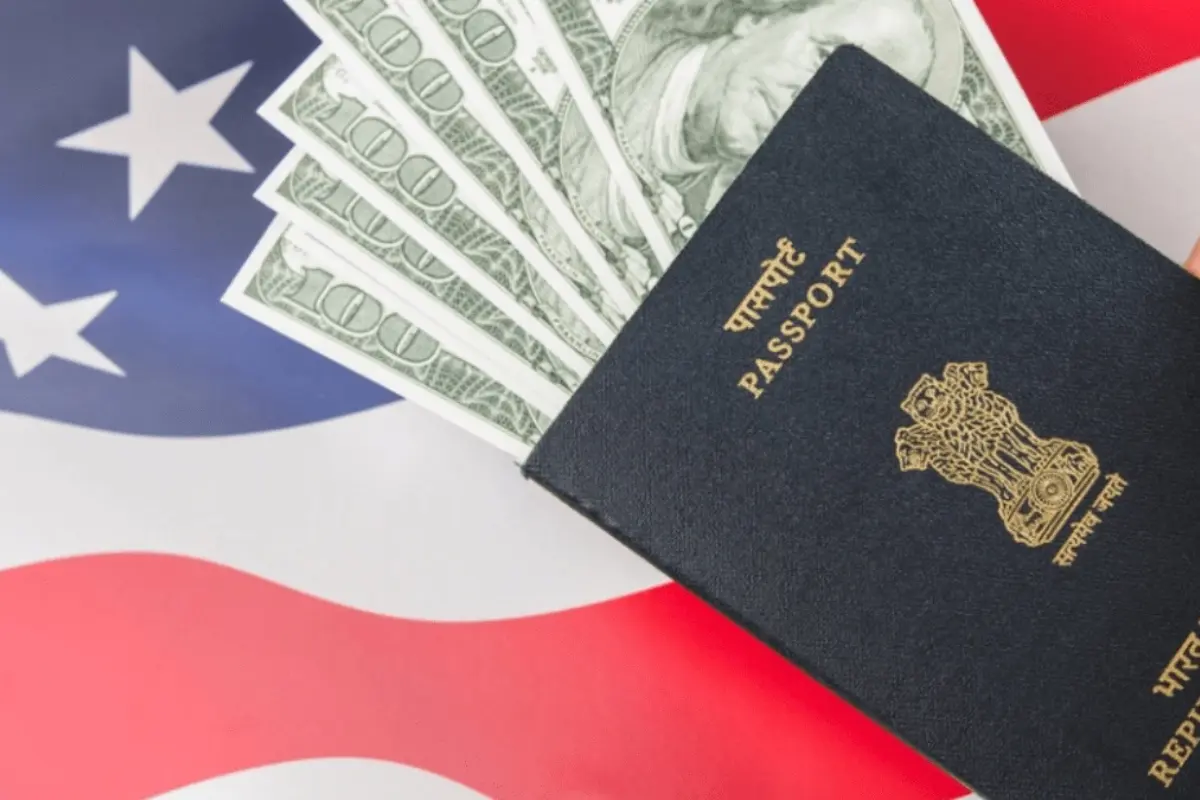
US Visa Delays for Indians Deepen Despite Record Demand
US Visa Delays for Indians Worsen as 221(g) Reviews and Social Media Checks Increase
Planning a trip to the United States but stuck in visa limbo? If so, you are far from alone.
US visa delays for Indians have emerged as a growing concern, with thousands of applicants facing extended wait times and unexpected holds on their applications. Immigration experts say tighter background checks, expanded social media scrutiny, and renewed enforcement priorities have slowed visa processing in what is already the United States’ largest revenue-generating visa market.
Over the past year, a sharp increase in Section 221(g) notices — temporary visa refusals that allow consular officers to conduct additional verification — has left many Indian applicants uncertain about their travel plans, careers, and legal status.
Why Are US Visa Delays for Indians Increasing?
The current trend gained momentum after President Donald Trump assumed office in January 2025, bringing with him a renewed focus on stricter immigration controls. While the administration has acknowledged occasional errors in enforcement, there has been little evidence of a broader policy relaxation.
Indians are among the most affected. According to US Citizenship and Immigration Services, Indian nationals accounted for more than 70% of H-1B visas issued in FY24, making them particularly vulnerable to policy shifts and procedural slowdowns.
Section 221(g) of the US Immigration and Nationality Act allows consular officers to place applications on hold when further review is deemed necessary. While the provision itself is not new, immigration attorneys say the threshold for triggering such reviews has dropped significantly.
“We are seeing a noticeably higher rate of 221(g) notices,” said Joel Yanovich, an attorney at Murthy Law Firm. “Even applicants who have cleared multiple visa interviews in the past are now encountering delays after their appointments.”
Old Arrest Records and Social Media Checks Raise Red Flags
One of the most troubling aspects of the current situation is the scrutiny of long-resolved legal issues. Gnanamookan Senthurjothi, founder of Visa Code, noted that applicants with arrest records dating back more than a decade are now being flagged for additional review.
“Since May 2025, we have seen cases where individuals with clean travel histories and multiple prior visa stampings are receiving 221(g) notices,” he said. “Some have even had valid visas revoked, leaving them stranded outside the US.”
Adding to the uncertainty, Xiao Wang, founder of Boundless Immigration, reported a rise in what are termed “prudential revocations,” where visas are withdrawn without detailed explanations. He also highlighted an unusual increase in biometric requests for H-1B applicants, a step that was previously rare.
US Visa: Longer Reviews, Fewer Appointments
The expansion of social media vetting has further slowed processing times. Officers are now required to conduct deeper evaluations of online activity, extending review periods for nearly every application.
“All applications are taking longer,” Wang explained. “Each case now involves more judgment calls and verification, which slows down the entire system.”
Scheduling issues have compounded the problem. Mass appointment cancellations in December left many applicants who had already departed the US scrambling for alternatives. Although some appointments were initially rescheduled for early 2026, several have since been pushed as far out as November.
What Applicants Are Being Asked to Submit
Applicants placed under 221(g) review are increasingly being asked to submit additional documentation, including police clearance certificates and, in some cases, toxicology reports. While these requests indicate that cases are moving forward, experts say hundreds of Indian applicants remain caught in prolonged uncertainty.