
US Tariffs on India May Be Lifted After Imports Decline
Future of US Tariffs on India, Russian Oil in Question After Import Slump
US Tariffs on India: The United States may be preparing to soften its hard line on India’s Russian oil imports, with Treasury Secretary Scott Bessent signaling that the controversial US tariffs on India’s Russian oil could eventually be lifted after Washington declared its pressure campaign a success.
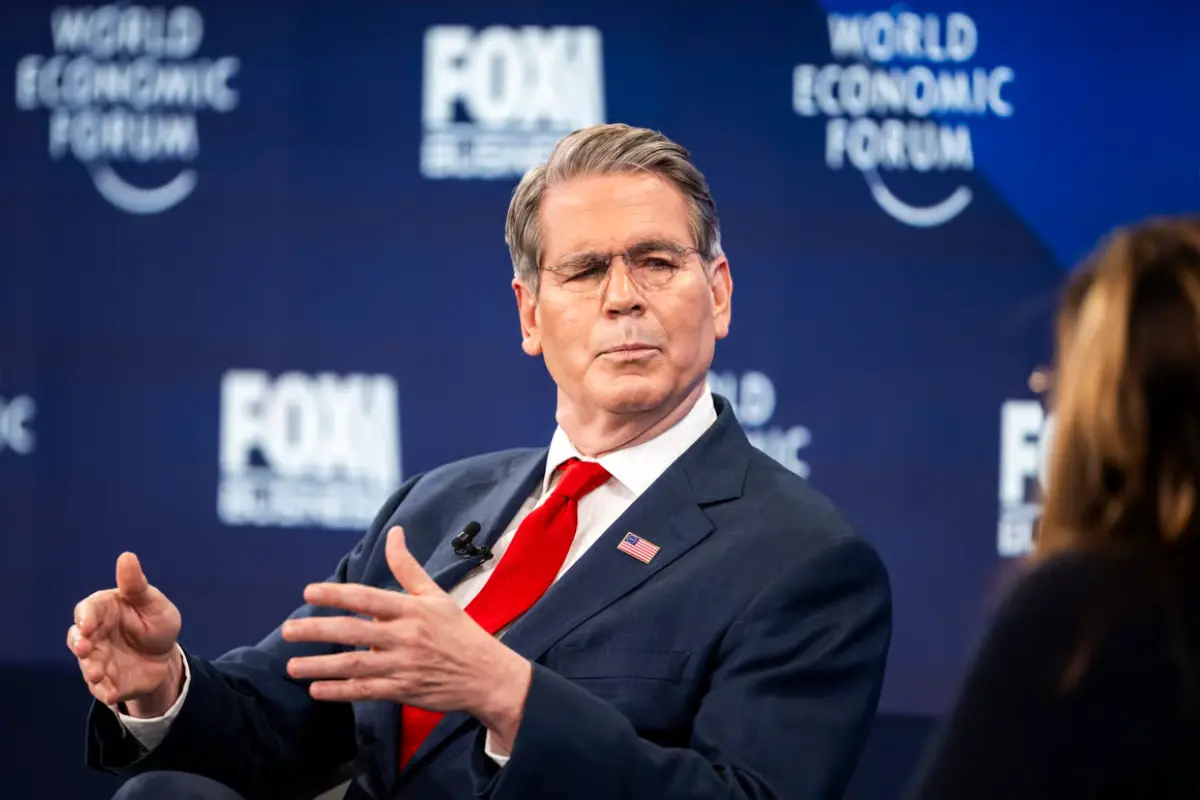
Speaking at the World Economic Forum in Davos, Bessent said the 25 per cent penalty tariffs imposed on India for buying Russian crude had sharply reduced such purchases, validating the Biden administration’s strategy of using trade levers to influence New Delhi’s energy choices amid the Ukraine war.
“We put 25 per cent tariffs on India for buying Russian oil, and the Indian purchases by their refineries of Russian oil have collapsed,” Bessent said. “So that is a success. The tariffs are still on. I would imagine there is a path to take them off.”
US Tariffs on India: Washington Claims Strategic Win
According to Bessent, Russia accounted for just 2–3 per cent of India’s oil imports before Moscow’s invasion of Ukraine. That share surged into the high teens after Western sanctions disrupted global energy markets, with Indian refiners snapping up discounted Russian crude.
However, US officials now say those numbers are falling rapidly. Estimates cited by Bessent suggest Indian imports of Russian crude declined by nearly 29 per cent month-on-month, touching their lowest levels since 2022, though not dropping to zero.
The decline, Washington argues, reflects the impact of US tariffs on India’s Russian oil, which were designed to make Russian supplies less commercially attractive without directly sanctioning India.
Sharp Words for Europe
While hinting at tariff relief for India, Bessent used unusually blunt language to criticize Europe’s approach. He accused the European Union of moral inconsistency for avoiding tariffs on Indian imports while continuing to buy refined fuel products made from Russian crude.
The EU’s actions, he said, amounted to indirectly financing Moscow’s war effort. Calling the situation an “ultimate act of irony and stupidity,” Bessent suggested that Europe had undermined its own sanctions regime by outsourcing refining to India.
His remarks come at a sensitive moment, with the EU and India reportedly on the verge of concluding a long-pending free trade agreement that has been under negotiation for nearly two decades.
US Tariffs on India: Trade Tensions Multiply
The impending EU–India deal appears to have irritated Washington, which has intensified its rhetoric against trading partners accused of benefiting unfairly from access to US markets. President Donald Trump, who has returned to the White House, has repeatedly claimed the United States has been “ripped off” by allies and rivals alike.
In a separate escalation, Trump this week threatened Canada with a 100 per cent tariff after accusing Ottawa of allowing Chinese goods to enter the US through backdoor trade arrangements. The warning followed Canada’s recent trade engagements with Beijing.
Critics Point to US Contradictions
Bessent’s comments have also drawn criticism from analysts who point out that the US itself continued importing Russian uranium until recently. Others argue that the Trump administration’s softer diplomatic tone toward Moscow has done little to advance a negotiated end to the Ukraine conflict.
These contradictions, critics say, weaken Washington’s moral authority when enforcing US tariffs on India, Russian oil or urging other countries to cut energy ties with Russia.
US–India Trade Deal Still Elusive
The tariff debate is unfolding alongside stalled negotiations on a broader US–India trade agreement. Commerce Secretary Howard Lutnick suggested last week that talks were delayed because Prime Minister Narendra Modi had not personally reached out to President Trump.
New Delhi has firmly rejected that claim. Indian officials said Modi has spoken with Trump at least three or four times since Operation Sindoor, covering a wide range of strategic and economic issues.
They clarified, however, that detailed trade negotiations are handled by officials, not by the prime minister himself. “Under our system, the PM does not negotiate the nitty-gritty,” an official said, adding that Modi would be “happy to call President Trump when the trade deal is concluded.”
No timeline has been set for the agreement.