
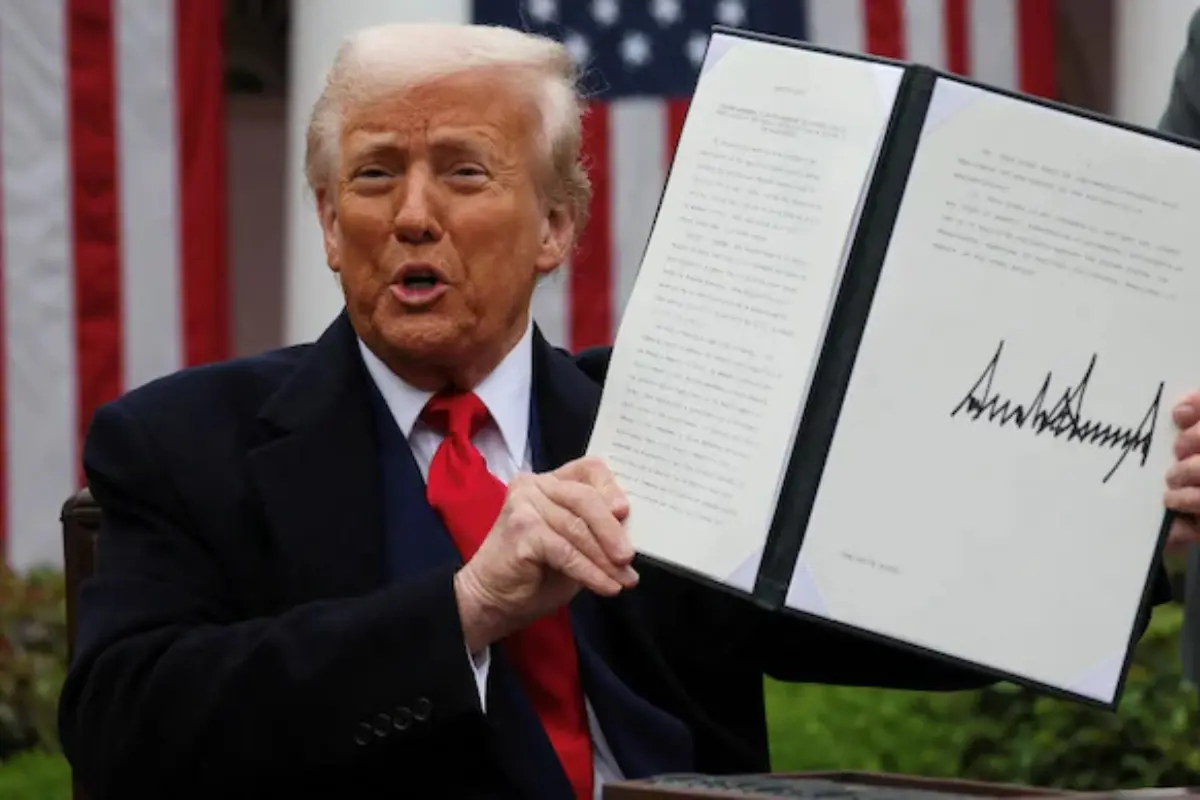
US Supreme Court: Trump Tariffs on India Ruled Illegal
US Supreme Court Trump Tariffs Ruling: Will Indian Exporters See Refunds or Just Relief?
In a decision that could reshape global trade dynamics, the US Supreme Court Trump Tariffs Ruling has declared that sweeping tariffs imposed during the administration of Donald Trump were illegal. The 6-3 split verdict has triggered a wave of legal, economic and diplomatic questions — especially for India, one of the hardest-hit countries under the controversial tariff regime.
But the central question remains: Will Indian exporters receive any refunds or compensation?
US Supreme Court Strikes Down Emergency Tariffs
The ruling invalidated tariffs that were imposed under the International Emergency Economic Powers Act (IEEPA), a law traditionally used to address national security threats rather than broad trade measures.
The Court upheld a lower court decision that President Trump exceeded his authority by using emergency powers to levy sweeping import taxes. However, while the judgment dismantled the legal foundation of the tariffs, it stopped short of addressing whether billions of dollars already collected must be refunded.
Justice Brett Kavanaugh, in his dissent, acknowledged the complexity ahead. He noted that the Court provided no clarity on “whether, and if so, how” the government should return the billions collected — warning that the process could be a “mess.”
Who Actually Paid the Tariffs?
One critical detail is often misunderstood in public discourse: tariffs are paid by importers, not exporters.
In the case of India, American companies importing Indian goods bore the direct cost. These higher costs were typically passed on to US consumers, contributing to inflationary pressures.
Indian exporters did not pay the tariffs directly. However, they suffered indirectly as higher prices made Indian products less competitive in the US — India’s largest export market.
US Supreme Court: Why India Was Hit Hard
India was among the first countries targeted when “reciprocal” tariffs were announced on April 2, 2025. With additional punitive duties linked to India’s continued purchase of Russian oil, total tariffs climbed as high as 50% — the steepest rate faced by any country at the time.
Although tariffs were later reduced to 18% after trade negotiations progressed earlier this year, significant damage had already been done to sectors such as textiles, engineering goods, auto components and pharmaceuticals.
The US Supreme Court Trump Tariffs Ruling now removes the legal backing for those emergency-based duties. But whether that translates into financial recovery is another matter.
Will Indian Exporters Get Refunds?
The short answer: Highly unlikely.
Because US importers paid the tariffs, any refunds — if ordered — would flow through the administrative processes of U.S. Customs and Border Protection and be overseen by the United States Court of International Trade.
There is currently no mechanism under US law to compensate foreign exporters for lost business, disrupted supply chains, or investments made to offset tariff shocks.
Economists have previously warned that even if the tariffs were ruled unlawful, the path to financial recovery would be narrow and prolonged. Refund claims would likely require formal filings, legal reviews, and potentially years of litigation.
Moreover, billions of dollars tied up in customs bonds and collateral complicate the process further.
What About Indian Companies Operating in the US?
If an Indian company functions as an importer within the US market and directly paid the tariffs, it may technically be eligible to file for refunds. However, trade attorneys caution that:
-
Refund timelines could stretch for years.
-
Courts must first clarify procedural guidelines.
-
Administrative backlogs could slow payments significantly.
As Justice Kavanaugh indicated, this is legally “uncharted territory.”
A Boost for Indian Exporters Going Forward
While retrospective refunds appear doubtful, the ruling carries important forward-looking benefits.
With the emergency tariffs removed:
-
Indian goods regain pricing competitiveness.
-
US importers face lower costs.
-
Consumer demand could stabilise.
-
Supply chains may normalize.
If US importers pass on savings or renegotiate contracts, Indian exporters could gradually recover lost ground.
In effect, the US Supreme Court Trump Tariffs Ruling may not repair past losses — but it strengthens future trade prospects.
US Supreme Court: Impact on India-US Trade Talks
The verdict also reshapes ongoing India-US trade negotiations.
With emergency tariffs off the table, roughly 55% of Indian exports to the US would revert to standard Most Favoured Nation (MFN) rates rather than the 18% reciprocal tariff structure.
This gives New Delhi additional leverage in negotiations and reduces immediate pressure to make concessions under duress.