
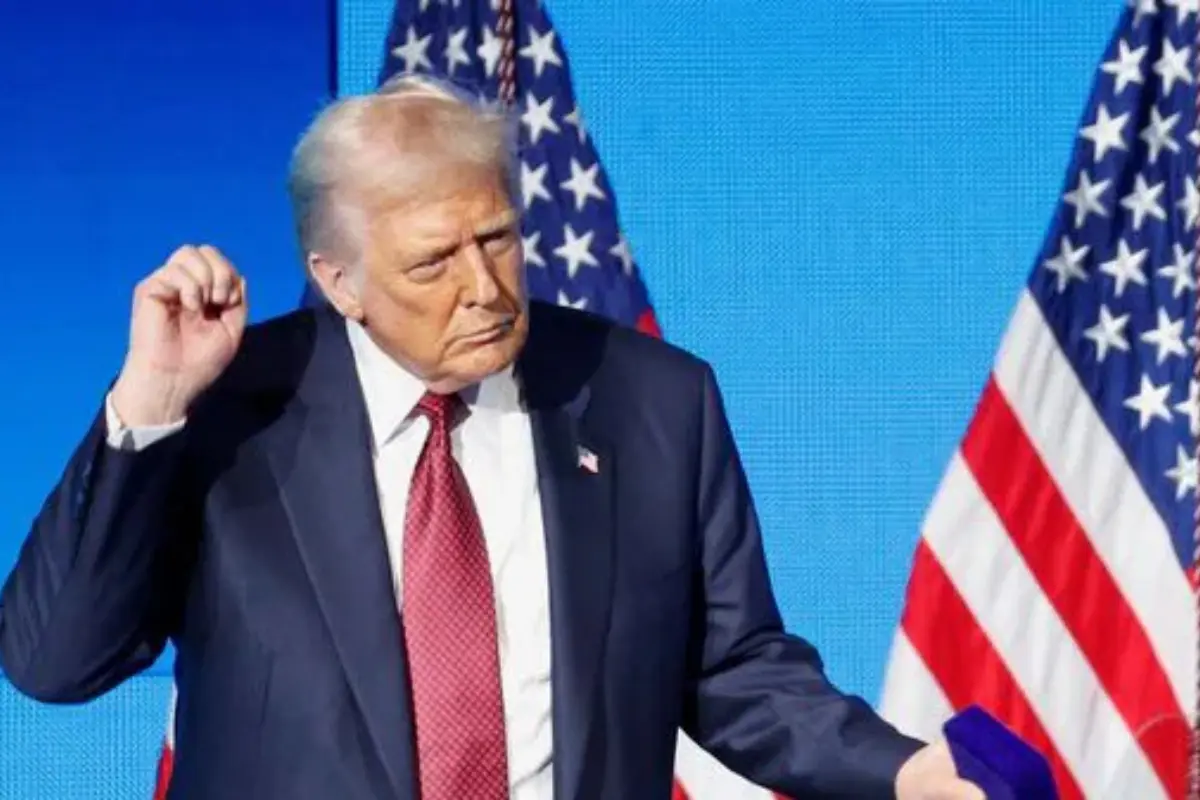
US Supreme Court skeptical of Trump tariffs
US Supreme Court Grills Trump Lawyers in Landmark Tariffs Case on Presidential Powers
In a marathon two-and-a-half-hour session that could redefine the balance of power between the White House and Congress, the Trump Tariffs Supreme Court Case unfolded on Wednesday with unusually pointed questioning from the bench. What began as a technical debate over trade law soon exposed the deepest fault lines in America’s constitutional order.
The case, formally known as Trump vs VOS Selections Inc. and Learning Resources, Inc. vs Trump, challenges the legality of sweeping tariffs imposed by former President Donald Trump under the International Emergency Economic Powers Act (IEEPA) — a 1977 law originally designed for sanctions during national emergencies, not for broad economic policy.
US Supreme Court: Neal Katyal’s Defining Moment in the Trump Tariffs Case
Leading the charge against the administration’s position was Neal Katyal, the Indian-American legal titan and former acting U.S. Solicitor General. Representing small businesses crushed by import duties as high as 145 percent on Chinese goods, Katyal argued that the Constitution reserves the taxing power to Congress — not the president.
“Tariffs are taxes,” Katyal declared in his opening statement. “And only Congress, under Article I, holds the authority to impose them.” He contended that IEEPA authorizes embargoes and quotas, but not revenue-raising tariffs. “The founders made this distinction for a reason,” he said, invoking the spirit of Madison and the nondelegation doctrine that limits executive overreach.
The courtroom, packed with business leaders, trade experts, and international observers, hung on every word. Even seasoned legal analysts described Katyal’s performance as “surgical,” combining constitutional logic with emotional appeal.
Supreme Court Skepticism Across the Spectrum
The justices — including some of the conservative bloc appointed by Trump himself — showed deep unease with the government’s argument. Chief Justice John Roberts, known for defending institutional integrity, questioned why the IEEPA made no explicit mention of tariffs. “Congress knows how to write ‘tariff’ when it means tariff,” Roberts noted pointedly.
Justice Neil Gorsuch, a textualist and one of the court’s strongest voices on limiting executive power, went further, warning that accepting the administration’s interpretation could create a “one-way ratchet” that “swallows the Constitution.”
Even Justice Amy Coney Barrett reflected on the practical implications of striking down the tariffs, noting it could trigger “a logistical nightmare” of refunds and recalculations across industries. Despite the 6–3 conservative supermajority, the tone of the questioning suggested a rare bipartisan skepticism toward unchecked presidential authority.
US Supreme Court: Trump Defends His Policy as ‘A Matter of Survival’
Outside the courtroom, former President Donald Trump remained defiant, calling the Trump Tariffs Supreme Court Case a “matter of life and death” for America’s future. In a string of social media posts, he warned that without tariff power, “the U.S. could end up as a third-world country.”
“If our country was not able to protect itself by using tariffs against tariffs, we would be dead — with no chance of survival or success,” Trump asserted. He had initially planned to attend the hearing but later backed out, saying his presence would be a distraction.
Administration officials have already hinted at a “Plan B” to maintain tariff pressure even if the Supreme Court rules against them. Treasury Secretary Scott Bessent defended Trump’s approach, dismissing Katyal’s arguments as “academic misunderstandings of real-world trade threats.”
Economic and Political Stakes of the Trump Tariffs Supreme Court Case
The financial implications of the ruling are enormous. The so-called “Liberation Day Tariffs” have generated more than $100 billion for the U.S. Treasury since their introduction, but critics say the policy has effectively taxed American consumers instead. Economists estimate that it costs the average U.S. household about $1,200 a year in higher prices for everyday goods.
Trump rejects those numbers, citing corporate discounts and consumer deals as proof that prices have fallen. On Thursday, he highlighted Walmart’s 25 percent price cut on its Thanksgiving dinner package as “evidence that tariffs work.”
However, trade analysts argue that temporary discounts cannot offset the structural rise in import costs. The National Retail Federation, which represents thousands of small businesses, has warned that uncertainty over tariff legality has disrupted supply chains and discouraged long-term investment.