
Trump-Putin Talks: India-US Tariff Uncertainty Rises
Trump-Putin Talks Leave India US Tariff Uncertainty Hanging Over Exports
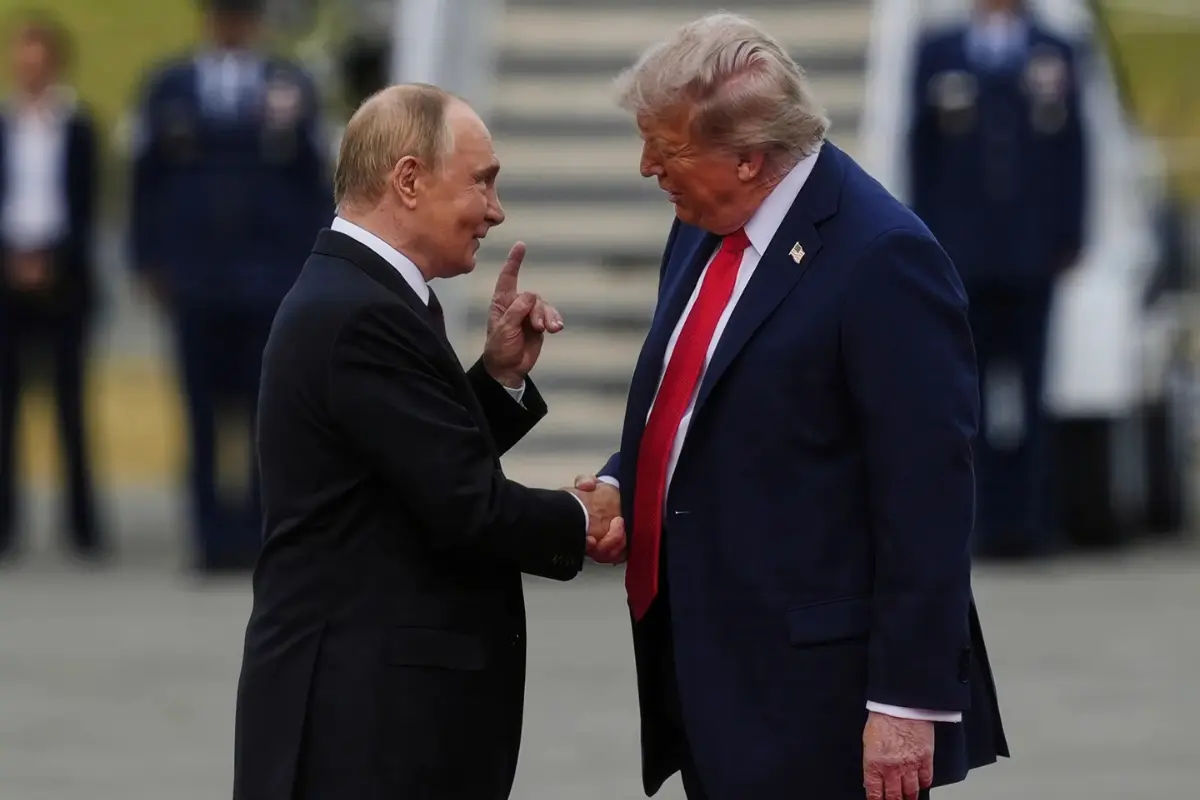
India’s hopes of a reprieve from the looming 25 per cent US tariff on its exports have been thrown into doubt after the Alaska summit between Donald Trump and Vladimir Putin ended without a breakthrough. While the talks stopped short of collapse, the lack of a concrete agreement has left India navigating a new phase of India-US tariff uncertainty tied directly to Washington’s Ukraine strategy.
Trump-Putin Talks: The Summit – Ambition Without Closure
At their joint press appearance in Alaska, Russian President Vladimir Putin struck an optimistic tone, claiming the two leaders had reached an “agreement” that could pave the path toward peace in Ukraine. Trump, however, was more cautious, reiterating, “There’s no deal until there’s a deal.” He admitted that a few sticking points remained, one of which he called “the most significant,” though he refrained from identifying it.
Rather than settling for a limited ceasefire, Trump and Putin appeared to elevate their ambitions toward a comprehensive peace settlement. Trump’s social media post following the summit captured this aspiration: “The best way to end the horrific war in Ukraine is to go directly to a Peace Agreement and not a mere pause or ceasefire.”
Trump has since briefed Ukrainian President Volodymyr Zelenskyy and key European leaders, with Zelenskyy expected in Washington for a White House meeting on Monday. If European allies rally behind the US, there is growing speculation about a trilateral meeting between Trump, Putin, and Zelenskyy — one that could reshape the trajectory of the Ukraine conflict.
Tariff Pressure on India
Delhi’s immediate anxiety, however, lies in the economic pressure Washington has chosen to impose. As part of Trump’s strategy to push Moscow toward compromise, the US has announced an additional 25 per cent tariff on Indian exports. This penalty is explicitly tied to India’s continued imports of discounted Russian crude — a move that has strengthened India’s energy security but placed it at odds with the West.
US Treasury Secretary Scott Bessent has warned that even harsher measures could follow if peace talks fail, with Congress considering legislation that would allow tariffs of up to 500 per cent on countries aiding Russia’s war economy. For New Delhi, the signal is clear: its energy choices have become deeply entangled in the geopolitical calculations of Washington and Moscow.
Trump-Putin Talks: India’s Balancing Act
Since 2022, India has emerged as one of the largest buyers of discounted Russian oil, helping to stabilize its domestic energy needs while benefiting from lower costs. Yet, this strategy has now become a double-edged sword. By turning to Russian crude, India inadvertently placed itself in the middle of a diplomatic tug-of-war between major powers.
For Prime Minister Narendra Modi’s government, the priority is to convince Washington to postpone or withdraw the additional tariffs, particularly as the August 27 implementation deadline approaches. Trump, in a TV interview after the summit, hinted that he would revisit the oil-related tariffs within “a couple of weeks,” depending on whether meaningful progress is made in Ukraine.
Broader Implications for Global Power Relations
Beyond the trade dimension, the Alaska summit may mark the beginning of a broader reset in relations between the US, Russia, and Europe. Putin emphasized the potential for US-Russia cooperation in fields ranging from outer space to Arctic development, drawing historical parallels to the wartime alliance of World War II. Trump, meanwhile, has staked significant political capital on forging a partnership with Moscow, though strong resistance within Washington and across Europe continues to cast doubt on his ability to deliver a lasting peace deal.
For India, the stakes extend beyond tariffs. Any shift in great power relations — whether toward reconciliation or renewed confrontation — will ripple across New Delhi’s strategic calculus, from energy policy to its positioning between Washington, Moscow, Beijing, and Brussels.
Also Read : China Introduces New K Visa for Young Scientists