
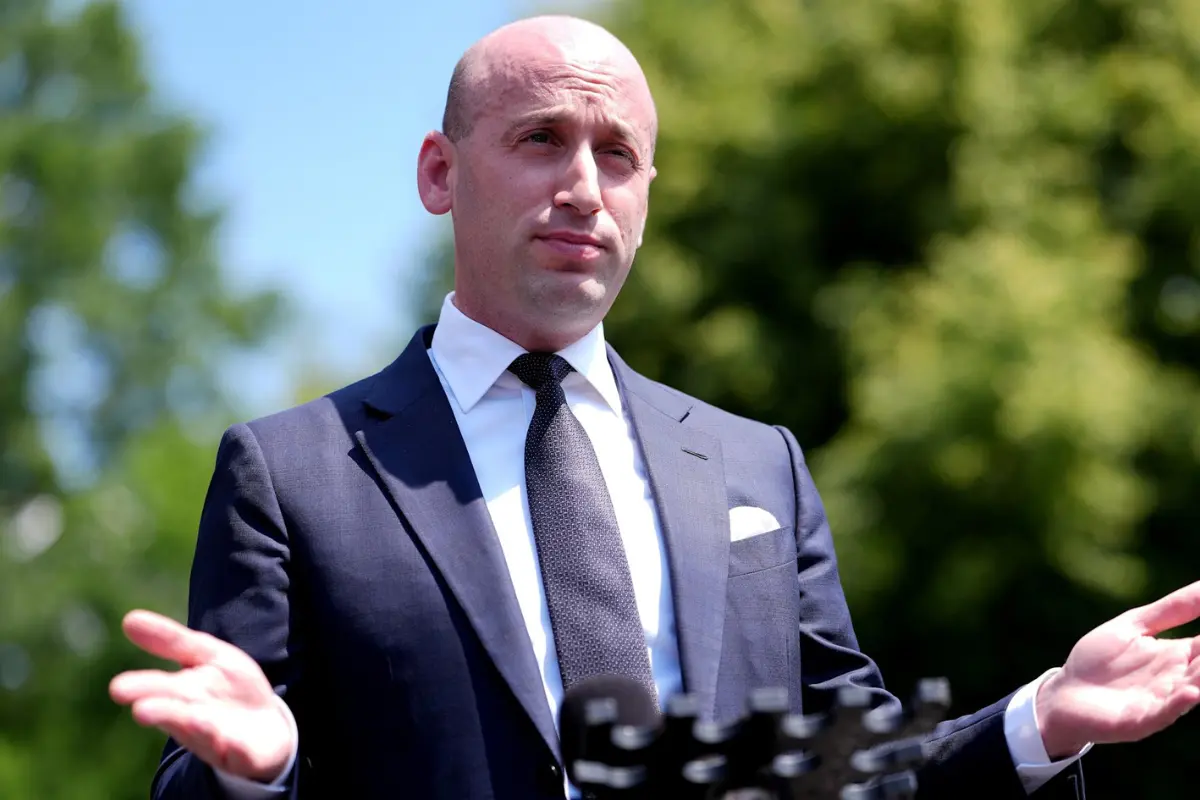
Trump promised to deport the worst of the worst, Stephen Miller knew better
Trump’s Deportation Agenda Escalates: 3,000 Arrests Per Day Now the Minimum
In his second inaugural address, President Donald Trump reignited a familiar but increasingly contentious pledge — to deport “millions and millions of criminal aliens back to the places from which they came.” This time, however, the message, veiled in tough-on-crime rhetoric, has quickly unraveled into what critics call an aggressive and indiscriminate mass deportation policy, deeply impacting both undocumented immigrants and the very communities that helped elect him.
At the heart of this push is Stephen Miller, Trump’s long-time policy architect and White House deputy chief of staff. For Miller, the focus has never been solely on “criminals” — a word that once reassured Trump’s base. Instead, it’s always been about the numbers. NBC News revealed that during a tense meeting last week, Miller scolded top officials at Immigration and Customs Enforcement (ICE) for failing to meet arrest expectations. He reportedly threatened to fire field office leaders who fell into the bottom 10% of monthly arrests.
Miller’s fury didn’t stop at reprimands. He set a new, unprecedented quota of 3,000 arrests per day across ICE’s 25 field offices — doubling January’s target. On Fox News, he proudly confirmed the new figure as the “minimum,” stating Trump would push to increase it further. The administration’s mass deportation policy now aims to hit 1 million deportations in Trump’s first year back in office, surpassing any prior enforcement levels in modern U.S. history.
But what’s drawing sharp criticism is the blatant broadening of ICE’s mandate. Miller has urged agents to detain noncriminal migrants wherever they find them, including those who had previously received court-granted protections. Migrants are now being arrested immediately after their cases are dismissed in court, turning legal appointments into perilous traps.
Karoline Leavitt, the White House press secretary, insisted in March that deportation efforts remain focused on “heinous monsters, rapists, murderers.” But the administration’s actions increasingly suggest otherwise. In small towns and suburbs, longtime residents who pose no threat are being rounded up — and even Trump’s own supporters are starting to take notice.
Donald Trump: A Town’s Wake-Up Call
In a quiet Missouri town, the story of Ming Li Hui, known as Carol, has become emblematic of the confusion and pain surrounding the mass deportation policy. After living in the U.S. for two decades, working as a waitress and housecleaner, Hui now faces removal to Hong Kong. Her friends are stunned.
“I voted for Donald Trump, and so did practically everyone here,” said Vanessa Cowart, a local church member. “But no one voted to deport moms. We were all under the impression we were just getting rid of the gangs, the people who came here in droves.” She paused before adding: “This is Carol.”
This disconnect between Trump’s original messaging and the policy now unfolding has led to feelings of betrayal and disbelief. For many, it’s the first time they’re confronting the consequences of Trump’s immigration agenda beyond its slogans.
Policy by Punishment
Trump and Miller’s agenda hinges on a radical reinterpretation of immigration law. Under current U.S. law, unauthorized entry is a civil, not criminal, offense — yet Miller continues to blur this distinction. His earliest executive orders aimed to make all undocumented immigrants, regardless of criminal background, fair game for deportation. Now, this strategy has metastasized into something far more sweeping.
Critics argue that this mass deportation policy is less about national security and more about ideology. By targeting nonwhite, noncriminal immigrants, the administration has made it clear: simply existing in America without papers — even for decades — is enough to be labeled a threat.
As one anonymous ICE agent put it, “The message from the top is simple: Arrest more people. It doesn’t matter who they are.”
Political Consequences
The optics of this campaign are already fracturing Trump’s support among moderates and suburban voters. Many conservative-leaning communities that once rallied behind tough border control now find themselves torn between party loyalty and protecting neighbors, coworkers, and fellow churchgoers.
Legal experts warn that the expanded arrests will further clog the immigration court system, delay asylum decisions, and erode public trust in law enforcement. Meanwhile, families are being separated, small businesses are losing workers, and schools are left without parents to attend PTA meetings.
Also Read : Limited Impact on Indian Pharma Companies Despite US Push to Cut Drug Prices