
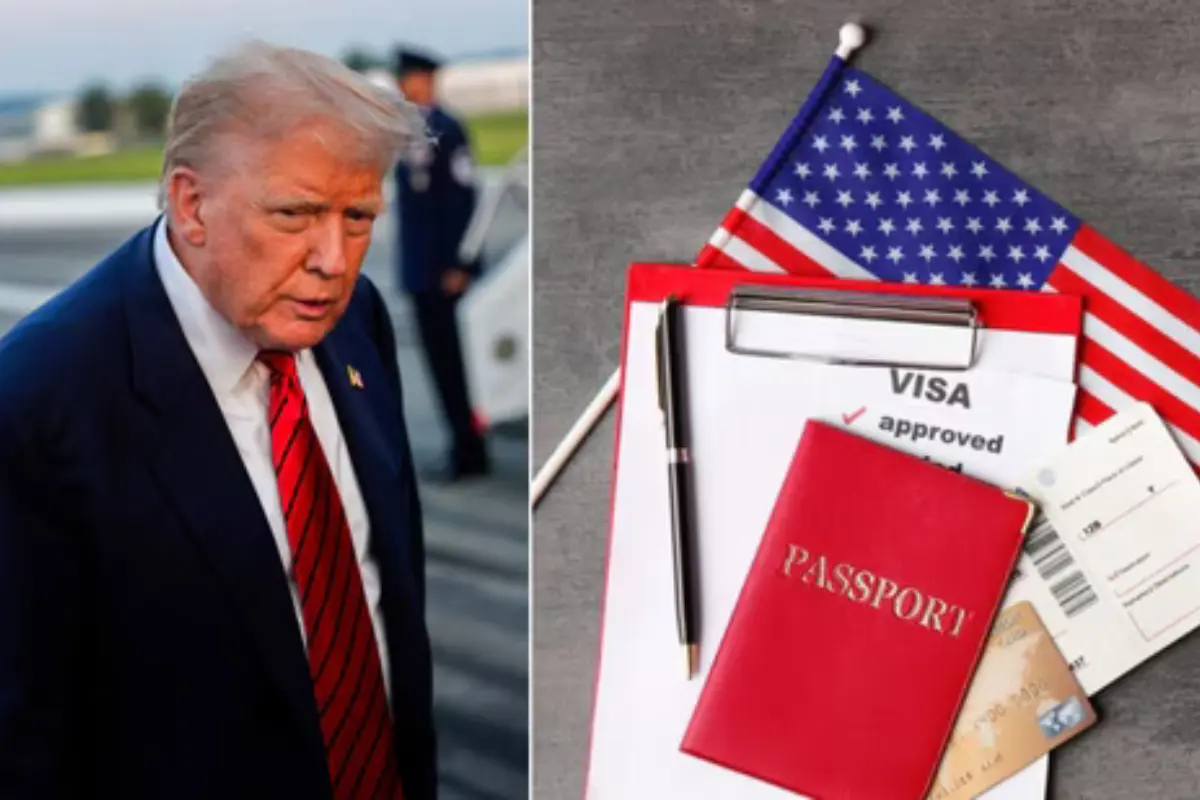
Trump Administration to Limit Stay of Students & Journalists
Trump Administration Visa Rule 2025 Puts Strict Caps on Student and Exchange Visas
The Trump administration on Wednesday unveiled a controversial proposal to overhaul how long international students, cultural exchange workers, and foreign journalists can legally stay in the United States. The move, part of President Donald Trump’s broader immigration crackdown, is being described as one of the most sweeping changes to visa regulations in decades.
Trump Administration: Key Changes in the Proposed Rule
Under the Trump administration visa rule 2025, F visas for students, J visas for cultural exchange participants, and I visas for media representatives would no longer last for the full duration of academic or professional programs. Instead, each category would face fixed timelines:
-
International students (F visas): A maximum of four years.
-
Cultural exchange visitors (J visas): Also capped at four years.
-
Foreign journalists (I visas): Limited to 240 days, with Chinese nationals restricted to 90 days.
Visa holders may apply for extensions, but approval would not be automatic. The Department of Homeland Security (DHS) has argued that such limits are necessary to prevent abuse, strengthen monitoring, and improve national security oversight.
“For too long, past administrations have allowed foreign students and other visa holders to remain in the US virtually indefinitely,” a DHS spokesperson said. “This new proposed rule would end that abuse once and for all.”
Background and Context
Since 1978, foreign students on F visas have been admitted under “duration of status,” which allowed them to remain in the United States for as long as their academic program required, without a fixed end date. DHS claims this flexibility created loopholes that left the system vulnerable to misuse.
President Trump has already tightened multiple areas of legal immigration since returning to office in January. Earlier this month, US Citizenship and Immigration Services announced it would resume neighborhood visits to verify citizenship applicants’ residency and “commitment to American ideals.”
In 2024 alone, the US hosted about 1.6 million international students, 355,000 cultural exchange visitors, and 13,000 accredited journalists, according to official data.
Trump Administration: Impact on Indian Students and Journalists
The proposed rule is of particular importance to Indian nationals, who make up the second-largest group of foreign students in the United States. According to India’s Ministry of External Affairs, 3,37,630 Indian students were studying in the US as of January 2024. DHS data further shows that India topped the list of active student records in America last year, with 4,22,335 enrolled.
For most undergraduate and master’s students, the four-year cap will align neatly with their course duration. However, students pursuing doctoral programs—many of which extend beyond four years—will likely face additional hurdles. PhD students often take between five and eight years to complete their research, meaning they could be forced to seek costly extensions multiple times.
Indian journalists, too, may feel the squeeze. While the 240-day validity may suffice for short-term reporting assignments, correspondents posted in the US for long-term coverage could struggle with frequent renewals.
Political and Global Reactions
Immigration advocates and education groups are expected to challenge the measure. A similar plan was floated in 2020 during Trump’s first term but was abandoned in 2021 after widespread opposition, including from NAFSA, a global non-profit that supports international education.
Supporters of the new proposal, however, argue it will strengthen accountability. By imposing clear visa expiration dates, DHS insists it can better track compliance and reduce overstays.
Also Read : Susheel Kumar Saraff: Strengthening India–Thailand Relations