
Trump Administration: 5 Big Immigration Changes in the US
Trump Administration’s Immigration Shake-Up Could Redefine Who Enters and Stays in America
The Trump administration has unveiled a sweeping set of immigration reforms that collectively signal the most far-reaching transformation of the U.S. immigration system in years. From revamping the H-1B visa lottery and expanding biometric surveillance to introducing a million-dollar residency card and rewriting the U.S. citizenship test, the latest Trump immigration policy changes are redefining who enters, works, and ultimately becomes a citizen of the United States.
Officials say the measures are aimed at protecting American workers, strengthening national security, and restoring what the administration calls “merit and integrity” to the immigration process. Critics, however, warn that the changes could disrupt industries reliant on global talent and raise new concerns over privacy and accessibility.
Trump Administration: H-1B Visa Overhaul Targets Salaries and Skill Levels
At the center of the Trump immigration policy changes is a proposed restructuring of the H-1B visa system, a program long viewed as essential to the U.S. technology sector. Issued by the Department of Homeland Security (DHS) and formally published in the Federal Register, the proposal would end the long-standing random lottery system used to allocate H-1B visas.
“The existing random selection process was exploited by employers seeking cheaper foreign labor,” said U.S. Citizenship and Immigration Services spokesperson Matthew Tragesser. Under the new framework, companies offering top-tier compensation would gain a competitive edge in securing foreign talent.
Expanded Facial Recognition at U.S. Borders
A new DHS rule implemented on December 26, 2025, significantly expands facial recognition requirements for non-citizens entering and exiting the country.
Under the regulation, U.S. Customs and Border Protection is authorized to collect facial biometrics from all non-citizens at airports, land crossings, seaports, and other approved departure points. The rule applies not only to temporary visitors but also to green card holders and other lawful residents.
While U.S. citizens are exempt, DHS says they may voluntarily opt into the biometric process to streamline travel. Civil liberties groups have raised concerns about data retention and surveillance, but officials insist the system strengthens border security and identity verification.
Trump Administration: Social Media Screening for Foreign Travelers
A December notice in the Federal Register confirmed that U.S. Customs and Border Protection will require applicants for the Electronic System for Travel Authorization (ESTA) to submit their social media histories from the past five years.
The change follows Executive Order 14161, signed in January 2025, which focuses on preventing national security and public safety threats. DHS describes ESTA as a risk-assessment tool used for travelers under the Visa Waiver Program, and officials say social media data will enhance vetting capabilities.
Trump Launches $1 Million Gold Card Residency Program
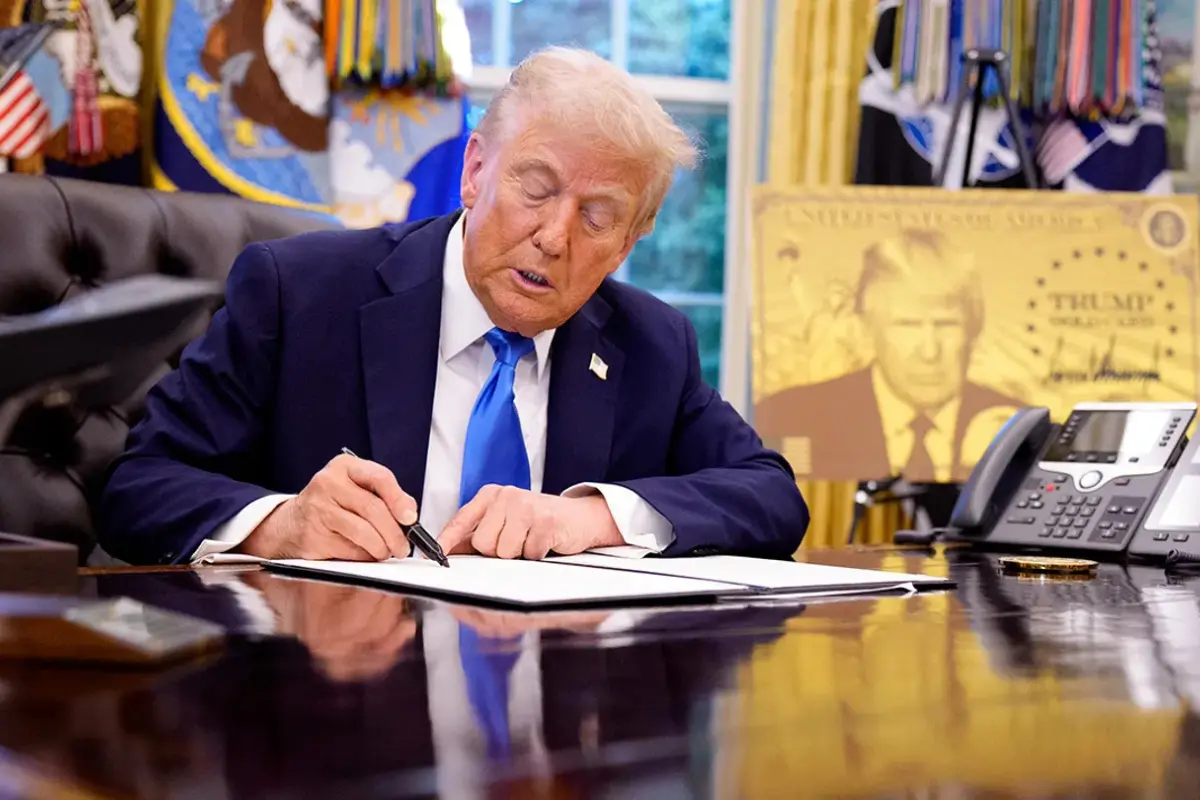
One of the most high-profile Trump immigration policy changes is the introduction of the “Trump Gold Card,” a premium immigration pathway carrying a starting price of $1 million. Announced in December, the program offers wealthy applicants an accelerated route to lawful permanent residency.
The card features a portrait of President Trump alongside national symbols and grants holders permanent resident status under EB-1 or EB-2 visa categories. Applicants must submit documentation through the official portal and pay a non-refundable processing fee, triggering expedited scrutiny by U.S. Citizenship and Immigration Services.
President Trump has projected massive revenue generation, claiming the program could raise over $100 billion to reduce taxes, fund growth initiatives, and lower national debt.
Revamped U.S. Citizenship Test Raises the Bar
Completing the suite of Trump immigration policy changes is a redesigned U.S. citizenship test that significantly increases difficulty. The new 2025 civics test doubles the number of oral questions from 10 to 20, drawn from a pool of 128 questions. Applicants must correctly answer at least 12 to pass.
The revised test removes geography-based questions and requires applicants to identify all three branches of government rather than just one.