
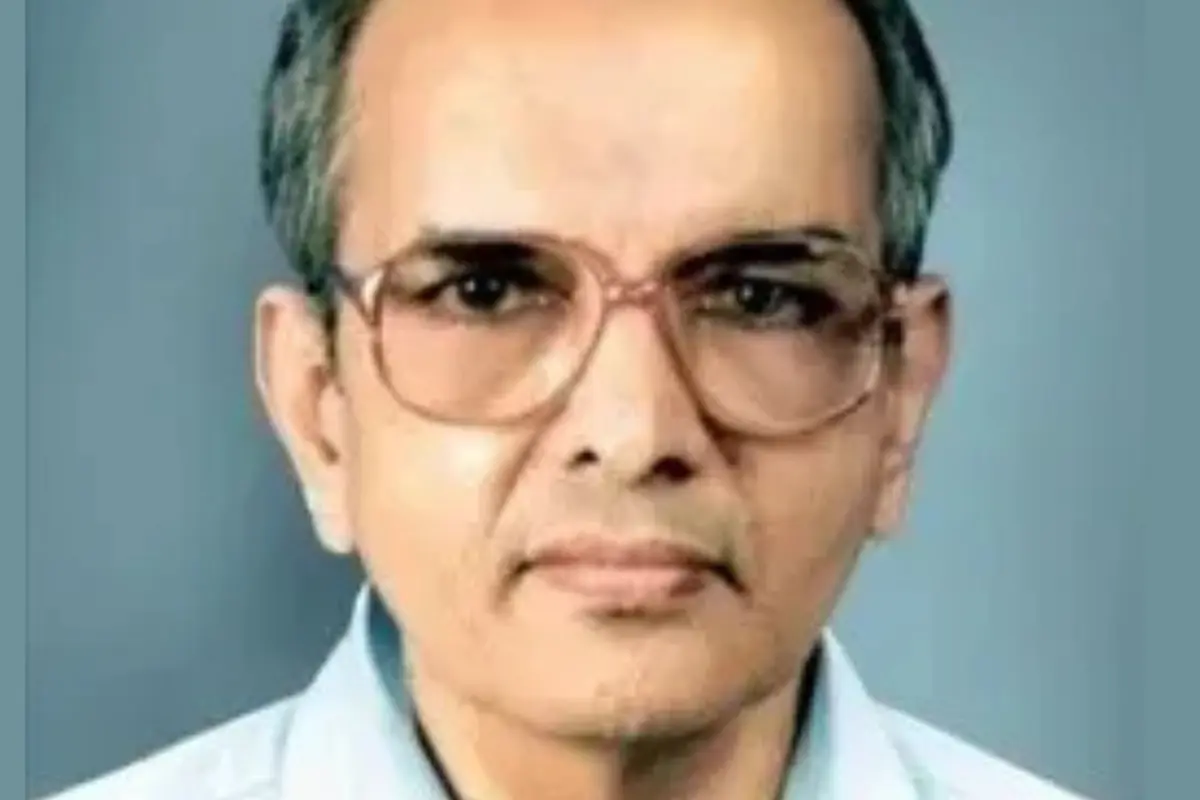
Raised in a traditional Tamil Brahmin household, Suryanarayanan Srinivasan grew up immersed in discipline, values, and structured learning. His childhood was shaped by spiritual grounding and academic curiosity—a rare combination that later reflected in his calm yet determined leadership style.
His academic brilliance surfaced early. He earned his Bachelor of Engineering degree in Electrical Engineering with honours from Annamalai University, demonstrating a natural aptitude for technical sciences. Not content with foundational knowledge, he pursued a Master’s degree in Aeronautical Engineering from the prestigious Indian Institute of Science, one of India’s top research institutions.
But Srinivasan’s thirst for knowledge stretched beyond national borders. After a brief stint at Hindustan Aeronautics Limited, he moved to the United States to pursue a PhD in Engineering Mechanics from Ohio State University. In 1970, armed with advanced research expertise, he returned to India—not for prestige or comfort, but for purpose.
Suryanarayanan Srinivasan: Joining ISRO – A Lifelong Commitment to the Nation
The year 1970 marked a turning point. Suryanarayanan Srinivasan joined the Indian Space Research Organisation (ISRO), beginning a journey that would define the next three decades of Indian space exploration.
His early work involved developing hardware for Rohini sounding rockets at what would later become the Vikram Sarabhai Space Centre (VSSC). These were foundational years for India’s space program, and Srinivasan was present at the very roots of the mission.
The SLV-3 Era: Working with Abdul Kalam
In the late 1970s, India’s dream of launching satellites indigenously was taking shape. When A. P. J. Abdul Kalam spearheaded the Satellite Launch Vehicle project, Suryanarayanan Srinivasan served as Deputy Project Director.
Together, they worked tirelessly on the SLV-3 mission. Their perseverance culminated in a historic milestone on July 18, 1980, when India successfully launched the SLV-3, entering the global “Space Club.” It was a defining national achievement, and Srinivasan’s quiet yet crucial contributions were deeply woven into that success.
While Kalam often stood in the public spotlight, Suryanarayanan Srinivasan was the steady hand behind complex technical execution, systems integration, and mission coordination. He was known among colleagues for his meticulous attention to detail and his unwavering calm during high-pressure launches.
Suryanarayanan Srinivasan: Architect of PSLV and GSLV – Building India’s Self-Reliance
If SLV-3 marked India’s entry into space, the Polar Satellite Launch Vehicle (PSLV) defined its self-reliance.
Suryanarayanan Srinivasan was entrusted with the formidable task of building the PSLV framework. Under his leadership, India developed an indigenous launch vehicle capable of placing remote sensing satellites into orbit with remarkable precision.
As Director of the Integrated Launch Vehicle Programme in 1988, he worked toward creating a family of launch vehicles that optimized design reuse and resource deployment. His strategic thinking reduced duplication, improved productivity, and elevated quality standards across ISRO’s programs.
His contributions extended to the Geosynchronous Satellite Launch Vehicle (GSLV) and the indigenous cryogenic stage—technologies that would later become central to India’s space ambitions.
Leadership at SHAR and VSSC
In June 1994, Suryanarayanan Srinivasan became Director of the Satish Dhawan Space Centre (SHAR). There, he strengthened production capabilities for large solid rocket boosters and refined launch operations with clockwork precision.
Later that year, he assumed leadership of the Vikram Sarabhai Space Centre in Thiruvananthapuram. As Director from 1994 to 1999, he guided advanced technological development and oversaw critical phases of PSLV and GSLV evolution.
On May 26, 1999, PSLV achieved its first successful commercial launch—an achievement that positioned India as a credible player in the global launch market. Just months later, on September 1, 1999, Suryanarayanan Srinivasan passed away while still in service, at the age of 58.
He died not retired, not distant—but in harness, serving the mission he believed in.
Honors, Recognition, and Legacy
Suryanarayanan Srinivasan’s contributions were recognized both nationally and professionally.
He was an elected Fellow of:
-
The Aeronautical Society of India
-
The Indian National Academy of Engineering
He was also associated with several scientific bodies including the Astronautical Society of India and the Society of R&D Managers of India.
Among his awards were:
-
National Aeronautics Prize
-
FIE Foundation National Award
On 26 January 2000, the Government of India posthumously awarded him the Padma Bhushan, the nation’s third-highest civilian honor. It was a recognition not just of an individual, but of a lifetime devoted to scientific nation-building.