
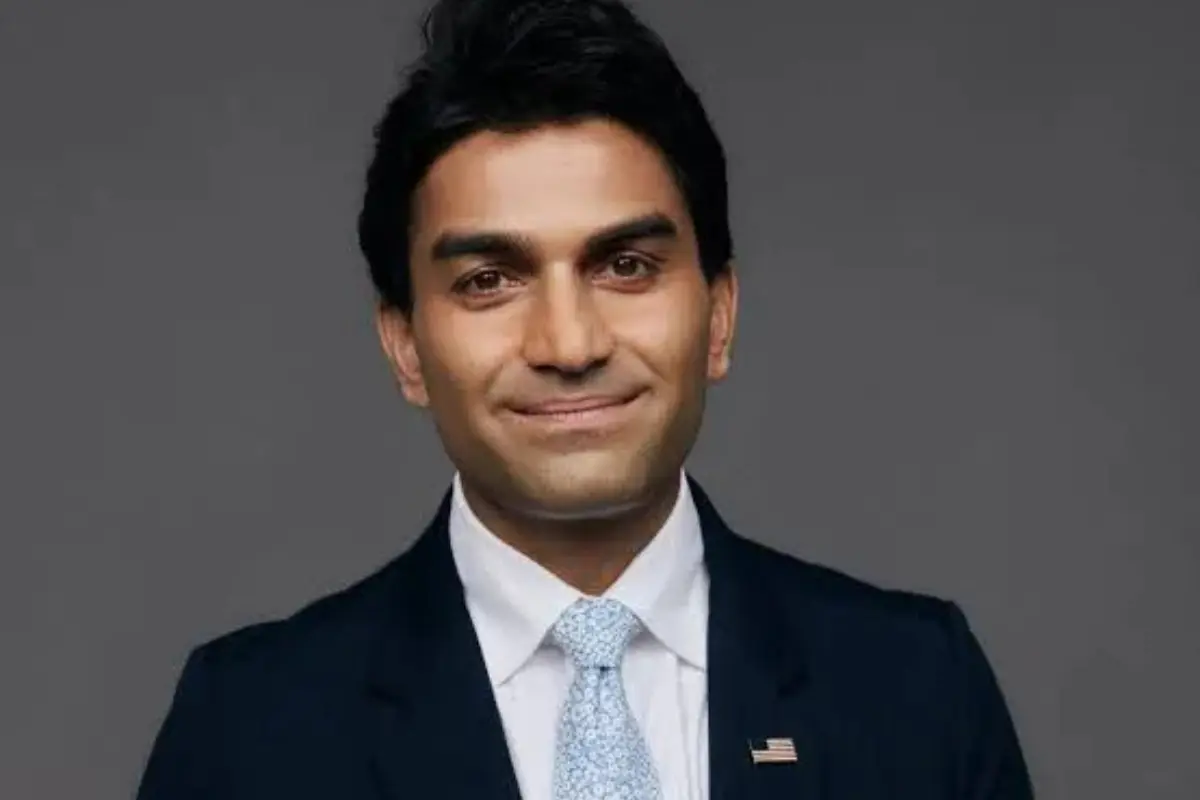
Born in Mississippi to Gujarati parents who emigrated from India in the late 1960s, Suraj Patel grew up in Indianapolis in a household defined by sacrifice and perseverance. Three generations of his family once shared a modest two-bedroom apartment above the bodega they operated. His father worked night shifts fixing subway tracks, embodying the quiet heroism of immigrant labor.
Suraj Patel’s upbringing was hands-on and humbling. He bused tables, stocked vending machines, folded motel laundry, and worked construction sites alongside his family. Entrepreneurship was not a concept discussed in classrooms; it was lived daily at the dinner table.
When the financial crisis struck, the family’s hospitality business teetered on the brink. Patel experienced firsthand what it means to struggle to make payroll, to worry about foreclosure, and to fight for survival in a turbulent economy. That chapter would shape his future political philosophy: economic opportunity must not be a privilege reserved for the few—it must be accessible to every hardworking family.
Suraj Patel: From Community Organizer to the White House
Suraj Patel’s commitment to public service crystallized during the historic 2008 presidential campaign of Barack Obama. As an organizer, Patel joined a movement that redefined civic participation and energized a generation. He later served on the White House Advance Team from 2008 to 2016, playing a key role during Obama’s 2012 reelection campaign.
Working behind the scenes in high-stakes political environments, Suraj Patel witnessed leadership at the highest levels. He learned that progress is rarely accidental—it is built through preparation, coalition-building, and relentless execution.
After the 2016 election of Donald Trump, Patel doubled down on activism. He served as a volunteer attorney for the ACLU in response to the controversial Muslim Ban and joined grassroots efforts to defend civil liberties. His work extended to immigrant communities through Atlas:DIY in Brooklyn, where he served as a long-time board member, and to public housing residents through Urban Upbound, an organization dedicated to breaking cycles of poverty.
Academic Leadership and Ethical Vision
Beyond politics, Suraj Patel has built a respected academic profile. As an adjunct professor at New York University’s Stern School of Business, he lectures on business ethics, challenging future executives to weigh profit against principle.
His teaching reflects his lived experience: capitalism must be dynamic, but it must also be humane. Patel’s philosophy bridges business pragmatism and progressive values—insisting that growth and justice are not mutually exclusive.
He has also served as a visiting fellow at The Century Foundation, writing and thinking deeply about supply-side progressivism and economic reform. For Suraj Patel, policy is not about ideology; it is about outcomes.
Suraj Patel: A Bold Congressional Challenger
Suraj Patel first ran for Congress in 2018 against long-time Representative Carolyn Maloney. Though unsuccessful, he returned in 2020 with a sharpened message and came within three percentage points of victory. In a pandemic-stricken election cycle, his campaign energized more than 100,000 Democratic primary voters and held a 30-year incumbent to just 42 percent of the vote.
In 2022, after district lines were redrawn, Suraj Patel launched another campaign for the newly created 12th Congressional District in Manhattan—covering the northern end of Central Park south to Union Square. Facing both Carolyn Maloney and Jerrold Nadler, Patel finished third with 19 percent of the vote.
His campaigns drew endorsements from figures such as environmental lawyer Steven Donziger, entrepreneur and former presidential candidate Andrew Yang, and journalist Matthew Yglesias.
One of his campaign advertisements sparked national discussion when a streaming platform required edits removing references to the January 6th Capitol attack and climate change. For Suraj Patel, it underscored the political tensions shaping modern media and democracy.
Political Philosophy: Practical and Progressive
Suraj Patel describes himself as a “practical and progressive” Democrat. His platform blends technocratic reform with ambitious structural change.
Housing and Urban Reform
A self-identified YIMBY (“Yes In My Backyard”), Patel supports market urbanism and rezoning initiatives aimed at increasing housing supply. He argues that reducing regulatory barriers and modernizing zoning laws are essential to tackling skyrocketing rents and urban stagnation. To him, empty storefronts are not abstractions—they are reminders of families struggling to survive.
Infrastructure and Road Safety
Suraj Patel advocates for safer street design and improved transit infrastructure. He supports congestion pricing and believes cities must invest in modern systems that reflect 21st-century realities rather than 20th-century compromises.
The Abundant Society Plan
Patel champions what he calls “The Abundant Society” framework—a supply-side progressivism agenda designed to combat inflation and expand opportunity. His proposals include tariff reductions, suspending outdated maritime laws like the Jones Act and Foreign Dredge Act, and expanding domestic manufacturing through federal investments such as the COMPETES Act.
For Suraj Patel, abundance means building more homes, more transit, more energy infrastructure, and more pathways to prosperity.
Democracy and Generational Change
Suraj Patel has consistently advocated for increased competition in Democratic primaries, arguing that democracy thrives when voters have real choices. His campaigns were fueled by grassroots volunteers rather than corporate PAC machinery, reflecting his belief that political power must flow upward from communities.