
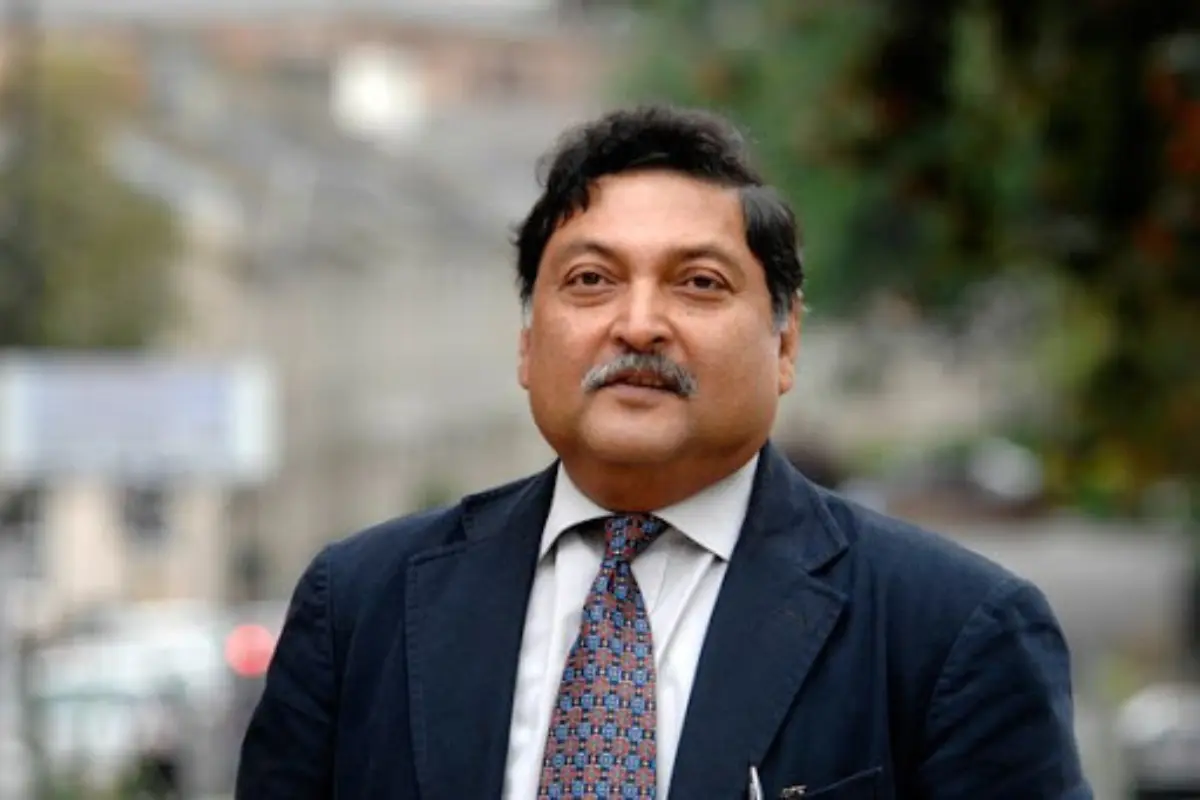
There are educators, and then there are revolutionaries—those rare individuals who dare to question the foundations of long-standing systems and replace them with bold, transformative ideas. Sugata Mitra, born on 12 February 1952 in Calcutta, India, stands among the most influential educational thinkers of our time. A physicist by training, an inventor by instinct, and a reformer by passion, Mitra reshaped global understanding of how children learn—proving that curiosity, collaboration and freedom can ignite an unstoppable form of learning.
Early Foundations of Sugata Mitra: A Physicist with the Soul of an Explorer
Long before the world knew him as an education pioneer, Sugata Mitra was immersed in the rigour of science. After completing his M.Sc. and Ph.D. in Solid State Physics from IIT Delhi in the 1970s, he published multiple papers on organic semiconductors and energy storage systems. His research journey took him from India’s Centre for Energy Studies to the Technische Universität in Vienna, where he explored the science behind zinc-chlorine batteries.
Even in these early scientific pursuits, Mitra’s curiosity refused to stay boxed into one discipline. He ventured into unconventional questions—like why human sense organs are located where they are—and explored neural networks as models to understand Alzheimer’s disease. Such interdisciplinary thinking would later become the hallmark of his educational innovations.
A Leap Toward Technology, Networks and Inventive Thinking
The 1980s marked a dramatic shift. As computers entered the mainstream, Mitra saw possibilities far beyond machines and circuits. He pioneered India’s first local-area-network-based newspaper publishing system in 1984, transforming the printing industry. He also created a hyperlinked computing environment years before the modern internet and invented the Voluntary Perception Recorder—an early precursor to variable voting systems.
Behind all his inventions lay a single question: How do humans perceive, understand and respond to information? That question led him increasingly toward the realm of cognitive science and eventually to the frontier of education.
Sugata Mitra: Planting the Seeds of Change – Learning, Not Teaching
When Mitra joined NIIT, his work helped shape curricula and pedagogical models for an entire generation of learners. His research in learning styles, cognitive tools, multimedia, and early education systems influenced close to a million young people, many of whom came from marginalized backgrounds. With more than 25 inventions in cognitive science and educational technology, Mitra established himself not only as a technologist but as a visionary educational theorist.
But the spark that would change global education forever was yet to ignite.
The “Hole in the Wall” Experiment: A Window Into the Future of Learning
In 1999, in a Delhi slum in Kalkaji, Mitra placed a computer in a hole carved into a wall and simply left it there—accessible to children who had never seen such a device. No instructions. No teachers. No supervision.
What happened next stunned the world.
The children, driven purely by curiosity, taught themselves how to browse, click, search, draw, and create. They navigated the internet, explored multimedia content and learned English words through trial and error. Later experiments showed children mastering everything from basic digital skills to complex scientific topics—completely on their own.
Mitra called this phenomenon Minimally Invasive Education (MIE).
The experiment was repeated in more than 23 kiosks across India and even in Cambodia. Everywhere, the results were the same: self-organized, collaborative learning emerged naturally when opportunity and access were provided.
This simple but powerful idea inspired the globally acclaimed novel and Oscar-winning film Slumdog Millionaire, written by Vikas Swarup.
The School in the Cloud: A New World of Learning
Sugata Mitra’s 2013 TED Prize-winning proposal, Build a School in the Cloud, was the culmination of decades of inquiry. Through cloud-based collaborative learning environments, he envisioned a world where children—no matter where they lived—could learn through guided curiosity and shared intelligence.
His Self-Organized Learning Environments (SOLE) model has since influenced classrooms across continents. By replacing rote instruction with big questions, group exploration, creativity and communication, Mitra challenged traditional educational norms and introduced models more aligned with the digital age.
His TED Talk, which captivated millions, argued powerfully that the Victorian education system—designed for an industrial world—must evolve. In an era of search engines, AI and limitless digital resources, what children need most is the ability to think, question, collaborate and innovate.
Global Recognition and Lasting Legacy
Over his extraordinary career, Sugata Mitra has received numerous honours—including the Dewang Mehta Award for Innovation in Information Technology (2005), the Leonardo European Corporate Learning Award (2012), and the $1 million TED Prize (2013).
He spent 13 influential years at Newcastle University in England, and in 2012 served as a Visiting Professor at MIT Media Lab—one of the world’s most respected hubs of innovation. He retired in 2019 but continues to inspire educators, researchers, policymakers and students worldwide.
Today, as Professor Emeritus at NIIT University, his ideas continue to spark new conversations on the future of learning.