
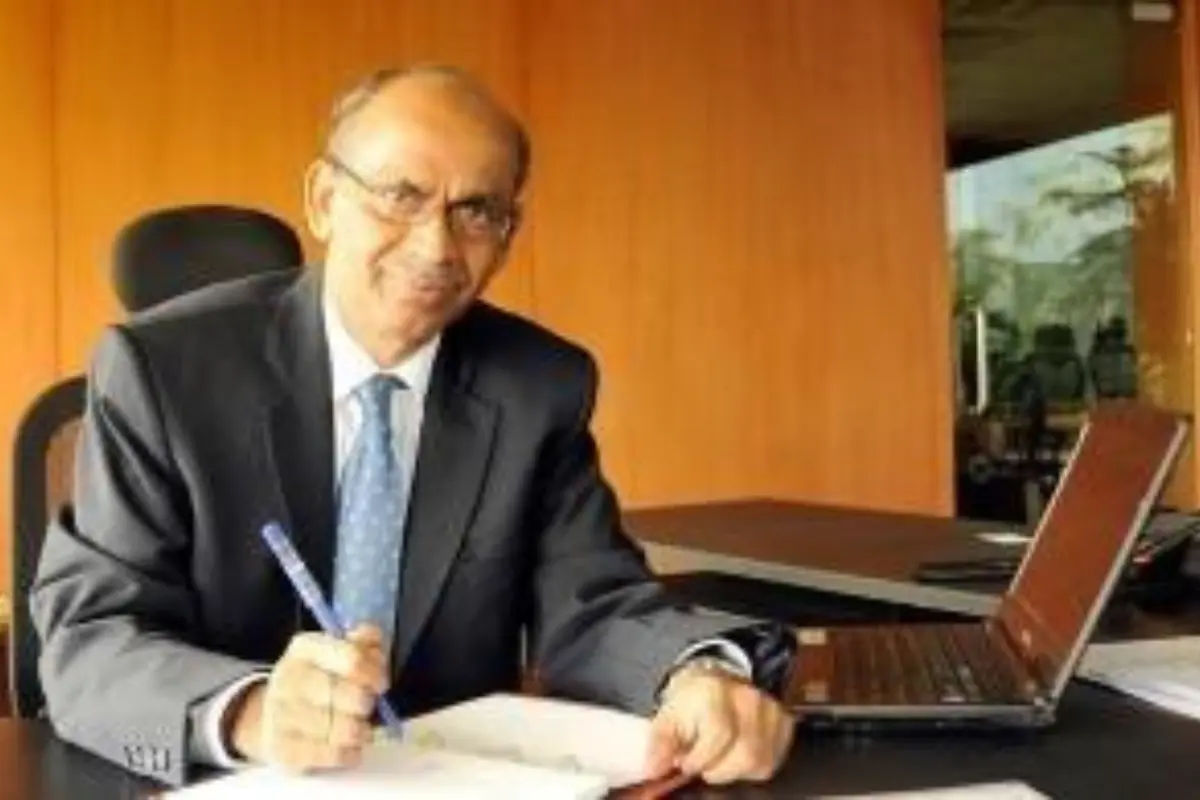
Subbarayan Pasupathy was born in Chennai, Tamil Nadu, India, into a time when independent India was beginning to invest heavily in science and engineering. From an early age, he demonstrated a remarkable aptitude for mathematics and analytical thinking, qualities that would later define his professional life.
In 1963, he earned his Bachelor’s degree in Telecommunications Engineering from the prestigious College of Engineering, Guindy, now part of Anna University. His academic performance immediately distinguished him as a rising star.
Driven by a thirst for deeper knowledge, Subbarayan Pasupathy joined the Indian Institute of Technology (IIT) Madras, where he completed his M.Tech. in Electrical Engineering in 1966. His exceptional achievement earned him the Siemens Prize, awarded to the top-ranked student in his graduating class, a distinction that foreshadowed his future global recognition.
Subbarayan Pasupathy: Advanced Education and Global Exposure
Seeking to explore the frontiers of engineering research, Subbarayan Pasupathy moved to the United States to pursue graduate studies at Yale University, one of the world’s leading research institutions.
At Yale, he completed his M.Phil. in 1970 and his Ph.D. in 1972 in engineering and applied science. His doctoral research, conducted under the mentorship of Professor Peter Schultheiss, focused on sonar systems and signal processing, an area that demanded both theoretical rigor and practical insight.
This period marked the transformation of Subbarayan Pasupathy from a brilliant student into a mature researcher capable of shaping future technologies.
Early Academic Roles and Research Development
Before establishing his long-term academic home, Subbarayan Pasupathy built a solid foundation through diverse teaching and research roles. He served as a Research Scholar and Part-Time Lecturer at IIT Madras, while also working as a Teaching Assistant at Yale University between 1968 and 1971.
From 1972 to 1973, he undertook postdoctoral research at the University of Toronto, focusing on array processing of sonar signals. This experience proved decisive, opening the door to what would become a lifelong association with one of Canada’s most respected universities.
Subbarayan Pasupathy: A Distinguished Career at the University of Toronto
In 1973, Subbarayan Pasupathy joined the University of Toronto as a faculty member in the Department of Electrical Engineering. Over the next 35 years, he helped build the university’s global reputation in communications research and engineering education.
He was promoted to Professor of Electrical Engineering in 1983 and later became Professor Emeritus upon retirement. During his tenure, he held several influential leadership positions, including:
-
Associate Chairman, Department of Electrical Engineering (1979–1982)
-
Chairman, Communications Group (1978–1981, 1992–1996)
Beyond administration, Subbarayan Pasupathy played a pivotal role in shaping curricula, strengthening industry collaboration, and mentoring generations of engineers who would go on to lead academia and industry worldwide.
Research Excellence and Global Influence
The research legacy of Subbarayan Pasupathy is both vast and profound. His work focused on statistical communication theory, digital communication systems, and signal processing, areas central to modern telecommunications.
His key contributions include:
-
Bandwidth-efficient coding and modulation techniques
-
Digital transceiver architectures
-
Statistical signal processing algorithms
-
Applications in mobile networks and array processing
He authored or co-authored over 275 scholarly articles and contributed to three influential books, with his research cited in more than 100 patent applications. Remarkably, he became the first Canadian communications professor to be listed as a “Highly Cited Researcher” by the ISI Web of Knowledge, highlighting the global relevance of his work.
Professional Service and Editorial Leadership
Subbarayan Pasupathy believed that scholarship extended beyond laboratories and classrooms. He actively served the global engineering community through editorial and professional roles, including:
-
Editor, IEEE Transactions on Communications (1982–1989)
-
Associate Editor, IEEE Communications Magazine
-
Associate Editor, Canadian Electrical Engineering Journal
He also coordinated a special issue on Canadian Telecommunications for IEEE Communications Magazine and authored a long-running humor column titled “Light Traffic”, showcasing his wit and humanity alongside technical brilliance.
Awards, Honors, and Global Recognition
The excellence of Subbarayan Pasupathy was recognized through numerous prestigious honors:
-
Fellow of the IEEE (1991)
-
Canadian Award in Telecommunications Research (2003)
-
Fellow of the Engineering Institute of Canada (2004)
-
Fellow of the Canadian Academy of Engineering (2007)
-
Distinguished Alumnus Award, IIT Madras (2010)
-
Registered Professional Engineer, Ontario