
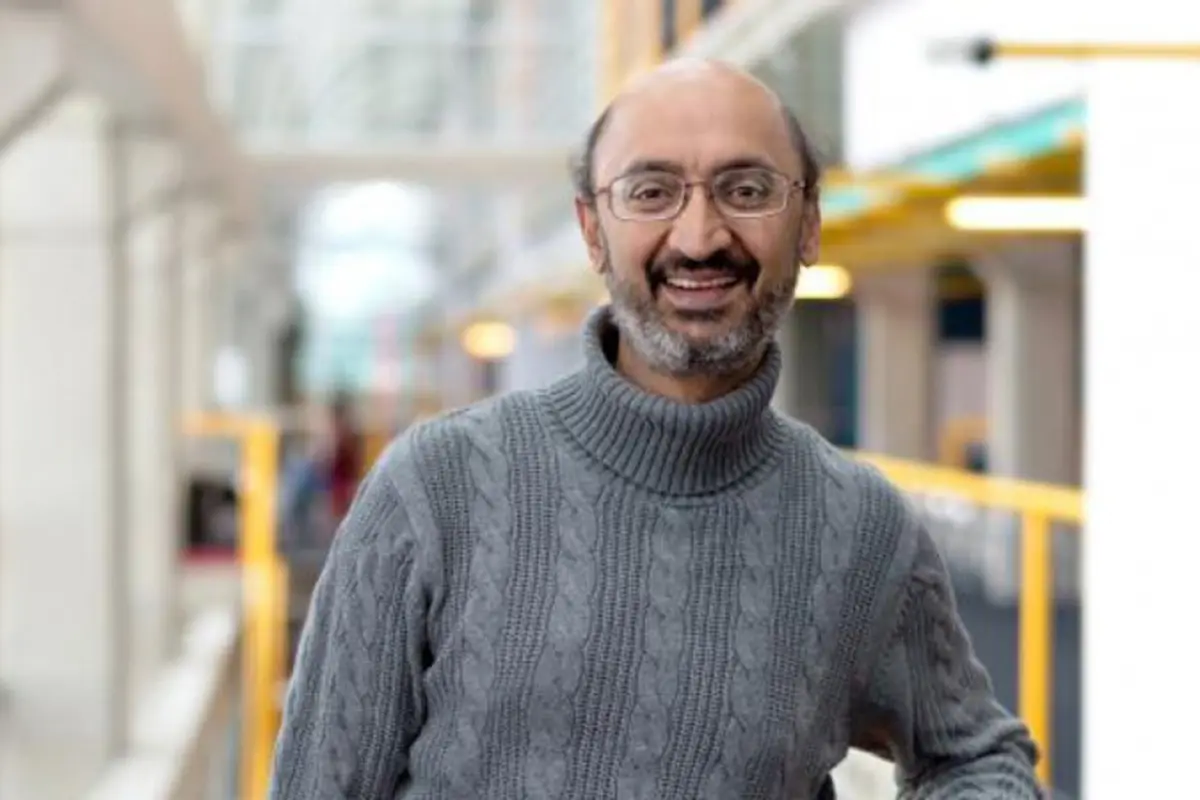
In a world where technology evolves at lightning speed, only a few individuals manage to harness its power for both human progress and planetary well-being. Srinivasan Keshav, a Fellow of the Royal Society of Canada and the Robert Sansom Professor of Computer Science at the University of Cambridge, stands among these rare visionaries. His career spans decades of groundbreaking research, entrepreneurial ventures, and sustainable innovation—proof that science can be both brilliant and compassionate.
Srinivasan Keshav: A Foundation Built on Academic Excellence
Srinivasan Keshav’s academic journey began at the Indian Institute of Technology, Delhi, where he completed his undergraduate studies in 1986. With an insatiable curiosity for computer networks, he pursued a PhD at the University of California, Berkeley, graduating in 1991 under the mentorship of Domenico Ferrari. His doctoral thesis, Congestion Control in Computer Networks, addressed a core challenge in digital communications, setting the stage for a career defined by solving complex, real-world problems.
From Bell Labs to Entrepreneurial Ventures
Soon after earning his doctorate, Keshav joined the research staff at Bell Labs, a birthplace of modern technological breakthroughs. He also enriched academia as a visiting faculty member at IIT Delhi and Columbia University. In 1996, he became an associate professor at Cornell University.
In 1999, driven by a passion for innovation beyond the classroom, he co-founded Ensim Corporation, a software company that brought his ideas into the commercial sphere. But academia called him back, and in 2003, he joined the University of Waterloo, where he would make some of his most transformative contributions.
Srinivasan Keshav: Innovations with a Social Purpose
One of Keshav’s most impactful projects was KioskNet—a system designed to bring internet access to underserved regions in impoverished countries. Developed alongside his students, KioskNet demonstrated how technical ingenuity could break down digital barriers and empower communities.
As Canada Research Chair in Tetherless Computing (2004–2014) and Cisco Chair in Smart Grid (2012–2017), he championed research that bridged connectivity with sustainability. His work focused on using sensors, data, and control systems to improve the carbon efficiency of energy infrastructure.
Smart Energy and IoT Breakthroughs
One striking example of his sustainability-driven research is the smart fan project. This fan, embedded with a heater, sensors, and a computer, could detect occupancy and comfort levels, automatically adjusting temperature and airflow. Field trials involving 70 such fans recorded over 400,000 hours of data, proving their potential to significantly reduce heating and cooling costs in commercial buildings. Today, a Canadian start-up is exploring large-scale production of these devices—turning research into real-world climate solutions.
Keshav also applied blockchain technology to renewable energy, enabling homeowners to receive trustworthy Renewable Energy Certificates for green electricity generation, creating new financial incentives for sustainable living.
Expanding into Forest Restoration and Conservation
While many computer scientists focus solely on digital systems, Srinivasan Keshav extended his expertise into forest landscape restoration (FLR). Collaborating with conservationists, he explored how computational models, sensors, drones, and satellite data could enhance reforestation strategies, biodiversity protection, and carbon sequestration.
His approach addressed a crucial point: restoring forests isn’t just about planting trees—it requires strategic planning to avoid ecological risks like wildfires and species imbalance. By improving the speed and efficiency of forest growth simulations and deploying long-lasting, low-cost monitoring sensors, Keshav has contributed to a new era of data-driven conservation.
Leadership, Publications, and Global Recognition
Beyond research, Keshav has shaped the computer science community through leadership roles—serving as Editor of Computer Communication Review (2008–2013) and Chair of ACM SIGCOMM (2013–2017). His books, An Engineering Approach to Computer Networking and Mathematical Foundations of Computer Networking, are regarded as foundational texts for students and professionals worldwide.
His honors include:
-
David Sakrison Memorial Prize, UC Berkeley (1992)
-
Sloan Fellowship (1997–1999)
-
ACM Fellow (2012) for contributions to computer communication networks and systems
-
IEEE Fellow (2019)
-
IIT Delhi Distinguished Alumni Award (2019)
-
Fellow of the Royal Society of Canada (2019)