
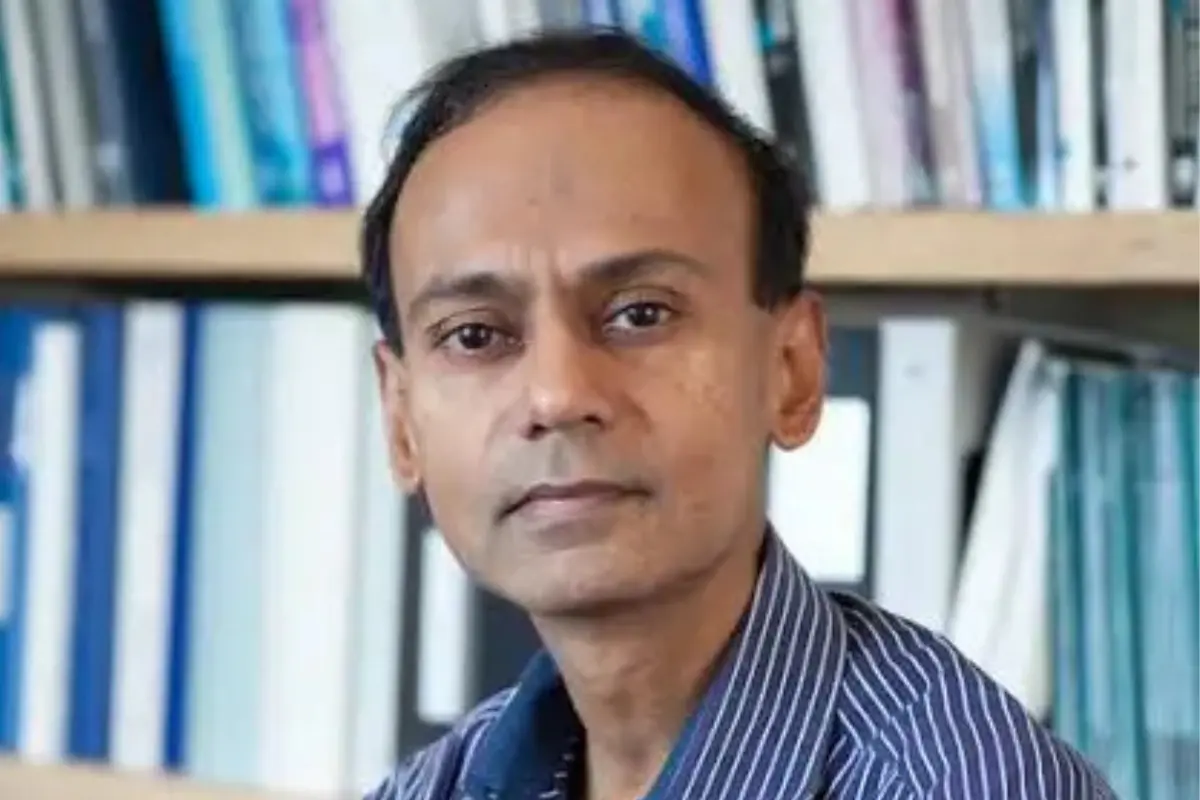
The intellectual journey of Srinivas Devadas began in India, where a strong academic culture and early exposure to engineering laid the groundwork for a lifetime of innovation. He earned his Bachelor of Technology in Electrical Engineering from the Indian Institute of Technology (IIT) Madras in 1985, one of India’s most prestigious institutions.
Driven by a passion for understanding how complex systems function at their core, Srinivas Devadas moved to the United States to pursue advanced studies at the University of California, Berkeley. There, under the mentorship of the renowned Arthur Richard Newton, he completed his Master’s degree in 1986 and PhD in 1988 in Electrical Engineering. These formative years shaped his rigorous analytical approach and planted the seeds for his later breakthroughs in secure hardware design.
Srinivas Devadas: A Lifelong Commitment to MIT
In 1988, Srinivas Devadas joined the faculty of MIT, marking the beginning of a relationship that would span decades and redefine multiple research fields. Over the years, he became an integral member of MIT’s Electrical Engineering and Computer Science (EECS) department and a leading figure within CSAIL.
Beyond research, Srinivas Devadas played a pivotal leadership role at MIT. From 2005 to 2011, he served as Associate Head of EECS, overseeing the Computer Science division during a period of rapid growth and transformation. His leadership was marked by intellectual openness, interdisciplinary collaboration, and an unwavering focus on excellence.
The Invention That Changed Hardware Security: Physical Unclonable Functions
Among the many contributions of Srinivas Devadas, none has had a more profound global impact than the invention of silicon-based Physical Unclonable Functions (PUFs) in 2002.
PUFs harness the inherent, uncontrollable manufacturing variations in silicon chips to create unique digital fingerprints. These fingerprints enable low-cost, highly secure device authentication and secret key generation without storing sensitive data in memory. The concept revolutionized hardware security, offering a scalable and tamper-resistant solution at a time when digital threats were rapidly evolving.
Today, PUFs are foundational to secure computing, with applications ranging from RFID authentication and IoT security to defense systems and trusted processors. The invention stands as a testament to Srinivas Devadas’s ability to transform subtle physical phenomena into powerful technological safeguards.
Srinivas Devadas: Secure Architectures and the AEGIS Processor
Srinivas Devadas’s vision of security extends beyond individual components to entire computing systems. One of his landmark achievements is the development of the AEGIS secure processor architecture.
AEGIS was designed to remain secure even when operating with untrusted memory, operating systems, or software layers. This work anticipated modern threats long before they became mainstream concerns, laying the groundwork for today’s trusted execution environments and secure enclaves.
Through AEGIS and related research, Srinivas Devadas helped establish security as a first-class architectural principle, rather than an afterthought layered onto vulnerable systems.
Broad Technical Influence Across Computing
The intellectual reach of Srinivas Devadas spans a wide spectrum of computing disciplines. His research contributions include:
-
Low-power circuit design
-
Computer-aided design (CAD) methodologies
-
Analytical cache modeling
-
Hardware information flow tracking
-
Single-chip secure processors
His work has earned multiple IEEE “Best Paper” awards, reflecting both technical excellence and long-term relevance. Across academia and industry, his ideas continue to shape how secure systems are designed, verified, and deployed.
Entrepreneurship and Real-World Impact
Innovation, for Srinivas Devadas, is incomplete without impact. In 2005, he founded Verayo, a company created to commercialize PUF technology. Under his technical vision, Verayo developed secure authentication solutions that have since been deployed in tens of millions of RFID security tags worldwide.
This entrepreneurial chapter demonstrates Srinivas Devadas’s rare ability to bridge academic research and real-world deployment—ensuring that theoretical breakthroughs translate into tangible societal benefits.
A Master Educator and Mentor
Equally defining is Srinivas Devadas’s reputation as a transformative educator. Revered by students for clarity, creativity, and intellectual generosity, he has received MIT’s most prestigious teaching honors.
His awards include:
-
Everett Moore Baker Memorial Award for Excellence in Undergraduate Teaching (2016)
-
MacVicar Faculty Fellowship (2016), MIT’s highest undergraduate teaching distinction
In 2017, he authored Programming for the Puzzled (MIT Press), a distinctive book that teaches programming and algorithms through engaging puzzles. The work reflects his belief that learning should be rigorous, playful, and deeply human.
Srinivas Devadas: Recognition and Global Honors
The international community has repeatedly recognized Srinivas Devadas for his transformative contributions. Among his most notable honors:
-
IEEE Computer Society Edward J. McCluskey Technical Achievement Award (2014)
-
IEEE Computer Society W. Wallace McDowell Award (2017)
-
IEEE Circuits and Systems Society Charles A. Desoer Technical Achievement Award (2018)
-
IEEE Cybersecurity Award for Practice (2021)
-
ACM SIGSAC Outstanding Innovation Award (2021)
He is a Fellow of both the IEEE and the ACM, reflecting sustained excellence and leadership at the highest levels of the profession. He has also received distinguished alumni honors from IIT Madras (2019) and UC Berkeley (2025).