
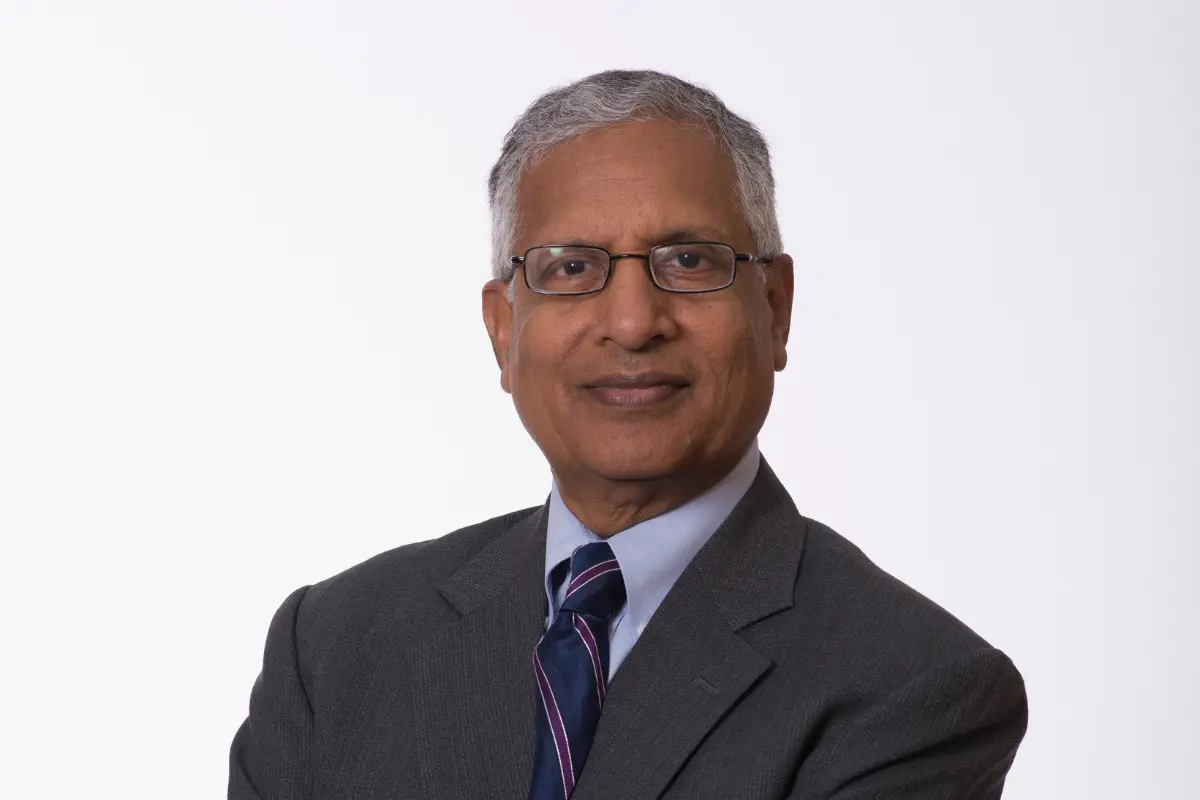
In the realm of global academia, few names resonate with as much intellectual influence and quiet brilliance as Shyam Sunder. Born on July 10, 1944, Dr. Sunder has dedicated his life to pushing the boundaries of accounting theory, experimental economics, and financial science. A distinguished scholar, he currently holds the prestigious title of James L. Frank Professor of Accounting, Economics, and Finance at the Yale School of Management, while also serving as a Professor of Economics at Yale University.
His profound contributions to the fields of accounting and economics have left an indelible mark on the way markets, institutions, and systems are understood and structured across the world.
Early Life and Education of Shyam Sunder: The Foundations of a Brilliant Mind
Shyam Sunder’s intellectual odyssey began in India, where he cultivated a deep curiosity for systems, logic, and numbers. His educational journey took shape at the Indian Institute of Technology (IIT) Kharagpur, one of India’s most esteemed institutions. He also trained at the Indian Railways School of Mechanical & Electrical Engineering in Jamalpur, an experience that imbued him with precision, discipline, and analytical thinking.
His quest for knowledge then carried him across the seas to the Carnegie Mellon University in the United States, where he earned his Ph.D. in 1974. This academic chapter was the turning point of his career — a time when his ideas about markets, valuation, and information systems began to take root and grow into theories that would later shape global accounting thought.
Academic Career: A Lifelong Dedication to Excellence
Before his tenure at Yale, Shyam Sunder shared his expertise with some of the most respected universities in the world, including the University of Chicago, California Institute of Technology (Caltech), University of Minnesota, Carnegie Mellon University, and Indian Institute of Management (IIM) Ahmedabad. Each academic environment enriched his perspective, allowing him to build a multidisciplinary understanding of economics, finance, and human behavior.
At Yale, Dr. Sunder’s influence has been transformative. Through his teaching, mentorship, and research, he has inspired generations of students to question conventional wisdom and explore the intersections between markets, institutions, and information flow. His course, Experimental Economics, became one of Yale’s most popular offerings — a testament to his ability to connect theory with real-world application and inspire intellectual curiosity.
Shyam Sunder: Research and Contributions – A Pioneer in Experimental Finance and Economics
Dr. Shyam Sunder is widely celebrated as a pioneer in experimental finance and experimental macroeconomics. His groundbreaking research has explored financial reporting, information dissemination in security markets, statistical theory of valuation, and the design of electronic markets — topics that are now cornerstones of modern financial analysis and regulation.
His influential works such as
-
“Allocative Efficiency of Markets with Zero-Intelligence Traders” (1993, with D.K. Gode),
-
“Efficiency of Experimental Security Markets with Insider Information” (1982, with C.R. Plott), and
-
“Market for Information: Experimental Evidence” (1992, Econometrica),
have fundamentally changed how economists and policymakers understand markets. These studies demonstrated that even without perfect rationality, markets can self-organize efficiently — a revelation that reshaped economic thought.
Sunder’s book, Theory of Accounting and Control, remains a cornerstone in the field, guiding both scholars and practitioners in understanding how institutions can achieve balance between oversight and autonomy. His research continues to explore the delicate equilibrium between regulatory control and market-driven efficiency, offering invaluable insights into the global financial system.
Leadership and Influence in Global Academia
Throughout his illustrious career, Shyam Sunder has taken on leadership roles that reflect his deep commitment to advancing education and research. He served as President of the American Accounting Association (AAA) from 2006 to 2007, and earlier as the Director of Research for the same organization. His involvement as a Founding Executive Committee Member of the Economic Science Association underscores his pioneering influence in experimental economics.
Dr. Sunder’s voice has echoed across more than 300 universities worldwide, where he has been invited to lecture and share his vision. From his role as Distinguished Lecturer at the University of Essex to serving on the International Academic Advisory Boards of IIT Gandhinagar and Jindal Global University, his contributions have inspired a generation of academics and practitioners committed to ethical and evidence-based finance.
Honors, Awards, and Global Recognition
The academic community has recognized Shyam Sunder’s contributions with numerous prestigious awards. His honors include the American Accounting Association’s Manuscript Award (1975), the Notable Contributions to Accounting Literature Awards (1982 & 1998), and the Outstanding Accounting Educator Award (2013). He was also the Alpha Kappa Psi Foundation National Accounting Award recipient in 1982.
In addition, he has been honored as the Presidential Research Lecturer (1999) and Distinguished International Visiting Lecturer (2000) by the American Accounting Association — a testament to his continued global impact and thought leadership in academia.
Editorial and Governance Roles
Beyond research and teaching, Dr. Sunder has shaped academic thought through his editorial leadership. He currently serves on the boards of the Journal of Accounting and Public Policy and the Indian Accounting Review, and has previously contributed to the editorial boards of Experimental Economics and Computational and Mathematical Organization Theory. His commitment to promoting rigorous, ethical, and impactful research continues to influence emerging scholars across the globe.
He has also served on the boards of several influential organizations, including the Academy for Government Accountability, American Accounting Association, International Association for Accounting Education and Research, and World Computer Exchange — reflecting his broad commitment to societal and educational advancement.