
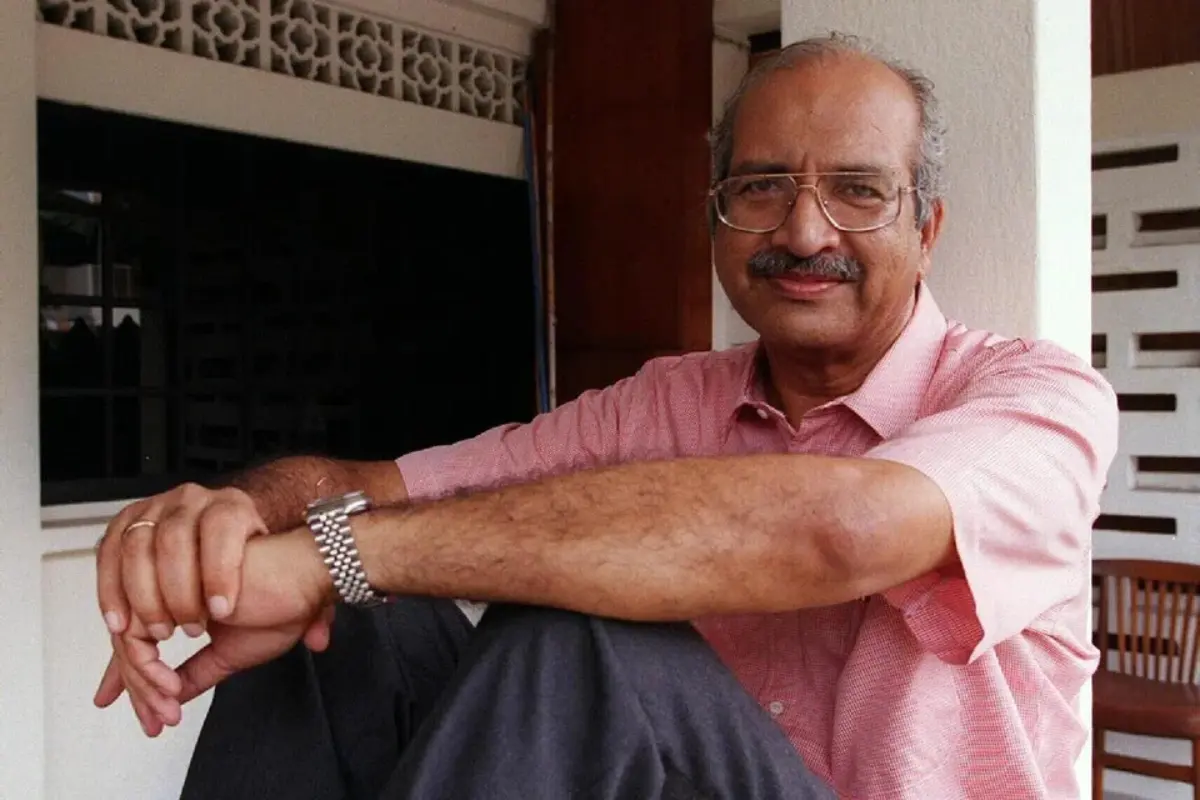
Born in March 1943 in Kanaicha, a village in Uttar Pradesh’s Gorakhpur district, Shriniwas Rai grew up in modest circumstances that deeply influenced his worldview. At the age of ten, he migrated to Singapore — a move that would shape his identity as both an Indian cultural custodian and a committed Singaporean citizen.
From an early age, Shriniwas Rai displayed exceptional academic promise. His intellectual curiosity and disciplined approach to learning paved the way for his admission to the University of Singapore, where he studied law. The young immigrant would soon embark on a journey that would span over 50 years in the legal profession, marked by integrity and an unwavering commitment to justice.
Shriniwas Rai: A Legal Career Defined by Compassion and Access to Justice
Shriniwas Rai’s legal practice was not simply a profession; it was a lifelong mission rooted in fairness and empathy. Over more than five decades, he became known as a principled lawyer who believed that the law should serve the vulnerable and uphold human dignity.
He took on complex and sensitive cases, including those involving national security detainees — often representing individuals whose voices were seldom heard. Despite the challenges, he approached every case with professionalism and humanity. Colleagues admired his calm demeanor and sharp intellect, while clients respected his genuine concern for their well-being.
Remarkably, Shriniwas Rai never officially retired. He continued practising law until his final days, a testament to his passion for justice and his enduring commitment to serving society.
Parliamentary Service: An Independent Voice with a Conscience
Between 1997 and 1999, Shriniwas Rai served as a Nominated Member of Parliament (NMP) in Singapore. During his tenure, he emerged as a thoughtful and principled voice, advocating for minority communities and raising issues of national importance.
In Parliament, he was known for his balanced approach — combining sharp analysis with compassion. He spoke with clarity on education policies, cultural preservation, and social cohesion. His contributions were marked by independence of thought and a genuine desire to build bridges between communities.
Many fellow lawmakers described Shriniwas Rai as a “statesman without pretence,” someone who approached public service not as a platform for personal gain but as an opportunity to uplift society.
Shriniwas Rai: Championing Language and Identity – The Hindi Society (Singapore)
One of Shriniwas Rai’s most enduring legacies lies in his advocacy for the Hindi language. In 1988, alongside Kailash Rai and S.K. Tiwari, he co-founded the Hindi Society (Singapore). Their mission was clear: to preserve linguistic heritage and provide future generations with access to Hindi education.
In recognition of his lifelong devotion, he received the prestigious Hindi Ratna award in 2024 — the highest honour conferred by the Hindi Society.
Building Community Institutions and Strengthening Social Bonds
Beyond language advocacy, Shriniwas Rai played a key role in shaping Singapore’s Indian community institutions. As Secretary of the Singapore Indian Development Association (SINDA) during its formative years, he helped establish strong organisational foundations that continue to empower families and students today.
He also served on the Hindu Advisory Board and was an active member of the Inter-Religious Organisation (IRO), representing the Hindu community and promoting harmony across faiths. Through these roles, he fostered dialogue, understanding, and unity within Singapore’s diverse society.
Preserving Gandhian Ideals through Cultural Leadership
Shriniwas Rai’s deep admiration for Mahatma Gandhi influenced both his personal lifestyle and professional choices. As Chairman of the Board of Trustees of the Mahatma Gandhi Memorial, he worked tirelessly to preserve the historic Race Course Lane site. Collaborating with the Singapore Indian Fine Arts Society (SIFAS), he helped transform the space into the SIFAS Annexe — ensuring that Gandhi’s principles of non-violence and service remained alive in Singapore’s cultural landscape.
Friends and colleagues frequently referred to him as a “true Gandhian.” His simplicity was evident in everyday actions: choosing public transport over luxury and maintaining a humble lifestyle despite his achievements.
A Scholar, Author, and Cultural Bridge-Builder
Shriniwas Rai’s intellectual curiosity extended beyond law and politics. He authored a work exploring linguistic connections between Hindi and Malay — reflecting his belief that languages serve as bridges between cultures. Through scholarship, he encouraged mutual understanding and celebrated Singapore’s multicultural heritage.
Those who interacted with him often spoke of his thoughtful insights and forward-looking perspectives. Mahendra Prasad Rai, president of the Hindi Society (Singapore), once remarked on Shriniwas Rai’s “impassioned yet objective approach” and his ability to leave a lasting impression on everyone he met.