
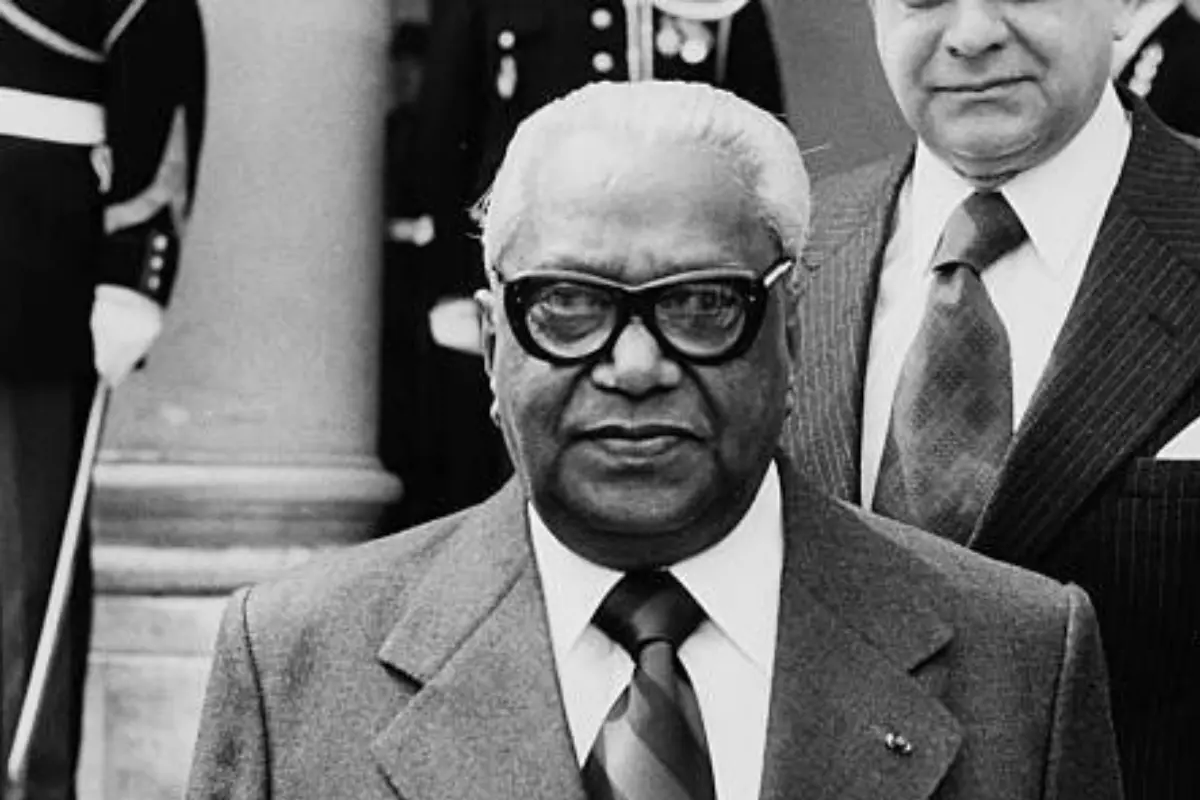
In the heart of the Indian Ocean lies a jewel of a nation, Mauritius—an island whose modern identity was shaped and steered by one extraordinary man: Sir Seewoosagur Ramgoolam. Revered by his people as “Chacha Ramgoolam” or simply “SSR”, he was far more than a politician. He was a healer, a liberator, a nation-builder, and above all, a beacon of resilience. His life story is not just a biography; it is an epic of triumph over adversity, of devotion to democracy, and unrelenting pursuit of equality and justice.
Roots of Resilience: A Humble Beginning
Born on 18 September 1900 in the quiet village of Belle Rive, Sir Seewoosagur Ramgoolam hailed from a modest Indo-Mauritian Hindu family with Bhojpuri roots. His father, Moheeth Ramgoolam, an indentured labourer from Bihar, India, embodied the struggles of thousands who journeyed across oceans seeking dignity and opportunity. The elder Ramgoolam worked on sugar plantations, eventually becoming a sirdar—laying the foundation of perseverance that would later define his son.
Raised by his mother, Basmati, and inspired by sacred Hindu scriptures like the Bhagavad Gita and Ramayana, young Seewoosagur’s early schooling in a baitka (local evening school) planted seeds of morality, knowledge, and courage. These cultural lessons, alongside Western education in English, French, and history at Roman Catholic schools, crafted his dual identity, rooted in Indian tradition, but open to the world.
A tragic accident in his youth left him blind in one eye, yet he never allowed physical hardship to limit his ambition. Instead, it only forged his determination. With his brother’s support, he sailed to London in 1921 to study medicine, ultimately graduating from University College London and taking lectures at the prestigious London School of Economics. His interactions with French intellectuals like André Gide and André Malraux further broadened his worldview.
Seewoosagur Ramgoolam: A Doctor With a Nation’s Pulse
Returning to Mauritius in 1935, Dr. Ramgoolam did not merely treat patients—he diagnosed the ailments of a society in chains. Mauritius at that time was shackled by colonial inequality and systemic neglect of its working-class citizens, mostly the descendants of slaves and indentured labourers. Armed with empathy and intellect, he began his political journey with small steps: joining local councils, publishing reformist essays under the pseudonym Thumb Mark II, and co-founding the Labour Party’s newspaper, Advance.
By 1947, he fully embraced political life, joining the Labour Party of Mauritius, led by Guy Rozemont. The party, a voice for the oppressed, advocated for universal suffrage, workers’ rights, and economic reforms. Ramgoolam, now a seasoned political thinker, emerged as Rozemont’s natural successor after the latter died in 1956.
Lighting the Flame of Independence
From the corridors of Port Louis’s municipal council to the colonial offices of London, Sir Seewoosagur Ramgoolam carried with him the dreams of a nation yearning to be free. As Chief Minister (1961–1965) and Premier (1965–1968), he carefully navigated complex political currents—uniting diverse communities, engaging British authorities, and forging coalitions across ideological lines.
The birth of the Independence Party in 1967, a coalition of the Labour Party, the IFB, and the Comité d’Action Musulman, was a masterstroke of inclusive politics. Under his stewardship, Mauritius attained independence on 12 March 1968, a peaceful yet revolutionary transition that earned him the title of Prime Minister and solidified his status as the Father of the Nation.
Challenges, Reforms, and A Lasting Legacy
Leading a newly sovereign state was no easy feat. Sir Seewoosagur Ramgoolam governed Mauritius through trials of poverty, social unrest, and economic transformation. Despite political turbulence and criticism for certain administrative shortcomings, his long tenure from 1968 to 1982 saw Mauritius evolve from a fragile post-colonial territory into a stable parliamentary democracy.
His political resilience was remarkable. Even after losing power in 1982, he helped stabilise the political scene by supporting emerging leaders. In 1983, he became the Governor-General of Mauritius, the ceremonial representative of the Queen, serving until he died in 1985.
Beyond governance, he championed education, healthcare, and multiculturalism. His commitment to peace and diplomacy was recognised globally, including being elected Chairperson of the Organisation of African Unity (1976–77) and receiving prestigious honours like the Grand Officier de la Légion d’Honneur (France) and the Knight Grand Cross of the Order of St Michael and St George (UK).
Seewoosagur Ramgoolam: A Family of Legacy and Leadership
His personal life was grounded in love and service. Married to Sushil Ramjoorawon, he raised two children, including Navin Ramgoolam, who would later follow in his father’s footsteps and become Prime Minister. The torch of leadership, lit by SSR, continued to shine through his lineage, ensuring that his ideals endured through generations.
Also Read : Navinchandra Ramgoolam: Champion of Inclusive Governance and National Growth