
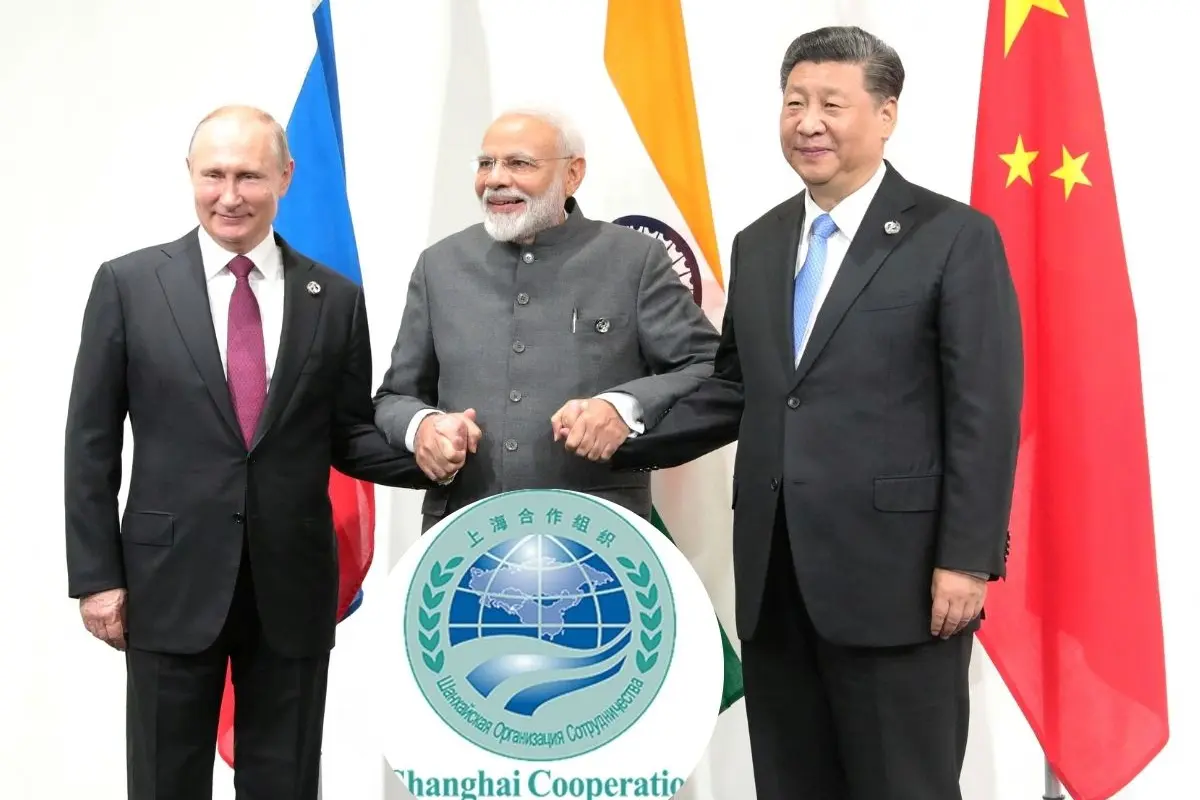
SCO Summit: India, Russia & China Unity Against US Tariffs
SCO Summit: Modi, Xi Jinping and Putin Meeting Comes at Crucial Time
SCO Summit: Indian Prime Minister Narendra Modi will land in China this weekend for his first visit in seven years, setting the stage for a high-stakes geopolitical moment. His attendance at the Shanghai Cooperation Organisation (SCO) summit in Tianjin comes at a delicate juncture: India’s once-solid partnership with Washington has soured after the United States doubled tariffs on Indian exports to 50%, citing New Delhi’s continued purchase of Russian oil.
SCO Summit: A Rift with Washington
The tariff escalation represents the sharpest downturn in US-India relations in decades. With $86.5 billion worth of Indian exports to the US each year, two-thirds—around $60.2 billion—are now under steep duties, striking at labour-intensive sectors like textiles, jewellery, and leather.
“Indian trust in the US is shattered,” said Michael Kugelman, a South Asia analyst. “I’m not sure whether American officials realise how much goodwill has been squandered in such a short time.”
Adding to the tension, Donald Trump’s former trade adviser Peter Navarro accused India of becoming an “oil money laundromat for the Kremlin.” New Delhi, however, insists its Russian oil imports are vital for keeping energy affordable in its vast developing economy, while also helping stabilize global prices.
Why the China Summit Matters
For Beijing, Modi’s arrival is symbolically significant. The SCO summit, hosted by Xi Jinping, positions China as a convener at a time when India’s alignment with the West is fraying. “No doubt there are some in China who are relishing the trade tensions between India and the US,” said Manoj Kewalramani of the Takshashila Institution.
The summit will also see Modi share the stage with Russian President Vladimir Putin, further amplifying the optics of a shifting power balance. For Moscow, India’s presence reinforces its enduring ties amid western isolation. “It’s a great moment for everyone to stick out their tongues at Washington,” Kugelman added.
SCO Summit: Resetting India-China Ties
The visit comes after years of frosty relations between Delhi and Beijing following the 2020 border clashes in Ladakh. While mistrust over the disputed frontier remains, both governments have shown cautious interest in easing tensions. Modi and Xi last met at the BRICS summit in Russia last year, the first time in four years.
“An effort is under way to see if India and China can reach some sort of new equilibrium,” said Kewalramani. “Neither can solve every friction, but creating predictability can deliver practical gains.”
Trade and investment will dominate Modi’s bilateral meeting with Xi, with India eyeing greater Chinese investment in technology and infrastructure, even as it remains wary of Beijing’s strategic ambitions.
Diversifying Beyond the US
New Delhi has already begun recalibrating its trade and strategic partnerships. Ahead of his China trip, Modi travelled to Tokyo for the annual India-Japan summit, securing pledges of up to ¥10 trillion ($68 billion) in Japanese investments over the next decade. Japanese automaker Suzuki alone promised $8 billion for India’s electric and hybrid vehicle sector.
Modi hailed Japan as a partner “made for each other,” with both nations exploring collaborations on critical minerals, advanced manufacturing, and technology transfers. India’s untapped rare earth reserves could be a cornerstone of this cooperation, potentially reducing dependence on US markets.
A Strategic Balancing Act
For India, this weekend’s photographs of Modi standing alongside Xi and Putin will deliver a carefully crafted message: Delhi is not beholden to Washington. While officials stress India remains committed to its US partnership, they also underline the importance of diversification.
“We cannot afford to appear as though we are capitulating to US pressure on oil or trade,” said an Indian government source. “Public anger is high, and India must show it is pursuing independent choices.”
With its largest export market under strain, India has launched an export drive across 40 countries, from the UK to South Korea, to expand its footprint in textiles and other sectors.
Also Read : PM Modi in Japan: Landmark Deals for Innovation and Growth