
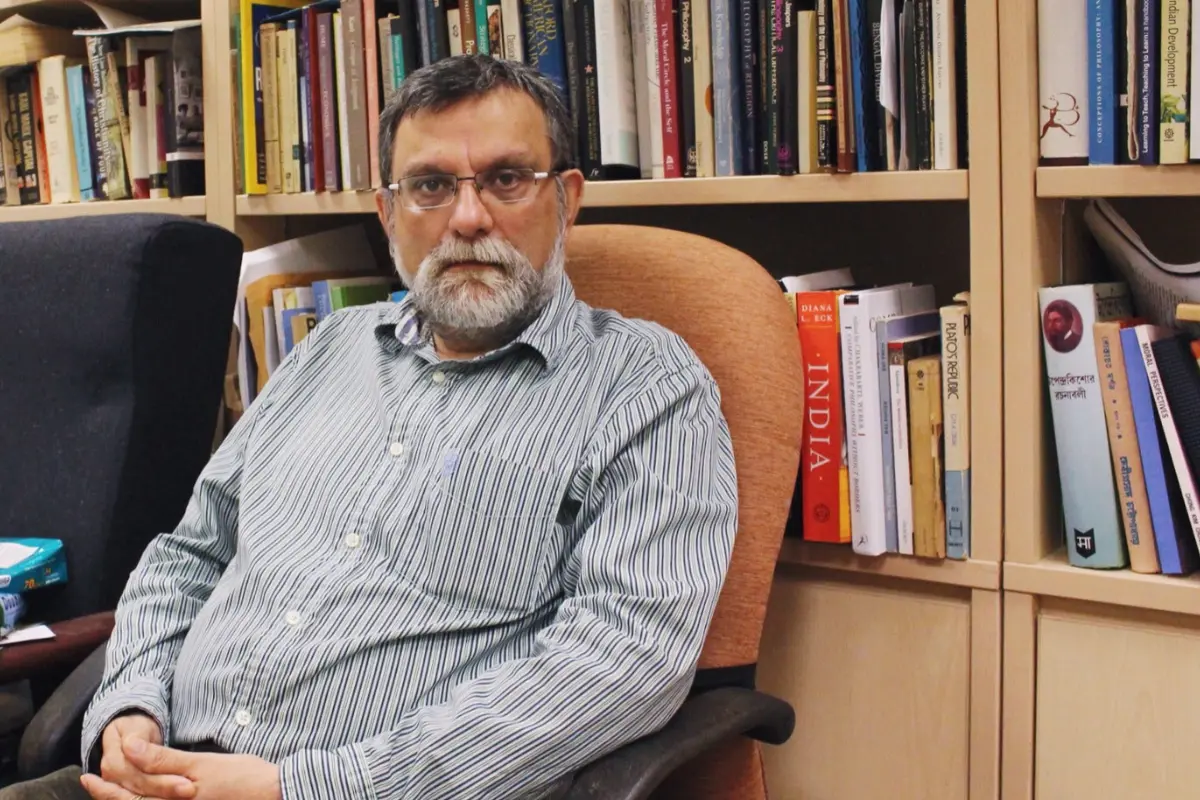
In a world often divided by cultural, political, and philosophical boundaries, there are rare individuals who dedicate their lives to building bridges of understanding. Saranindranath Tagore stands out as one of them—an intellectual deeply rooted in both Indian and Continental philosophy, yet global in his vision. His work reflects a profound belief that humanity’s future depends on embracing diversity, celebrating cultural exchange, and expanding our understanding of modernity itself.
An Associate Professor of Philosophy at the National University of Singapore, Saranindranath Tagore is not only a scholar but also a cultural ambassador. His academic journey spans across continents, from teaching in the United States to engaging in vibrant philosophical dialogues in Asia. He has held prestigious visiting affiliations at Harvard University, the University of Toronto, and the South Asia Initiative, each enriching his research and global outlook.
Saranindranath Tagore: Philosophy with a Purpose
At the heart of Saranindranath Tagore’s intellectual mission is a quest: to integrate the wisdom of Indian philosophy with the analytical depth of Continental thought. This is not simply an academic exercise—it is a philosophical necessity in our era of interconnected challenges. He is currently developing a compelling idea that cosmopolitan theory should incorporate alternative conceptions of modernity, allowing space for non-Western perspectives to reshape global discourse.
His teaching portfolio is as diverse as his research. Over his career, he has guided students through subjects ranging from the Philosophy of Science and Kantian ethics to Phenomenology, Postmodernism, Greek Philosophy, Business Ethics, and the cultural heritage of India. In doing so, he equips learners not only with intellectual tools but also with the empathy and awareness to navigate a multicultural world.
A Historic Dialogue Across Time and Space
In June 2016, Saranindranath Tagore played a role in a symbolic and long-overdue cultural moment. Invited by the Lu Xun Cultural Foundation and the Indian Consulate in Shanghai, he participated in “Lu Xun and Tagore: A Dialogue Beyond Time and Space” at Shao Xing University.
The event commemorated the mutual admiration between two literary giants—Rabindranath Tagore and Lu Xun—who, despite their overlapping lifetimes, never had the opportunity to meet. Representing his great-grand uncle Rabindranath Tagore, Saranindranath met Lu Xun’s grandson, Mr. Zhou Ling Fei, thus bridging a cultural gap nearly a century old.
This dialogue not only honored the historical connection between India and China but also reaffirmed the value of cross-cultural respect. Saranindranath Tagore emphasized that the works of both authors would stand the test of time, inspiring generations as long as human civilization endures.
Saranindranath Tagore: The Cosmopolitan Spirit of Rabindranath Tagore
A descendant of the legendary Tagore family, Saranindranath carries forward a legacy rich in art, literature, and philosophy. His great-grandfather, Abanindranath Tagore, revolutionized Indian painting, while Rabindranath Tagore’s global literary influence remains unmatched—being the only person to have inspired or composed national anthems for three nations: India, Bangladesh, and Sri Lanka.
Saranindranath Tagore often reflects on his great-grand uncle’s commitment to cosmopolitanism. Rabindranath Tagore championed the idea that humanity’s shared identity transcends national and cultural borders. In his own scholarship, Saranindranath echoes this belief, describing Singapore as a living model of cosmopolitan coexistence—where people of diverse heritages share spaces, values, and dreams.
Philosophy in Action
For Saranindranath Tagore, philosophy is not confined to books—it is a living practice. His work on cosmopolitanism calls for more than intellectual agreement; it demands real-world application. By highlighting cities like Singapore, New York, and London as experimental grounds for cultural integration, he invites societies to see diversity not as a challenge, but as humanity’s greatest asset.
His contribution to Rabindranath Tagore studies is significant. Through collaborative translations like Rabindranath Tagore: Final Poems and analytical essays such as “Rabindranath Tagore’s Conception of Cosmopolitanism: A Reconstruction”, he has brought Tagore’s timeless ideas into contemporary philosophical debates.
Also Read : Amitava Kumar: Chronicler of Identity, Migration, and Memory