
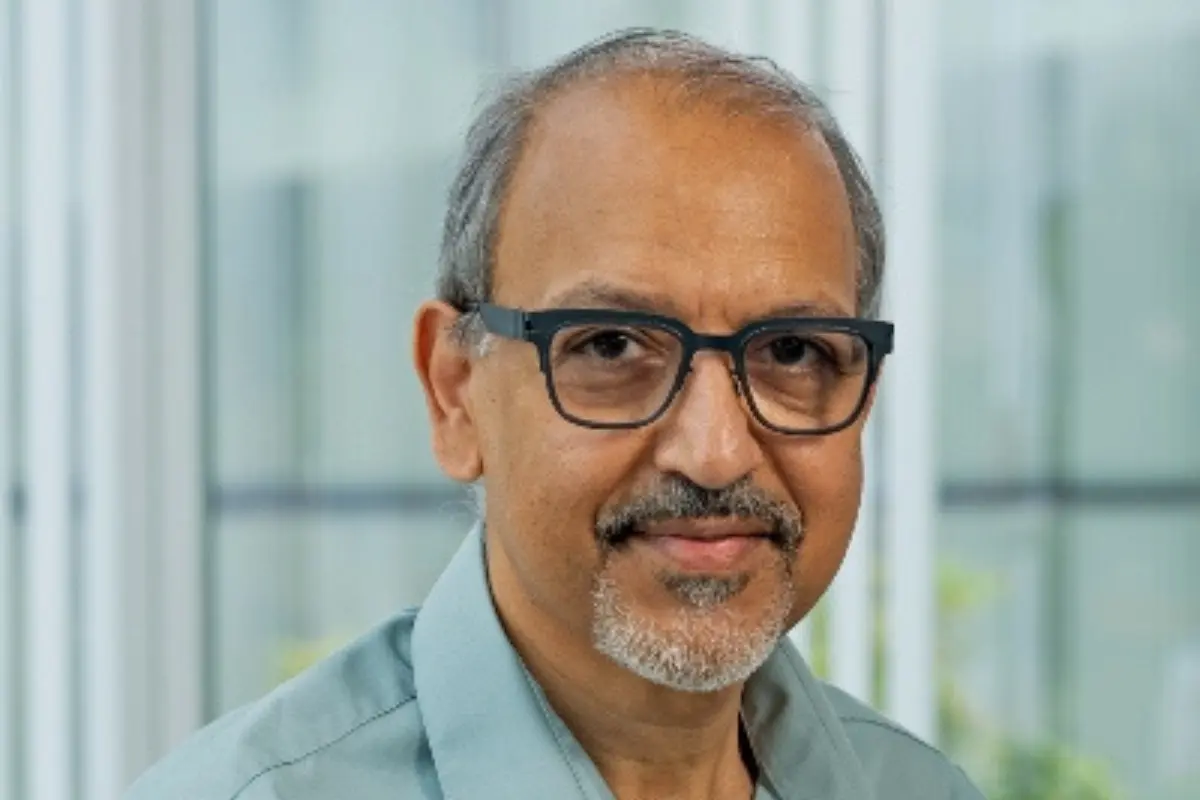
In the world of theoretical computer science—an arena where imagination meets mathematical rigor—few thinkers have pushed the frontier as boldly as Sanjeev Khanna, an Indian-American researcher whose work continues to influence the very way we understand computational complexity.
Sanjeev Khanna: A Journey Rooted in Curiosity and Courage
Growing up in India, Khanna’s academic path began at the prestigious Birla Institute of Technology and Science (BITS), Pilani, where he earned undergraduate degrees in computer science and economics. Even in those early years, he gravitated towards the complexity of algorithms—problems that demanded both creativity and precision.
His quest for deeper understanding took him to the University of Illinois at Urbana-Champaign for a master’s degree, followed by a transformative doctoral journey at Stanford University. It was here that he authored his groundbreaking dissertation, A Structural View of Approximation, which won the 1996 Arthur Samuel Prize for the best PhD thesis in Stanford’s Computer Science Department—an honor that foreshadowed an extraordinary career ahead.
After completing his Ph.D., Khanna spent three intellectually rich years at Bell Laboratories, where the atmosphere of rigorous problem-solving helped shape his distinctive approach to theoretical research. In 1999, he joined the University of Pennsylvania, beginning a chapter that would define him as one of the most influential figures in modern theoretical computer science.
A Research Portfolio That Redefined Algorithmic Boundaries
The contributions of Sanjeev Khanna Computer Scientist stretch across several foundational areas of theoretical computer science. His work does not simply answer questions—it reframes them.
1. Approximation Algorithms
When exact solutions to NP-hard problems become computationally infeasible, approximation becomes a lifeline. Khanna has been one of the world’s most prominent architects of this lifeline, designing near-optimal solutions for problems once considered hopelessly complex.
2. Hardness of Approximation
Understanding how close we can get to exact solutions is as important as the solutions themselves. Khanna has illuminated the inherent limits of computation, offering proofs and structures that help the scientific community understand the true boundaries of efficient problem-solving.
3. Combinatorial Optimization
From matching problems to large-scale clustering, Khanna’s approaches bring clarity to the art of selecting the “best possible” from countless possibilities—impacting fields from data science to operations research.
4. Sublinear Algorithms
In an age of massive datasets, Khanna’s pioneering work in sublinear algorithms allows computation to happen faster than data can even be read. This paradigm shift is vital to modern analytics, streaming, and large-scale AI operations.
5. Randomized and Combinatorial Techniques
His research includes influential breakthroughs in bipartite matching, sparsification, and hierarchical clustering—each advancing the theoretical foundations that modern computing is built upon.
Sanjeev Khanna: Accolades That Reflect a Life of Impact
Recognition has followed Khanna not because he seeks it, but because his work continually elevates the field. His honors include:
-
ACM Fellow (2018) for major contributions to approximation algorithms and computational intractability
-
Guggenheim Fellowship (2007)
-
Sloan Research Fellowship (2000)
-
NSF Career Award (2001)
-
S. Reid Warren, Jr. Award for distinguished teaching at UPenn
-
Lindback Award for Distinguished Teaching
He has also served on editorial boards of prestigious journals such as SICOMP, Algorithmica, JCSS, ACM TALG, and Foundations and Trends in Theoretical Computer Science.