
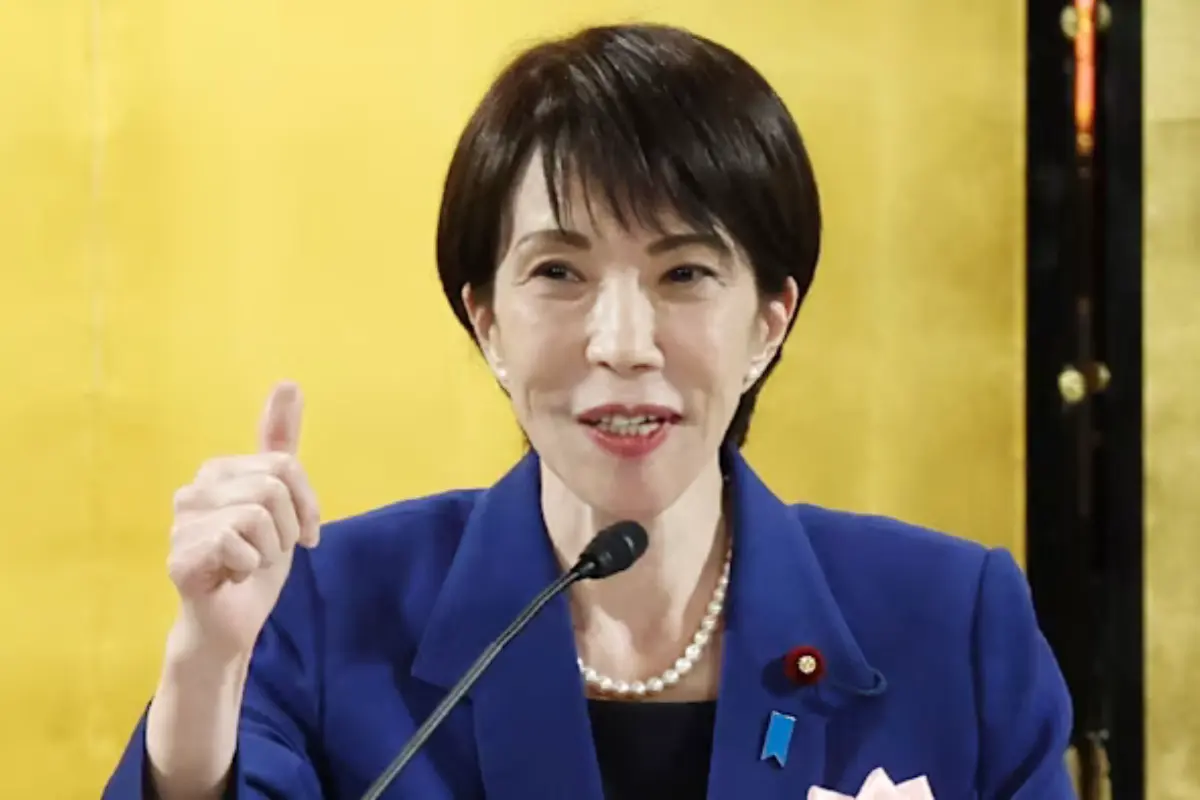
Sanae Takaichi: What’s her Mandate Means for China & India
Sanae Takaichi’s Landslide Win Signals a New Strategic Era for Japan and the Indo-Pacific
Japan’s political landscape has undergone a dramatic shift after Prime Minister Sanae Takaichi secured a sweeping parliamentary mandate that analysts say could redefine the country’s defense posture, economic strategy and global alliances for years to come. The Sanae Takaichi election victory delivered a commanding majority in the lower house, giving her government an unusually strong platform to push legislation and accelerate long-planned reforms.
Her Liberal Democratic Party (LDP) captured 316 seats in the 465-member chamber. Together with coalition partner Japan Innovation Party (Ishin), the ruling bloc surpassed the two-thirds threshold — a powerful advantage that allows it to override resistance from the upper chamber and shape policy with fewer domestic obstacles.
The result followed a risky snap election called during mid-winter, a move widely viewed as a political gamble. Despite harsh weather in several regions and skepticism from critics, voters delivered a decisive outcome that reinforced Takaichi’s reputation as a blunt and determined conservative leader capable of mobilising support during uncertain times.
Sanae Takaichi: Markets Rally on Political Stability
Financial markets reacted quickly to the Sanae Takaichi election victory, with Japanese equities surging to record highs as investors welcomed policy clarity and continuity. Traders began referencing a renewed “Takaichi trade,” a shorthand for optimism that stable leadership could accelerate industrial policy, technology investment and national security reforms.
Investors appear to be betting that predictable governance will outweigh concerns about fiscal expansion. Sectors tied to defense production, semiconductors and advanced manufacturing saw strong interest as expectations grew for expanded government support and faster policy implementation.
Economists cautioned that enthusiasm may hinge on how Tokyo balances spending ambitions with long-term fiscal discipline. Still, the immediate sentiment underscored how much weight global markets place on Japan’s political stability — especially amid broader uncertainty across the Indo-Pacific region.
A Strategic Turning Point for the Indo-Pacific
Beyond domestic politics, the Sanae Takaichi election victory is poised to influence strategic calculations across Asia and beyond. With fewer internal constraints, Tokyo is now positioned to move more decisively on defense spending, industrial policy and alliance coordination — areas that directly affect relations with China, the United States and India.
Analysts argue that Takaichi’s strengthened mandate gives Japan an opportunity to assume a more assertive role in shaping regional security architecture. At the same time, it forces neighbouring capitals to reassess their diplomatic and economic strategies toward Tokyo.
One Asia-policy analyst noted that China must now contend with a Japanese government capable of implementing policies it previously only discussed cautiously. The result could be a recalibration of regional deterrence dynamics, particularly in the Western Pacific.
Sanae Takaichi: China – Tougher Deterrence with Managed Diplomacy
Beijing’s unease stems less from ideology than from Takaichi’s willingness to speak openly about security scenarios that earlier leaders preferred to leave ambiguous — especially concerning Taiwan and Japan’s potential role during a crisis. Her previous statements triggered some of the sharpest diplomatic tensions between the two countries in years, prompting Beijing to signal displeasure through strong rhetoric and economic pressure.
With a supermajority in hand, Takaichi now has greater leverage to advance policies China views warily, including increased defense spending, expanded military-industrial capacity and potential constitutional debates around Japan’s security framework.
Yet analysts say the Sanae Takaichi election victory could also create space for a controlled diplomatic reset. A strong electoral mandate may allow Tokyo to pursue pragmatic engagement without appearing weak domestically. The most likely path, observers suggest, will blend stronger deterrence capabilities with continued dialogue to preserve economic ties and avoid escalation.
The risk, however, lies in misinterpretation. If Beijing perceives Japan’s reforms as part of a broader containment strategy, tensions could intensify — particularly if Tokyo deepens intelligence cooperation, joint production and operational integration with the United States.
India: The Quiet Strategic Winner
While China and the United States dominate headlines, India may emerge as one of the biggest beneficiaries of the Sanae Takaichi election victory. A politically stable and assertive Japan aligns closely with New Delhi’s long-term goals of building resilient supply chains, advancing technology partnerships and balancing China’s influence without entering formal military alliances.
Takaichi’s emphasis on industrial policy and technological innovation creates opportunities for deeper collaboration in semiconductors, advanced manufacturing and infrastructure financing. Stronger Japanese leadership also reduces the risk of policy interruptions that can derail long-term projects, an outcome welcomed by Indian policymakers seeking continuity in regional initiatives.
Strategically, a more confident Japan in the Western Pacific could ease pressure on India by sharing the burden of regional deterrence. This allows New Delhi to focus more on its own border challenges and Indian Ocean priorities while continuing to strengthen the Quad partnership.
Still, some analysts note potential limitations. Takaichi’s conservative stance on immigration and labour policy could affect Japan’s economic growth trajectory over time, indirectly influencing the scale of overseas investment and cooperation.
United States: A Stronger Ally with New Expectations
For Washington, the Sanae Takaichi election victory offers clear advantages. A treaty ally willing to increase defense spending and expand industrial collaboration aligns with longstanding US goals in Asia. Senior American officials have welcomed Japan’s growing strategic role, arguing that a stronger Tokyo enhances regional stability.
However, the relationship also comes with complexities. The transactional nature of US leadership and evolving expectations around defense budgets, basing arrangements and investment commitments could test the alliance. Analysts say the coming years will likely involve negotiations over how responsibilities are shared between the two countries.