
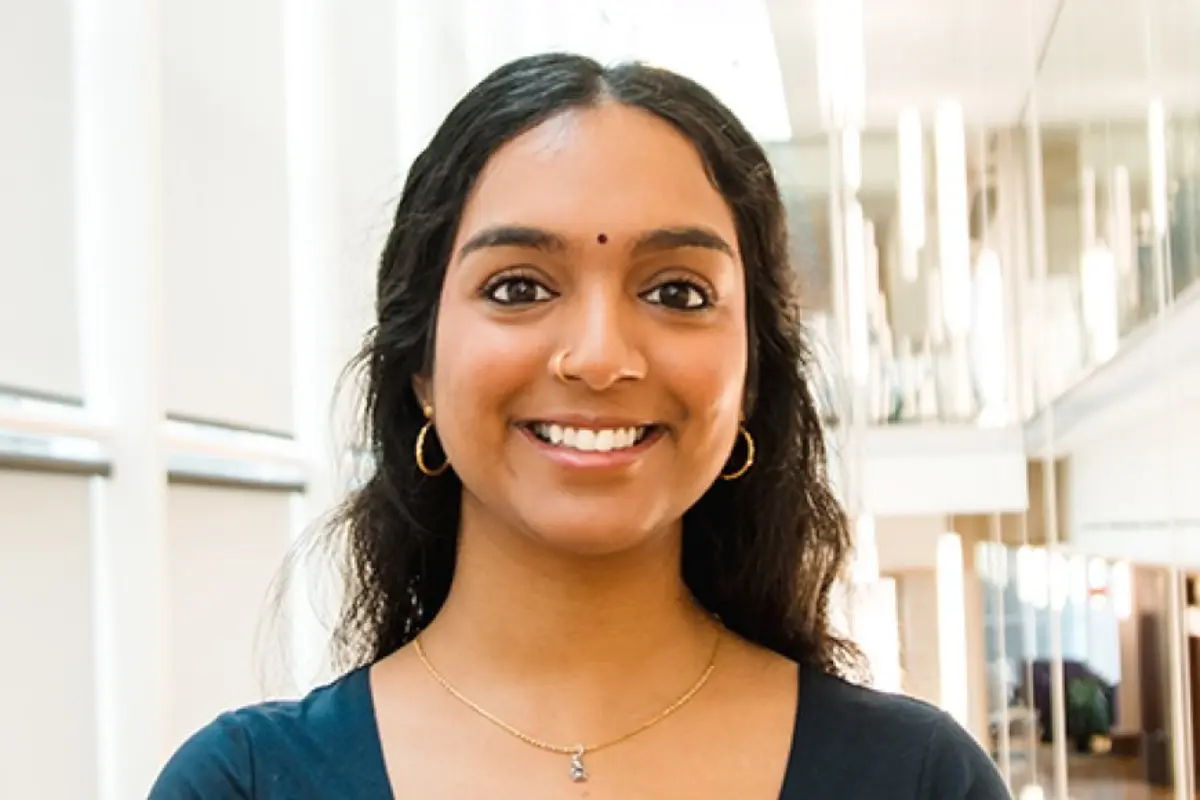
Before entering the world of advanced geospatial analytics, Sai Cheruvu built a multidisciplinary foundation during her undergraduate years at the University of Texas at Austin, where she earned a Bachelor of Science in Public Health. Alongside her scientific training, she pursued a minor in journalism, strengthening her ability to communicate complex social and environmental issues in accessible and impactful ways.
Her academic curiosity was deeply shaped by family history. Reflecting on her roots and her family’s agricultural background in India, she began to see farming not simply as a profession but as a cultural and social ecosystem. This realization led her toward sustainable agriculture — an area where environmental science meets human resilience.
During her undergraduate capstone project, she conducted fieldwork in Andhra Pradesh, India, collaborating with farmers involved in the Community-Based Natural Farming initiative. Working closely with small-scale farmers in the Kadapa district, she listened to their stories, observed indigenous climate adaptation practices, and explored the realities of agrarian distress. These experiences planted the seeds for her future path — combining research, technology, and social advocacy.
Sai Cheruvu: A Turning Point – Discovering Geospatial Data Sciences at SEAS
Motivated to build technical expertise that could amplify her impact, Sai Cheruvu pursued graduate studies at the University of Michigan’s SEAS program, specializing in Geospatial Data Sciences (GDS). Her decision was inspired by research conducted by Associate Professor Meha Jain, whose work demonstrated the power of satellite data and spatial analytics in understanding agricultural systems.
At SEAS, Cheruvu immersed herself in interdisciplinary learning, integrating environmental science with advanced statistical analysis and remote sensing technologies. Her research explored how big data could reveal patterns in agricultural decision-making, climate adaptation, and sustainable practices.
Working with the Meha Jain Lab, she investigated barriers to climate-smart agriculture in South Asia. By pairing remote sensing data with agricultural and census datasets, she examined factors influencing the adoption of practices like zero tillage — an approach that reduces soil disturbance and enhances sustainability.
Her work reflected a central belief: that technology, when guided by community knowledge and ethical research practices, can help scale solutions without losing cultural context.
Transformative Food Systems Fellowship: Leadership Beyond the Classroom
During her time at SEAS, Sai Cheruvu was selected as a member of the Transformative Food Systems (TFS) fellowship cohort — an experience that broadened her perspective beyond academic research.
Through the fellowship, she collaborated with peers from urban planning, public health, and environmental science, exploring the social dimensions of food systems. She also led training programs for K-12 educators in Flint, Michigan, focusing on environmental justice and food waste. These initiatives demonstrated her commitment to community engagement and her belief that education plays a critical role in long-term sustainability.
The fellowship reinforced her understanding that transforming food systems requires holistic thinking — addressing environmental, social, economic, and cultural factors simultaneously.
Sai Cheruvu: Research with Purpose – Sustainable Agriculture and Farmer Livelihoods
Throughout her graduate studies, Sai Cheruvu remained deeply connected to her research roots in India. She explored the challenges faced by small farmers navigating climate variability, market pressures, and technological transitions.
Her research examined how data-driven tools could help policymakers and farmers make informed decisions — identifying regions where sustainable practices are viable and understanding the socioeconomic factors that influence adoption. At the same time, she emphasized the importance of amplifying farmers’ voices, ensuring that research findings reflect lived realities rather than purely statistical trends.
By bridging the gap between advanced analytics and grassroots knowledge, she helped reshape conversations about agricultural sustainability in South Asia.
Personal Narrative: How Loss and Community Shaped Her Vision
Beyond her academic achievements, Sai Cheruvu has spoken openly about the personal motivations behind her work. The passing of her grandfather profoundly influenced her understanding of community, food traditions, and the emotional connections people have with agriculture.
This experience deepened her belief that food systems are not only about production and economics but also about relationships, culture, and collective identity. Her reflections highlight a broader philosophy: that sustainable solutions must respect human stories as much as scientific data.
Professional Aspirations and Public Service
Following her graduation in May 2025, Sai Cheruvu became involved with the U.S. Government Accountability Office (GAO), applying geospatial analysis to environmental policy and public sector research. Her work reflects a desire to serve communities through evidence-based policymaking and to ensure that sustainability efforts translate into tangible benefits for vulnerable populations.
She has expressed a strong interest in pursuing a long-term career in public service, where she can see the direct impact of her work. Looking ahead, she is also considering doctoral studies to further explore global agrarian distress and develop scalable solutions for food system transformation.
Philosophy on Transforming Food Systems
For Sai Cheruvu, transforming food systems is not about isolated technological fixes. Instead, it requires a holistic vision — one that integrates environmental sustainability, social equity, economic viability, and cultural respect.
She believes meaningful change emerges through collective action: empowering small farmers, supporting community-driven innovation, and fostering interdisciplinary collaboration. By combining geospatial data with grassroots insights, she advocates for solutions that are both scientifically rigorous and socially inclusive.