
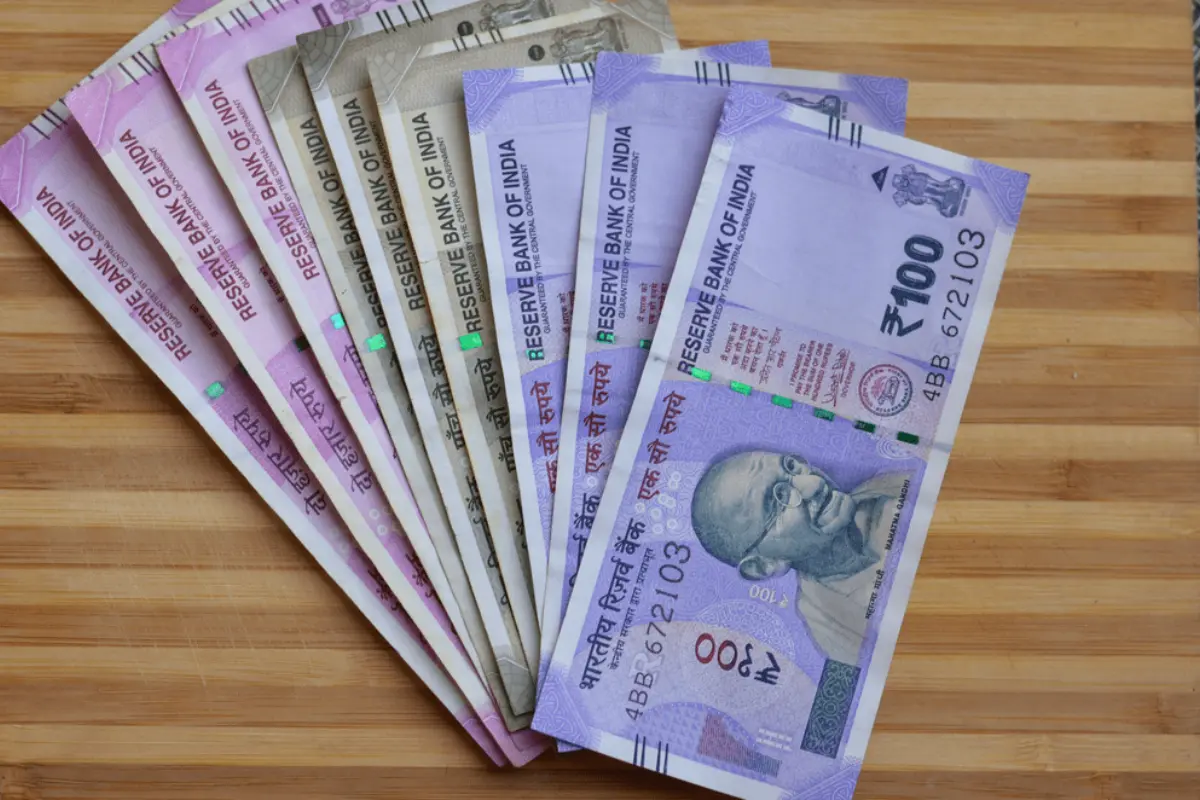
The Indian Rupee 2025 has endured a challenging year, depreciating steadily from around ₹83.3–83.5 in January to approximately ₹88.6–88.8 per US dollar by mid-November. This persistent weakness reflects a complex mix of domestic and global headwinds — from a resilient US dollar and elevated oil prices to sustained foreign fund outflows and trade friction between major economies.
However, a glimmer of optimism has emerged in recent weeks, as renewed hopes of a comprehensive US-India trade agreement and supportive MSCI index changes have provided a cushion for the struggling rupee.
Rupee: A Year of Challenges for the Indian Currency
Throughout 2025, the rupee has battled a relentless global environment marked by higher oil import bills and tighter US monetary policy. Persistent Foreign Institutional Investor (FII) outflows, coupled with weaker export demand under lingering US tariffs, weighed heavily on India’s external position.
Despite these pressures, the domestic currency has shown signs of stabilizing. Over the past week, the rupee strengthened modestly, buoyed by reports that the United States and India are “pretty close” to finalizing a fair trade agreement — a statement made by President Trump that sparked optimism among investors and traders alike.
On Wednesday, however, the rupee slipped by 15 paise to 88.65 per dollar in early trading as higher crude prices and ongoing fund outflows exerted fresh pressure. Yet, according to forex analysts, the renewed hope surrounding trade negotiations helped the rupee resist further decline.
Trade Talks Revive Confidence
Market experts believe that a successful US–India trade deal could act as a significant turning point for the Indian Rupee 2025.
“A credible trade agreement is likely to enhance investor confidence and boost exports, leading to stronger dollar inflows,” said Rahul Kalantri, VP Commodities at Mehta Equities Ltd. “If structured well, it could lift the rupee by improving India’s current account balance and attracting foreign investment.”
However, Kalantri also warned that if the agreement disproportionately increases US imports into India, it could trigger higher dollar demand, creating mild downward pressure on the currency in the short term.
“While near-term volatility is inevitable, the medium-term outlook remains positive for the rupee, especially if the deal translates into tangible export and investment growth,” he added.
Rupee: MSCI Review Spurs Inflows
Another key development that could support the Indian Rupee 2025 is the MSCI Global Standard Index review, which has led to the inclusion of four prominent Indian firms — Fortis Healthcare, GE Vernova T&D India, One 97 Communications (Paytm), and Siemens Energy India.
These additions are expected to attract passive fund inflows from global investors, as large funds adjust their portfolios to align with the updated index composition.
“As passive inflows pour in, they could provide an additional cushion to the rupee in the near term, helping offset temporary weakness from global uncertainties,” noted Amit Pabari, Managing Director at CR Forex Advisors.
This development could not have come at a better time, as foreign portfolio investors have been net sellers in Indian equities for much of 2025. The MSCI inflows are now being viewed as a timely stabilizer.
Expert Views: Measured Optimism for 2026
Looking ahead, analysts predict that the rupee could regain some ground if the trade deal materializes and market sentiment improves.
Mohit Gulati, CIO and Managing Partner at ITI Growth Opportunities Fund, expects the rupee to trade in a more stable range. “Assuming a credible US–India trade agreement is achieved, I forecast INR between ₹83 and ₹84.5 over the coming year,” said Gulati.
He cautioned that while the agreement would lower India-specific risk premiums, broader global dynamics — such as US Federal Reserve policy, oil price volatility, and capital flows — will remain dominant forces.
“Expecting the rupee to surge into the high 70s is unrealistic unless we see decisive Fed rate cuts and sustained capital inflows,” Gulati added.
Jigar Trivedi, Senior Research Analyst at Reliance Securities, shares a cautiously optimistic view. He believes that the trade deal could “enhance market access for Indian goods, attract capital inflows, and improve India’s current account balance.”
Trivedi projects that the rupee could strengthen toward ₹86.5 per dollar by year-end if the trade agreement successfully addresses tariff irritants and promotes smoother trade in services and manufacturing.
“USDINR may face resistance near 89, with strong support around 86,” Trivedi said, hinting that the currency may soon find a more stable footing.