
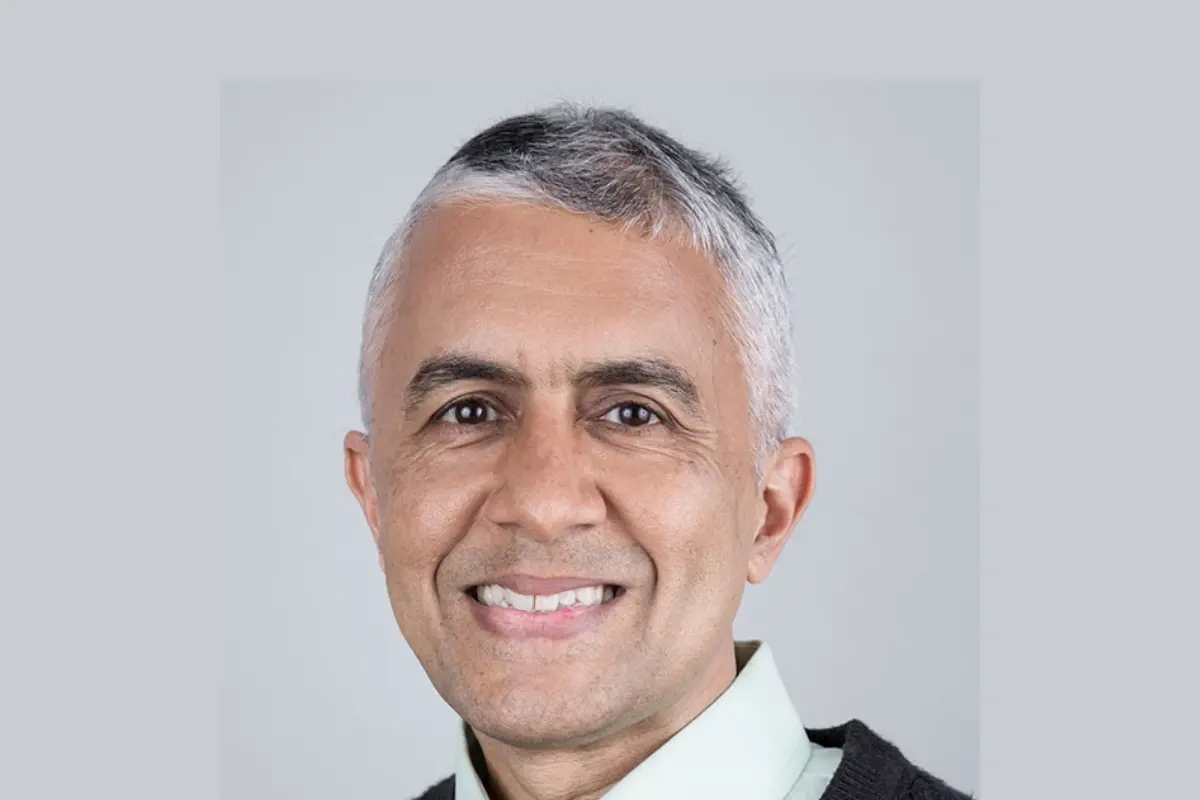
The intellectual journey of Ramesh Govindan began in India, where he demonstrated early excellence in science and engineering. He earned his Bachelor of Technology in Computer Science and Engineering from the Indian Institute of Technology Madras (IIT Madras) in 1987—an institution renowned for producing some of the world’s most impactful technologists.
Driven by curiosity and a desire to explore the deeper mechanics of computing systems, he moved to the United States for advanced studies. At the University of California, Berkeley, one of the world’s foremost research universities, he completed his Master’s and Ph.D. in Computer Science, earning his doctorate in 1992. This period proved formative, laying the intellectual groundwork for his lifelong engagement with computer networking, routing systems, and large-scale distributed infrastructures.
Ramesh Govindan: Academic Career and Leadership at USC
After completing his doctoral work, Ramesh Govindan joined the University of Southern California, where he steadily rose through the academic ranks to become a full professor. His appointment as the Northrop Grumman Chair in Engineering stands as recognition of his extraordinary scholarly impact and leadership.
At USC, he co-leads the Networked Systems Laboratory (NSL), a hub for cutting-edge research in wired and wireless networking. Under his guidance, the laboratory has become a training ground for generations of students who now contribute to academia, industry, and public research institutions worldwide.
Pioneering Internet Routing and Topology Research
One of the defining phases of Ramesh Govindan’s career was his early work on internet routing and topology analysis. At a time when the Internet was rapidly expanding but poorly understood, he helped uncover fundamental weaknesses in routing protocols.
In 2000, collaborating with Kannan Varadhan and Deborah Estrin, he analyzed routing oscillations in inter-domain networks. Their work revealed that unconstrained hop-by-hop routing decisions could destabilize networks. The introduction of a “safe mode” concept demonstrated how disciplined routing policies could reduce errors and enhance stability—an insight that influenced subsequent routing research and protocol design.
He was also among the first researchers to map the Internet at scale. His Mercator network-mapping system produced unprecedented views of the internet backbone, providing researchers and engineers with a clearer understanding of global connectivity and structural resilience.
Ramesh Govindan: Transforming Wireless Sensor Networks
While his early contributions reshaped internet routing theory, Ramesh Govindan later turned his attention to wireless sensor networks, a field that would become central to IoT technologies.
His research on Directed Diffusion and Geographic Hash Tables proved seminal, redefining how data could be stored, retrieved, and routed in energy-constrained environments. These ideas addressed the core challenge of sensor networks: how to move information efficiently when power, bandwidth, and computation are limited.
In 2001, working with Deborah Estrin, Deepak Ganesan, and Scott Shenker, he helped develop braided multipath routing, a fault-tolerant and energy-efficient approach to recovery after network failures. This work became foundational for resilient wireless communication.
Tenet, Wisden, and Energy-Aware Innovation
The mid-2000s marked another creative phase in Ramesh Govindan’s career. He and his collaborators introduced Tenet, a novel network architecture for wireless sensing that simplified application development and promoted code reuse. Tenet’s layered design became a reference point for future sensor network architectures.
In parallel, his work on Wisden, a wireless sensor network system for structural monitoring, demonstrated how reliable data transport could be achieved without global clock synchronization. The project also introduced wavelet-based data compression techniques, allowing low-power radios to transmit meaningful information using minimal bandwidth.
In 2010, Govindan extended his research philosophy to mobile devices. By using smartphones to evaluate remote-area power supply systems, his team demonstrated methods that extended phone battery life by nearly four times compared to traditional GPS-based approaches.
Expanding into Cloud, NFV, and 3D Sensing
Never confined to a single domain, Ramesh Govindan has continuously evolved his research agenda. His later work explores cloud computing and Network Function Virtualization (NFV), including systems such as Quadrant, designed to improve performance, reliability, and security in virtualized networks.
He has also ventured into 3D sensing and urban-scale systems, contributing to projects like RECAP, which integrates LiDAR and stereo cameras for large-scale traffic reconstruction. These efforts illustrate his belief that networking research must intersect with real-world sensing and intelligent infrastructure.
Editorial Leadership and Professional Service
Beyond research, Ramesh Govindan has played a pivotal role in shaping the global research community. He served as Editor-in-Chief of IEEE Transactions on Mobile Computing, one of the most influential journals in the field. His editorial leadership upheld rigorous standards while encouraging innovative and interdisciplinary work.
His election as a Fellow of both the IEEE and the ACM reflects peer recognition of his sustained and transformative contributions to computer science.
Ramesh Govindan: Awards and Global Recognition
The career of Ramesh Govindan is distinguished by numerous honors, including:
-
2018 IEEE Internet Award
-
2014 IIT Madras Distinguished Alumnus Award
-
2014 IEEE Fellow
-
2011 ACM Fellow
-
2014 IRTF Applied Networking Research Prize
-
Multiple Best Paper Awards at leading conferences such as ACM SenSys and IEEE IPSN