
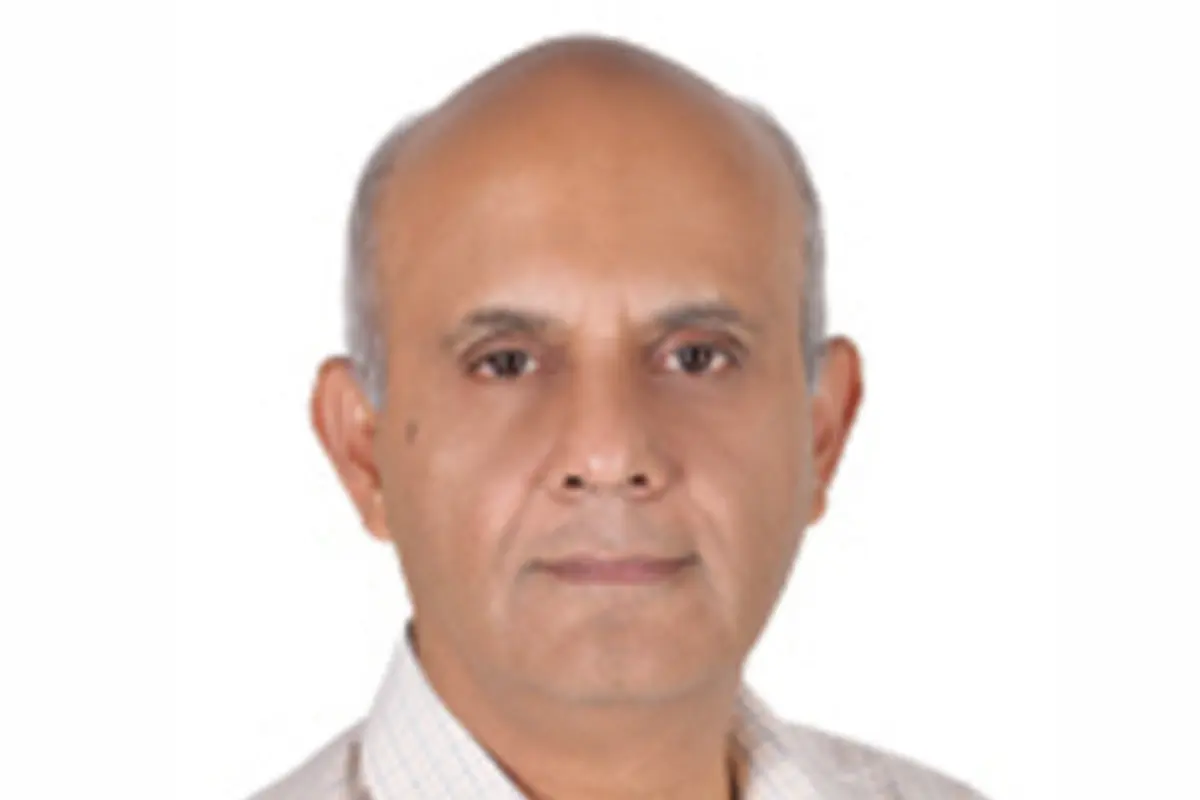
Ramarathnam Narasimhan was born on 31 May 1960 in the culturally rich southern Indian state of Tamil Nadu. From an early age, he demonstrated a strong aptitude for analytical thinking and problem-solving—traits that would later define his scientific career.
His formal journey into engineering began at the Indian Institute of Technology Madras, where he earned his B.Tech. degree in Mechanical Engineering in 1982. IIT Madras, known for its rigorous academic environment, provided him with a strong grounding in classical mechanics and engineering principles, nurturing both discipline and curiosity.
Driven by a desire to explore the deeper theoretical foundations of mechanics, Ramarathnam Narasimhan moved to the United States to pursue higher studies at the California Institute of Technology (Caltech)—one of the world’s most prestigious hubs for applied science and engineering.
Caltech Years of Ramarathnam Narasimhan: Shaping a Scientific Vision
At Caltech, Ramarathnam Narasimhan completed his M.S. in Mechanical Engineering in 1983, followed by a Ph.D. in Applied Mechanics in 1986. These years proved transformative, exposing him to cutting-edge research, interdisciplinary collaboration, and an uncompromising culture of scientific excellence.
His doctoral and post-doctoral research was conducted under the mentorship of Professor Ares J. Rosakis, a global authority in experimental mechanics. Together, they explored complex phenomena in elastic-plastic solids, particularly focusing on crack initiation, propagation, and three-dimensional crack-tip fields.
One of their landmark findings demonstrated how three-dimensional effects dominate crack-tip behavior at distances nearly half the specimen thickness from the crack front—an insight that significantly advanced fracture mechanics theory and experimental validation.
For this exceptional collaborative work, Ramarathnam Narasimhan received the Rudolph Kingslake Medal of SPIE in 1988, shared with Rosakis and Alan Taylor Zehnder—an early indicator of a distinguished scientific career ahead.
Return to India and Academic Leadership
In 1987, Ramarathnam Narasimhan returned to India, joining the Indian Institute of Technology Bombay as a faculty member. During his four years at IIT Bombay, he established himself as a rigorous researcher and an inspiring teacher, blending theoretical clarity with practical relevance.
In 1991, he joined the Indian Institute of Science (IISc), an institution synonymous with advanced research and scientific leadership in India. At IISc, he found the ideal environment to expand his research vision, mentor scholars, and contribute to national and global scientific discourse.
Over the decades, Ramarathnam Narasimhan has remained deeply associated with IISc, serving as a Professor of Mechanical Engineering, shaping curricula, research culture, and interdisciplinary collaboration.
Ramarathnam Narasimhan: Global Exposure Through Sabbaticals
To continuously refine his scientific outlook, Ramarathnam Narasimhan undertook multiple international sabbaticals. These included:
-
Royal Institute of Technology (KTH), Stockholm, Sweden
-
Institute for High Performance Computing (IHPC), Singapore
-
National University of Singapore (NUS)
Research Legacy and Scientific Contributions
The research legacy of Ramarathnam Narasimhan is both deep and wide-ranging. His work spans:
-
Solid Mechanics
-
Fracture Mechanics
-
Mechanics of Materials
-
Nonlinear and Dynamic Fracture
-
Indentation Mechanics
-
Bulk Metallic Glasses (BMGs)
He is particularly acclaimed for his work on mixed-mode ductile fracture, where he developed innovative methodologies to quantify micro-mechanical processes such as microvoid coalescence and shear banding.
In collaboration with Professor Upadrasta Ramamurty, he made seminal contributions to understanding the fracture behavior of bulk metallic glasses, identifying characteristic fracture time scales and proposing explanations for nanoscale trench formation—insights that bridged theory with experimental observation.
His scholarly output includes over 100 peer-reviewed journal articles, widely cited and respected across the international mechanics community. Platforms such as Google Scholar list more than 140 research publications, reflecting the enduring impact of his work.
Service to Science and Editorial Leadership
Beyond research and teaching, Ramarathnam Narasimhan has played a vital role in shaping scientific policy and publication standards. He has served as:
-
Member, Science and Engineering Research Board (SERB), Department of Science and Technology, Government of India
-
Editorial Board Member for leading journals such as:
-
Engineering Fracture Mechanics
-
Journal of the Mechanics and Physics of Solids
-
International Journal of Fracture
-
-
Former Editorial Board Member of Current Science (Indian Academy of Sciences)
His editorial contributions have helped maintain rigorous standards in scientific publishing while encouraging innovative, high-impact research.
Mentorship and Teaching Excellence
One of the most enduring aspects of Ramarathnam Narasimhan’s legacy is his role as a mentor. Over the decades, he has personally guided more than 25 doctoral and postgraduate students, many of whom have gone on to successful careers in academia, research laboratories, and industry.
Known for his clarity, patience, and intellectual honesty, he has inspired generations of engineers to pursue depth over shortcuts and curiosity over convenience.
Ramarathnam Narasimhan: Awards, Honors, and Recognition
Ramarathnam Narasimhan’s contributions have been recognized with some of India’s most prestigious scientific honors:
-
Shanti Swarup Bhatnagar Prize for Science and Technology (1999) – Engineering Sciences
-
Fellow, Indian Academy of Sciences (2000)
-
Fellow, Indian National Science Academy (2002)
-
Fellow, Indian National Academy of Engineering
-
Prof. Rustom Choksi Award for Excellence in Research, IISc (2003)
-
J. C. Bose National Fellowship (since 2010)
-
Distinguished Alumnus Award, IIT Madras (2016)