
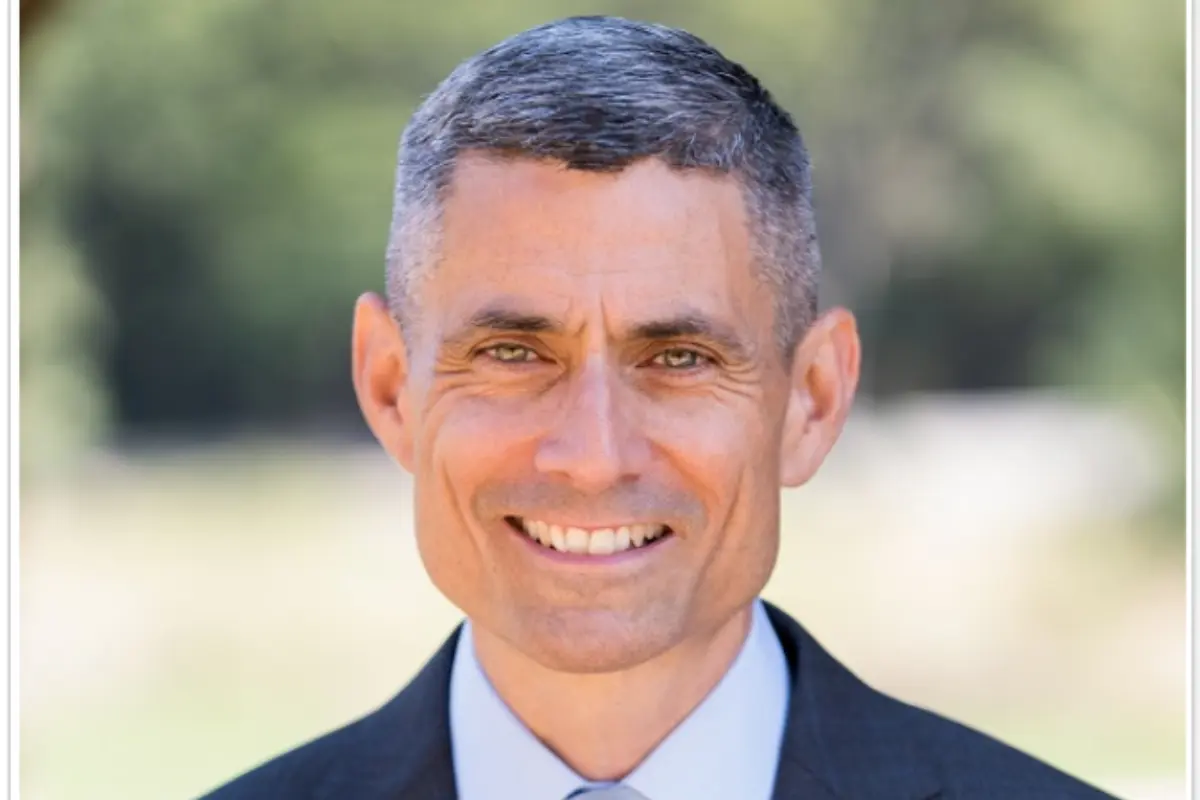
In an era where global diplomacy requires more than mere political rhetoric, Paul Kapur stands as a beacon of informed leadership, combining academic brilliance with practical policy influence.
As the newly nominated Assistant Secretary of State for South and Central Asian Affairs in the Second Trump administration, Kapur is not merely stepping into a title—he is stepping into a legacy of insight, strategic foresight, and an unwavering commitment to international security.
Paul Kapur: A Scholar of the World, Shaped by Curiosity
Paul Kapur’s journey began with a deep-rooted thirst for knowledge. Earning his undergraduate degree from Amherst College and later his Ph.D. from the University of Chicago, Kapur distinguished himself early with an intellectual rigour that foreshadowed his future contributions.
These prestigious institutions provided more than education—they ignited a passion for geopolitics, security policy, and the intricate dynamics of South Asia.
His academic odyssey was not confined to books and theories. It translated into a career that would blend research with real-world impact. Kapur’s teaching roles at Claremont McKenna College, the U.S. Naval War College, and as a visiting professor at Stanford University refined his voice as both an educator and thought leader.
Paul Kapur: A Professor at Heart, a Diplomat by Vision
In 2025, Paul Kapur was nominated as Assistant Secretary of State for South and Central Asian Affairs, succeeding Donald Lu. For many, this appointment was a natural progression. For those in policy circles, it was a triumph of wisdom over partisanship.
Kapur currently serves as a professor in the Department of National Security Affairs at the U.S. Naval Postgraduate School. He also maintains scholarly influence as a visiting fellow at Stanford’s Hoover Institution and the Observer Research Foundation in New Delhi. His teaching is deeply rooted in strategic realities, covering topics like nuclear proliferation, Indo-Pacific security, and the volatile intricacies of Islamist militancy.
Beyond academia, he has been instrumental in Track 1.5 dialogues between the United States and India. Kapur has also served on the U.S. State Department’s Policy Planning Staff, focusing on South and Central Asia, Indo-Pacific dynamics, and U.S.-India bilateral strategies.
This rare blend of academic rigor and real-world engagement makes Paul Kapur a uniquely qualified leader for one of America’s most complex foreign policy portfolios.
Thought Leadership: Beyond Classrooms and Conference Rooms
What sets Paul Kapur apart is his fearless scholarship. In his landmark book, Jihad as Grand Strategy, he challenges conventional narratives by asserting that Pakistan’s use of jihadist groups is not incidental but an intentional element of national strategy. This powerful insight compels policymakers to reassess assumptions, confronting difficult truths with clarity and courage.
Kapur’s other notable works—Dangerous Deterrent, India, Pakistan, and the Bomb (co-authored with Sumit Ganguly), and The Challenges of Nuclear Security—reflect a career dedicated to unravelling the world’s most volatile security dilemmas. His articles have appeared in elite journals like International Security and Security Studies, as well as in media outlets including the Wall Street Journal and National Interest.
Whether penning policy-shaping essays or guiding defence dialogues, Kapur’s work consistently bridges the theoretical with the practical—an approach that has never been more essential in our geopolitically fractured world.
Also Read : Trump Opens $5 Million Gold Card Visa Waitlist—What To Know