
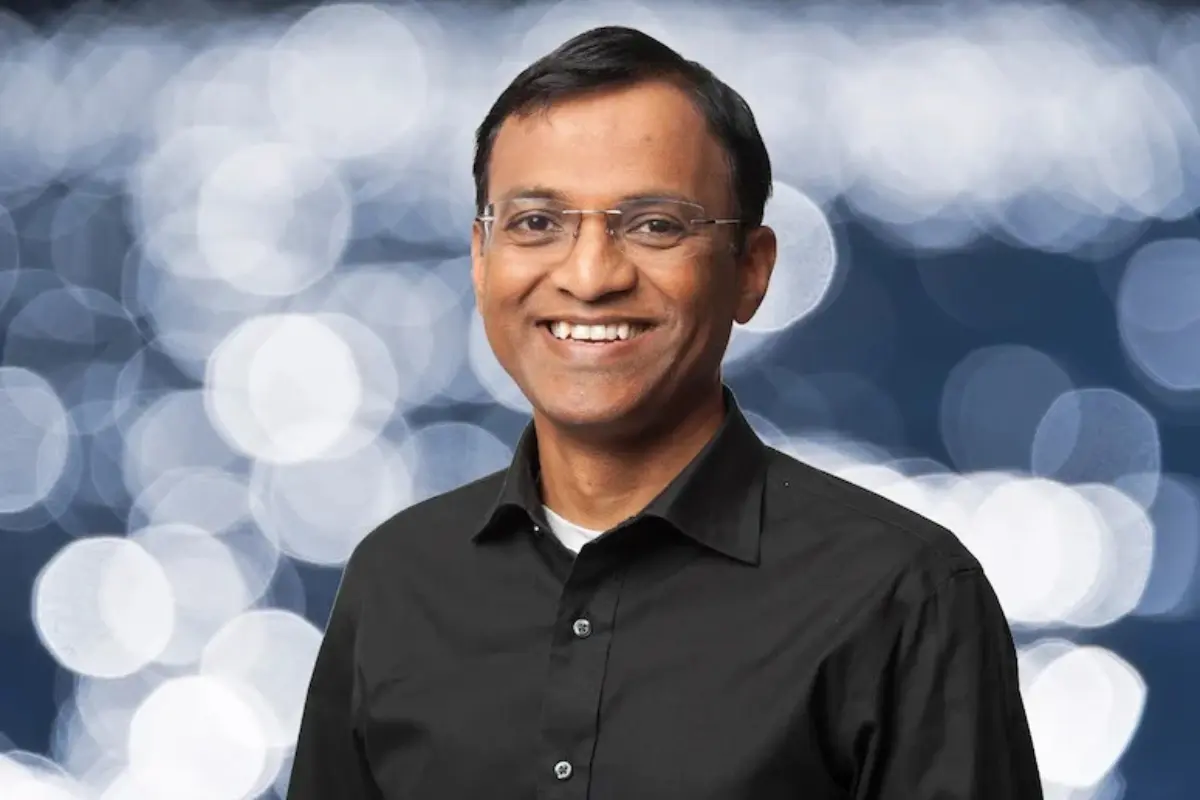
The story of Parthasarathy Ranganathan begins in India, where academic rigor and curiosity shaped his formative years. In 1994, he graduated from the Indian Institute of Technology Madras with a B.Tech in Electrical Engineering. IIT Madras, renowned for producing world-class engineers, provided Ranganathan with a disciplined grounding in problem-solving and systems thinking—skills that would later define his career.
Seeking to deepen his engagement with computing systems, he pursued graduate studies at Rice University, Houston, earning both his M.S. and Ph.D. in Electrical and Computer Engineering. Under the supervision of Professor Sarita Adve, one of the most respected figures in computer architecture, Ranganathan developed a research mindset that emphasized rigor, reproducibility, and real-world relevance.
During this period, he also became one of the primary developers of RSIM (Rice Simulator for ILP Multiprocessors), a tool that would gain wide adoption in academic research.
Parthasarathy Ranganathan: Hewlett-Packard Labs: A Crucible of Innovation
Ranganathan joined Hewlett-Packard Laboratories in 2000, embarking on a 13-year journey that would establish him as a global authority in systems architecture and energy efficiency. Rising through the ranks to become HP Fellow and Chief Technologist, he led research initiatives that bridged fundamental science and deployable technology.
At HP Labs, he pioneered several transformative ideas:
-
Energy-aware user interfaces, enabling systems to adapt intelligently to power constraints
-
Heterogeneous multi-core architectures, influencing industry-wide adoption of energy-efficient designs
-
Ensemble power capping, allowing data centers to safely oversubscribe power budgets at scale
-
Disaggregated and data-centric server architectures are challenging decades-old assumptions about system design
These innovations were not confined to research papers. They materialized into commercial products such as HP Moonshot servers and enterprise power-capping technologies, demonstrating Ranganathan’s rare ability to translate research into real economic and environmental impact.
Google: Designing Systems at Planetary Scale
At Google, Parthasarathy Ranganathan operates at the frontier of global computing. As an Engineering Fellow and VP, he serves as the Area Technical Lead for Hardware and Data Centers, guiding the design of systems that support search, cloud computing, artificial intelligence, and countless consumer and enterprise services.
His work at Google has defined new paradigms:
-
Software-defined hardware, where intelligent control planes dynamically adapt infrastructure
-
Machine-learning-driven system management, enabling self-driving data centers
-
Custom silicon accelerators, optimized for Google’s most demanding workloads
-
Next-generation storage hierarchies, including systems redesigned for non-volatile memory
Under his leadership, data centers are no longer static facilities but adaptive, intelligent organisms—capable of learning, optimizing, and evolving in real time.
Parthasarathy Ranganathan: Research Impact and Technical Contributions
The Parthasarathy Ranganathan Biography is inseparable from his technical legacy. His research spans energy efficiency, system architecture, modeling, and large-scale manageability. Among his most influential contributions are:
-
Energy-adaptive displays and interfaces, reducing power consumption at the user level
-
Heterogeneous single-ISA multi-core designs, foundational to ARM’s big.LITTLE architecture used in billions of devices
-
Temperature-aware scheduling and cross-layer power management
-
Industry benchmarks and standards, including JouleSort, SPECpower, and PUE
-
Disaggregated servers, such as microblade and memory blade architectures
Collectively, these ideas have reshaped both academic curricula and industrial practice, influencing how modern computing systems are built and operated.
Publications, Patents, and Thought Leadership
Ranganathan is a prolific scholar and inventor. He has:
-
Published over 100 technical papers, many of them award-winning
-
Co-authored the influential textbook “The Datacenter as a Computer”, now a standard reference
-
Filed more than 125 patents, spanning hardware, software, and system-level innovations
His work has been featured in leading media outlets, including The New York Times, The Wall Street Journal, BusinessWeek, San Francisco Chronicle, and The Times of India, reflecting its broad societal relevance.
Awards, Honors, and Global Recognition
The global technology community has consistently recognized Ranganathan’s impact:
-
IEEE Fellow (2012) for contributions to energy-efficient data centers
-
ACM Fellow for fundamental contributions to computer architecture
-
ACM SIGARCH Maurice Wilkes Award, one of the field’s highest honors
-
Named among the Top 35 Young Innovators in the World by MIT Technology Review
-
Listed as one of 15 Top Enterprise Technology Rock Stars by Business Insider
-
Recipient of Rice University’s Outstanding Young Engineering Alumni Award
-
Distinguished Alumnus Award, IIT Madras
He is also a member of the ISCA and ASPLOS Halls of Fame and serves on the Board of Directors of Open Compute, shaping the future of open hardware ecosystems.
Teaching, Mentorship, and Community Leadership
Beyond industry and research, Ranganathan is deeply committed to education and service. He has taught at leading institutions, including Stanford University, mentored engineers through initiatives such as Google TechAdvisors, and served in leadership roles within ACM SIGARCH.
He is also a founding member of the pan-IIT Alumni Association and a founding director of the IIT Madras Alumni Association of North America, reinforcing his belief that technological excellence must be matched by community stewardship.