
Pakistan Using Terrorism As State Policy Against India
Pakistani Terror Attacks on India: NatStrat’s Landmark Report Exposes 78 Years of Cross-Border Violence
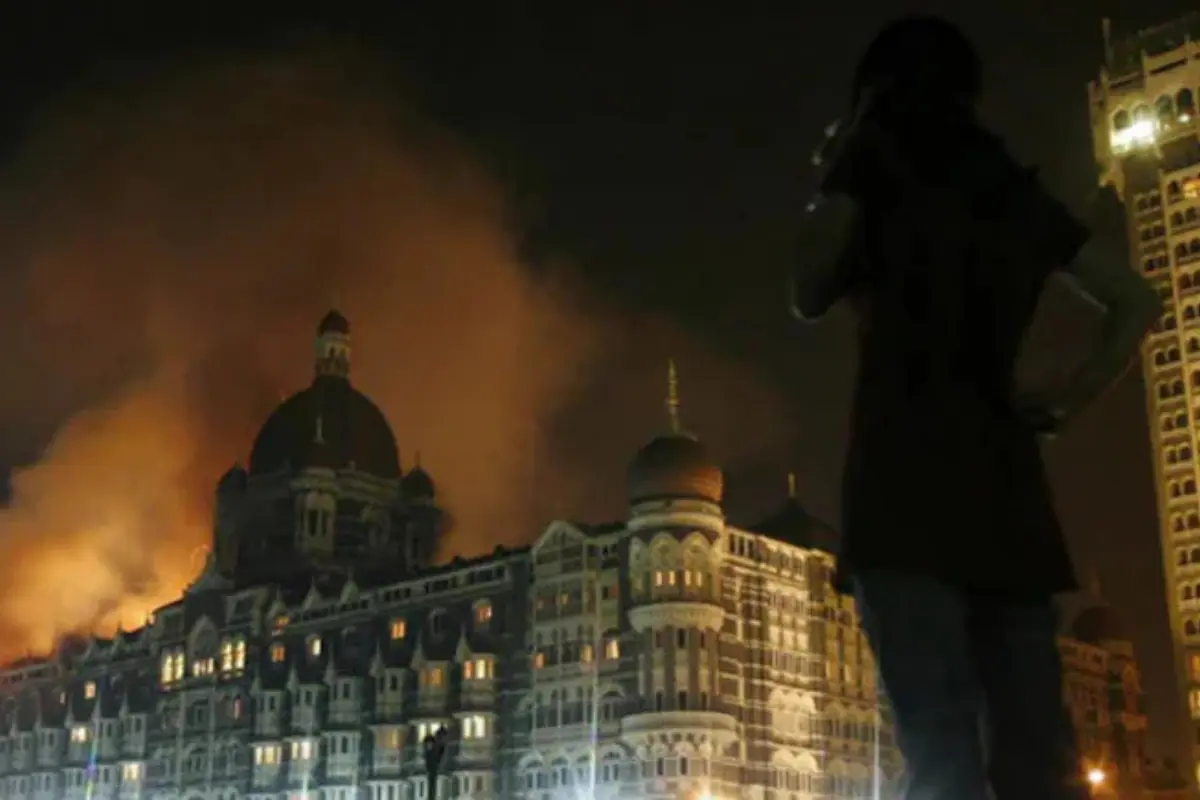
As India observes the 17th anniversary of the 26/11 Mumbai terror attacks, one of the darkest chapters in its modern history, NatStrat — an independent centre for strategic and security research — has issued a landmark study that lays bare the unbroken timeline of Pakistani Terror Attacks on India since 1947.
Released on the eve of the memorial day, the report titled Chronology of Pakistani Terror Attacks on India (1947–2025) offers a sweeping historical account of cross-border terrorism, proxy warfare and covert military aggression spanning nearly eight decades. Far from isolated events, the report argues, these attacks stem from a consistent strategic behaviour deeply embedded in Pakistan’s statecraft.
Speaking to NDTV, Ambassador Pankaj Saran, former Deputy National Security Advisor and Convenor of NatStrat, explained the urgency behind documenting this history:
“When we began analysing the roots of terrorism in India, it became evident that Pakistan’s behaviour has followed the same arc since 1947 — a pattern built on deniability, deception, and the use of non-state actors to cause harm. The present generation must not forget this history.”
Saran emphasized that the study is not merely a compilation of attacks, but a tribute to the countless lives lost and an affirmation of India’s resilience against decades of externally driven violence.
Pakistan: Origins of a Strategy – From 1947 Tribal Raiders to a Global Hub of Terror
NatStrat’s report traces the origins of Pakistani Terror Attacks on India to the very birth of Pakistan. The first major assault — the tribal invasion of Jammu and Kashmir in October 1947 — was not a spontaneous uprising but a carefully orchestrated military operation led by Pakistani officers, including Major General Akbar Khan, who later documented the conspiracy in Raiders in Kashmir.
This operation set the template for Pakistan’s future strategy:
-
Use irregulars and proxies instead of direct military engagement.
-
Maintain plausible deniability.
-
Mask state-led operations as local uprisings or independent militancy.
What began as a tactical option in 1947 evolved into a full-fledged terror ecosystem managed by Pakistan’s military and intelligence establishment.
ISI’s Expanding Web: Training, Radicalisation and Proxy Warfare
Over the decades, Pakistan’s Inter-Services Intelligence (ISI) developed an extensive network of jihadist organisations, training centres and radicalisation factories across Pakistan and Pakistan-occupied Kashmir. NatStrat’s report highlights Pakistan’s active role in:
1. Khalistani Militancy (1980s)
ISI-backed camps in Lahore and Karachi trained militants, supplied weapons and facilitated infiltration routes.
2. Kashmir Insurgency Post-1989
Afghan war veterans and Pakistan-based outfits such as Lashkar-e-Taiba (LeT), Hizbul Mujahideen and later Jaish-e-Mohammad (JeM) became the backbone of the insurgency.
3. Major India-Wide Terror Strikes
The report documents Pakistan’s direct involvement in attacks including:
-
1993 Mumbai serial blasts
-
2001 Parliament attack
-
2006 Mumbai train bombings
-
2008 Indian Embassy bombing in Kabul
-
2008 Mumbai attacks (26/11)
4. Recent High-Impact Attacks
From Pathankot (2016) and Uri (2016) to Pulwama (2019) and the 2025 Pahalgam assault — each incident traces its roots back to ISI-backed operatives and infrastructure.
Globally, Pakistan’s reputation as the “mothership of terrorism” — a phrase used by India’s External Affairs Minister in 2016 — has been reinforced by UN sanctions on leaders like Hafiz Saeed and Masood Azhar, and Pakistan’s repeated grey listing by the Financial Action Task Force (FATF).
Pakistan: 26/11 – A Brutal Showcase of Pakistan’s Proxy Machinery
Among the most horrific Pakistani Terror Attacks on India, the 26/11 Mumbai attacks exposed the depth of Pakistan’s involvement in terror operations.
Ten LeT terrorists were:
-
Trained in specialized camps
-
Armed with military-grade equipment
-
Guided in real time by handlers in Pakistan
The assault left 166 people dead, including foreign nationals, and demonstrated the sophistication of Pakistan’s proxy war infrastructure—communication hubs, maritime infiltration routes, surveillance teams and remote command centres.
NatStrat’s chronology shows that 26/11 was not an exception but a continuation of a well-established pattern that includes:
-
The 1999 IC-814 hijacking
-
The 2001 Parliament attack
-
The 2019 Pulwama suicide bombing
All involving groups nurtured, sheltered or directly coordinated by Pakistan’s deep state.
A Military–Militant Nexus: The Core of Pakistan’s Strategy
The report concludes that Pakistan’s Army and ISI have, for decades, maintained operational control over jihadist groups, treating them as tools of foreign policy. Civilian governments are regularly bypassed, as seen during the Kargil War, which was planned by a handful of generals without informing elected leaders.
Key findings include:
-
Safe havens for terror leaders across Pakistan
-
Cross-border launch pads in PoK
-
Global fundraising networks for jihadist outfits
-
Sophisticated weapon supply chains supported by the military
-
Radicalisation pipelines targeting vulnerable groups
In essence, Pakistan’s terror policy is not a deviation — it is a system.
India’s Response: A Story of Resilience and Reinvention
Despite the heavy toll — tens of thousands of civilians, jawans and officers lost since 1947 — the report acknowledges India’s unwavering resilience.
India has:
-
Amplified Pakistan’s terror footprint at UN bodies
-
Strengthened counterterror laws and intelligence coordination
-
Modernised armed forces and border security apparatus
-
Conducted surgical and strategic operations to neutralise terror infrastructure
Ambassador Saran notes,
“This chronicle is a reminder of India’s strength, its democratic spirit, and its ability to withstand a prolonged assault on its social and political fabric.”