
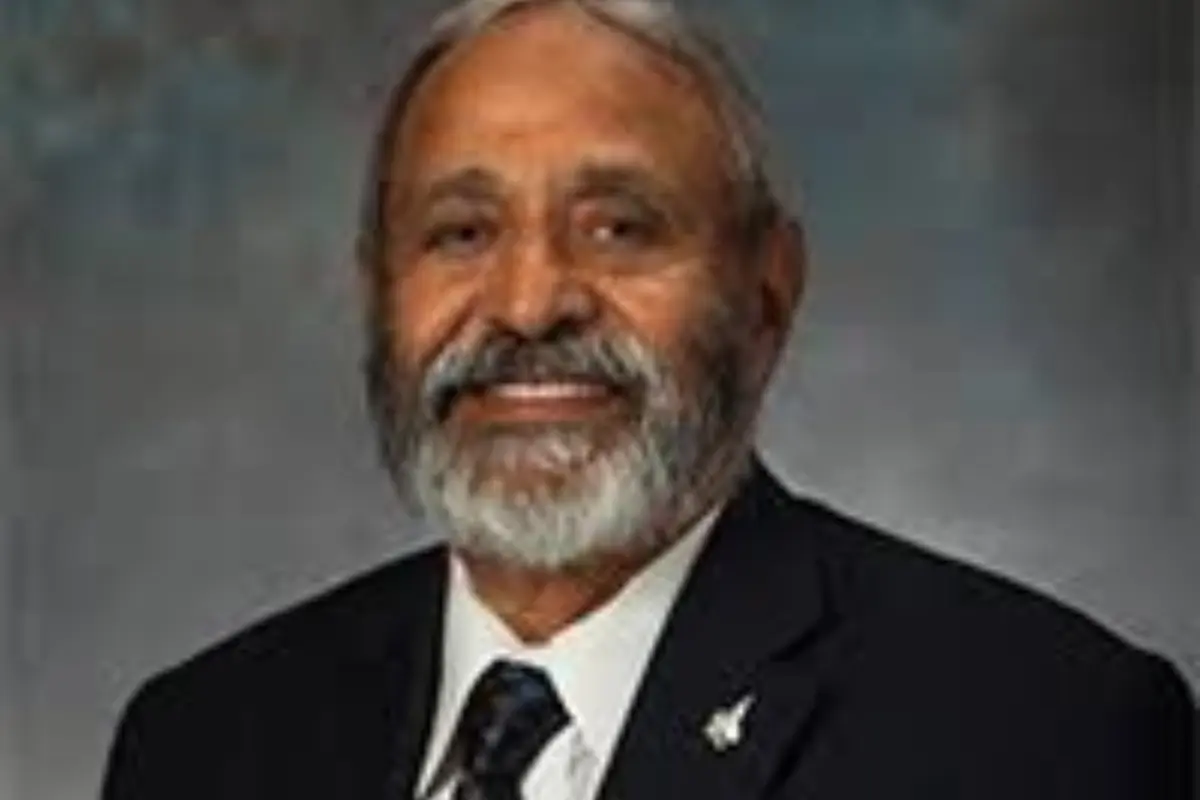
In the world of aerospace engineering—where precision meets imagination and physics bends to innovation—few names resonate as powerfully as Om Prakash Sharma.
Early Foundations of Om Prakash Sharma: The Making of a Trailblazer
The seeds of Dr. Sharma’s engineering brilliance were first sown at the Indian Institute of Technology (IIT) Delhi, where he earned both his B.Tech. and M.Tech. degrees in Mechanical Engineering by 1970. His academic drive, matched with a hunger to understand the deeper beauty of fluid mechanics and thermodynamics, carried him across continents to the University of Birmingham, UK, where he completed his Ph.D. in 1975.
These formative years were more than academic milestones—they were the training ground for a mind that would soon redefine the possibilities of turbomachinery.
Beginning at Pratt & Whitney: Where Theory Met Transformation
In 1977, Om Prakash Sharma joined Pratt & Whitney in East Hartford, stepping into the Turbine Technology Group at a time when engine development depended heavily on trial-and-error testing. Designs were empirical, data was limited, and optimizations were slow.
Dr. Sharma saw an opportunity:
Replace intuition-led testing with physics-driven design.
Armed with a sharp analytical mind and the courage to challenge tradition, he began integrating controlled physical experiments with powerful numerical simulations—an approach that would become central to Pratt & Whitney’s success and later the entire UTC ecosystem.
Om Prakash Sharma: Innovations That Shifted an Industry
Throughout the 1980s and 1990s, Dr. Sharma led a series of breakthroughs that altered the very fabric of gas turbine engineering:
1. Pioneering 3-D Airfoils
Under his leadership, teams developed low-loss, three-dimensional airfoil and end-wall concepts that delivered nearly 20% loss reduction across fans, compressors, and turbines. These innovations soon became industry-wide standards, applied in aircraft, power generation systems, and space propulsion.
2. Hot-Streak Clocking for Turbine Durability
He spearheaded advanced hot-streak management concepts, enabling dramatic improvements in the life of turbine components. This work allowed engines to increase rotor inlet temperatures by nearly 300°F—a game-changing advancement for efficiency and performance.
3. High-Fidelity Physics-Based Design Systems
Between 1986 and 1990, Dr. Sharma directed the development of a comprehensive physics-based turbine design system. His concepts were adopted in some of the world’s most advanced engines, including the Space Shuttle Alternate Turbo-Pump, PW4000, F119, and Joint Strike Fighter engines.
4. Multistage Compressor with 20% Lower Losses
As Chief of Aerodynamics for Fans and Compressors in 1992, he led a world-class team, partnering with NASA and MIT, to design a highly efficient multistage compressor—one that later powered aircraft such as the Boeing 777.
5. Revolutionizing Engine Development Time
By championing physics-based modeling, high-fidelity simulations, and targeted experiments in place of repeated full-scale tests, he helped cut engine development time by nearly 50%—a milestone that reshaped UTC’s operational efficiency.
Leadership at UTC: Scaling Innovation Across the Corporation
In 1998, Dr. Sharma was appointed Director of the Modeling, Analysis, Simulation and Computation (MASC) initiative at UTC. His charge was ambitious:
reduce development time, costs, and risk across all UTC divisions.
His leadership led to new design cultures, improved processes, and widespread adoption of advanced simulation-driven engineering methodologies.
By 2007, he rose to the role of Senior Technical Fellow in Aerodynamics and Gas Turbines, becoming one of the corporation’s most respected visionaries.
A Lifetime of Honors and Global Recognition
The industry did not take long to acknowledge his unmatched contributions:
-
R. Tom Sawyer Award (2019) – For groundbreaking advancements in turbomachinery technology for military and commercial engines.
-
International Gas Turbine Institute Scholar Award (2011)
-
Aircraft Engine Technology Award (2007)
-
Distinguished Alumni Award, IIT Delhi (1999)
-
UTC George Mead Medal (1995) – Corporation’s highest technical honor.
-
Pratt & Whitney Special Award (1989) for innovations in low-pressure turbine airfoil design.