
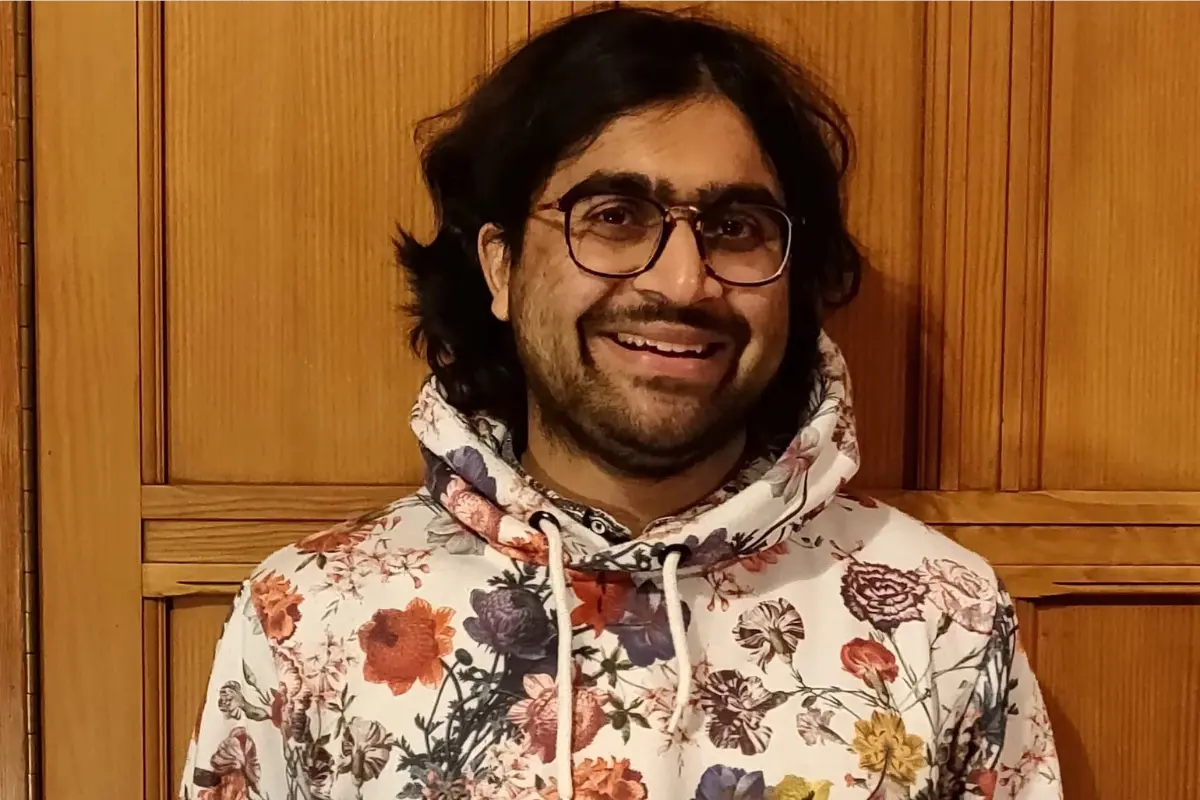
In a world racing toward artificial general intelligence, few stories shine as brightly—or as unexpectedly—as the rise of Neel Nanda, a trailblazer whose work is reshaping the foundations of AI safety and mechanistic interpretability. Today, he serves as a Senior Research Scientist and Mechanistic Interpretability Team Lead at Google DeepMind, guiding one of the most critical efforts in modern computer science: understanding how neural networks think.
Yet the path that led him here is anything but typical.
It is a story of humility, curiosity, courage, and the philosophy Neel calls “maximising your luck surface area”—a way of living that invites opportunity through action, experimentation, and boldness.
Neel Nanda: A Foundation Built on Curiosity and Mathematical Imagination
Neel Nanda’s journey began at the University of Cambridge, where he earned a B.A. in Mathematics. Instead of being drawn solely to equations for their beauty, he was fascinated by something deeper: how complex systems learn and represent the world.
This curiosity guided him to Anthropic, where he worked under renowned interpretability researcher Chris Olah, immersing himself in the earliest stages of a transformative field. There, he explored the hidden inner workings of language models, laying the groundwork for a research identity rooted in transparency, safety, and scientific rigor.
Rising at Sonic Speed: Leading a Frontier AI Safety Team at 26
When Neel joined Google DeepMind, he had no prior team-lead experience. Yet, he soon found himself in charge of the mechanistic interpretability group—a role he assumed when the previous lead departed.
How does a 26-year-old earn such trust?
Neel’s answer is disarming in its simplicity:
“It’s mostly luck. But another part is maximising my luck surface area.”
In practice, this meant:
-
Saying yes to challenging opportunities before he felt ready
-
Sharing his ideas openly through blogs, podcasts, and talks
-
Reaching out to researchers he admired
-
Publishing relentlessly, even when early drafts felt imperfect
-
Building strong relationships across the AI community
His habit of doing rather than waiting fast-tracked his mastery during the formative years of mechanistic interpretability—a field that was “tiny but growing fast.”
Within just a few years, Neel had:
-
Published dozens of influential papers
-
Mentored more than 50 junior researchers
-
Seen seven of his mentees join top AI companies
-
Become a central voice in global conversations about AI safety
This was not luck alone. It was disciplined openness—an active strategy for creating opportunity.
Neel Nanda: The Heart of His Work: Mechanistic Interpretability
A major thrust of Neel’s research focuses on reverse engineering neural networks—understanding the circuits, structures, and algorithms that emerge during training. His contributions span several deep-impact research areas:
1. Superposition
How do models pack many features into limited dimensions?
Neel helped illuminate how networks compress information and when that compression becomes brittle.
2. Toy models of universality
He explored how small, simple networks can reveal universal principles about much larger models.
3. Grokking
Neel studied why models suddenly generalize late in training, offering new perspectives on learning dynamics.
4. Sparse autoencoders
He developed tools to extract disentangled features from neural networks, opening pathways for more reliable interpretability.
Through this body of work, Neel Nanda AI Interpretability has become synonymous with scientific clarity—an approach grounded in open methodologies, accessible tooling, and clear explanations that empower thousands of emerging researchers worldwide.
A Public Voice Who Makes Complex Ideas Understandable
While many researchers stay behind closed doors, Neel stepped boldly into public engagement.
He shares insights through:
-
Podcasts
-
Interviews
-
Blog posts
-
Twitter threads
-
His personal website
-
Long-form research explainers
His writing is fresh, direct, and deeply human. He openly discusses perfectionism, motivation, career mistakes, and mental blocks. One of his most inspiring stories is the time he challenged himself to write one blog post every day for 30 days—a practice that:
-
Overcame his fear of imperfect writing
-
Seeded many influential ideas in interpretability
-
Unexpectedly led him to meet his partner of four years
His message:
When you show your work, magical things happen.
Reimagining Learning Through LLMs
Neel strongly believes that LLMs are revolutionizing how people can skill up in AI research.
He argues that not using them is a missed opportunity.
He recommends:
-
Using detailed system prompts for deep learning tasks
-
Using voice dictation to capture messy ideas and letting the model refine them
-
Asking for brutally honest feedback using anti-sycophancy prompts
-
Querying multiple models and synthesizing their critiques
-
Using Cursor for large coding projects
-
Avoiding LLMs when your goal is hands-on practice, not task completion
These approaches reflect a broader philosophy:
Use LLMs as accelerators for your intellect, not replacements for your effort.
A Nuanced Perspective on AI Safety and Capabilities
Contrary to common belief, Neel argues that safety work should often enhance model capabilities, because:
-
Making models behave correctly is inherently useful
-
Good safety techniques typically improve system performance
-
Capability-neutral safety research is often impractical
-
Differential advancement—not isolation—is what matters
He cautions that companies won’t always find the best safety ideas on their own, especially under commercial time pressure.
Thus, safety researchers must:
-
Build coalitions
-
Produce useful work
-
Understand organizational incentives
-
Become trusted advisors rather than ideological opponents
This approach has helped Neel drive meaningful changes within one of the largest AI labs in the world.
Guiding the Next Generation: Career Advice That Breaks the Mold
Neel’s guidance for newcomers to AI safety is refreshingly grounded:
1. Learn skills with fast feedback loops
Coding, experiments, and conceptual problem-solving pay dividends quickly.
2. Don’t obsess over research taste early
Taste develops slowly—seek mentorship instead of perfection.
3. Understand the three phases of research
-
Explore: Form hypotheses
-
Understand: Run focused experiments
-
Distil: Communicate clearly
4. Use papers as “portable credentials”
A strong paper matters more than your institution.
5. Reach out boldly but concisely
Email first authors, and make every sentence count.
6. Don’t be afraid to skip or leave a PhD
Opportunities in frontier AI move faster than academia.
7. Develop diplomacy if joining a less safety-focused company
Influence requires calm confidence and strategic alignment.