
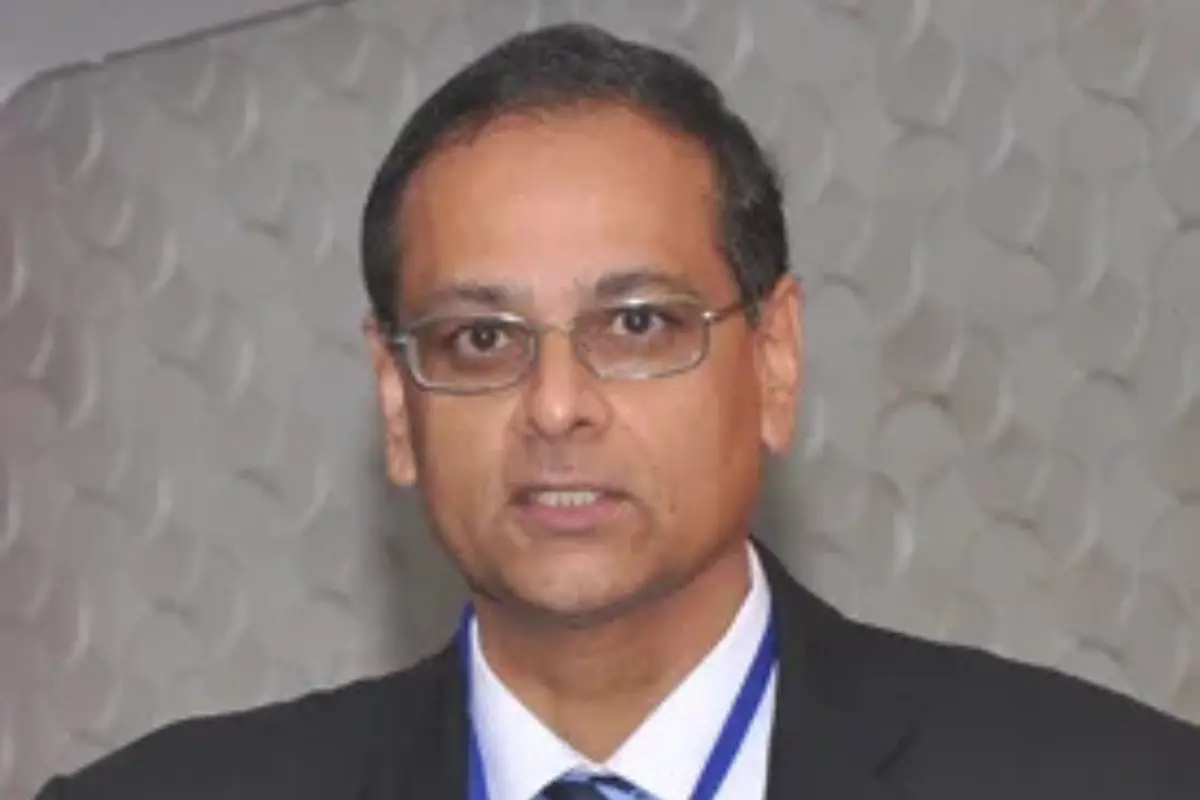
The intellectual foundations of Murali Sastry were laid at the Indian Institute of Technology, Madras (IIT Madras), one of India’s premier institutions. He completed his Master’s degree in Chemistry in 1982, followed by a PhD in thin film technology in 1987. His doctoral work reflected an early fascination with surfaces, interfaces, and condensed matter systems—areas that would later define his scientific legacy.
Driven by curiosity and a global outlook, Murali Sastry pursued post-doctoral research at the International Centre for Theoretical Physics (1988–1989) and later at Elettra Sincrotrone Trieste, Italy (1989–1991). These formative years exposed him to advanced surface spectroscopies and cutting-edge experimental techniques, sharpening his expertise in nanoscale phenomena.
Murali Sastry: A Scientific Career Across Disciplines and Borders
Murali Sastry’s career is remarkable for its diversity and depth. After early industry exposure at QAD Global Resource Center, where he worked as a Software Engineer, Technical Consultant, and Project Manager, he transitioned back to pure science—a move that would prove transformative.
At the CSIR–National Chemical Laboratory (NCL), Pune, Murali Sastry served as a Senior Scientist, building a formidable research portfolio. His work at NCL explored:
-
Thin films and Langmuir–Blodgett materials
-
Organic and hybrid nanostructures
-
Colloidal chemistry and nanoparticle functionalization
-
Biologically inspired synthesis of nanomaterials
These studies positioned Murali Sastry as a pioneer in interfacing nanomaterials with biological systems, an area that attracted international acclaim and opened new research frontiers.
Innovation Leadership in Industry
One of the defining chapters of Murali Sastry’s career was his transition from laboratory science to innovation leadership in industry.
Tata Chemicals: Science for Society
In 2005, Murali Sastry joined Tata Chemicals as Chief Innovation Officer. Here, he established a world-class innovation centre that delivered multiple new technology platforms. Among his most celebrated contributions was the development of “Swach”, a low-cost water purifier that used nano-silver technology to provide safe drinking water to millions. This innovation exemplified his belief that science must serve society, especially at the grassroots level.
The Tata Chemicals innovation ecosystem under Murali Sastry also expanded into nano-oxides, nutrition, and advanced materials, creating tangible commercial and social value.
DSM India: Building the Future
In 2011, Murali Sastry joined DSM India as Director of the Innovation Centre, where he helped shape long-term strategies in renewable energy, nutrition, and sustainable materials. His work focused on future-ready technologies aligned with global sustainability goals.
Murali Sastry: Academic and Global Engagements
Parallel to his industry leadership, Murali Sastry maintained strong academic ties. He has served as:
-
INAE and C. V. Seshadri Chair Professor at IIT Kanpur
-
DAE Professor at the University of Hyderabad
-
Visiting Scientist at the University of Maryland (USA)
-
Visiting Scientist at CNRS, Orsay (France)
These roles underscore his commitment to mentoring young scientists and fostering global scientific collaboration.
Leadership at IITB-Monash Research Academy
In 2015, Murali Sastry was appointed Chief Executive Officer of the IITB-Monash Research Academy, a prestigious Indo-Australian research partnership between IIT Bombay and Monash University. Under his leadership, the Academy expanded its interdisciplinary research footprint and established a new headquarters in Mumbai.
As CEO, Murali Sastry championed collaborative research involving academia, industry, and global partners—strengthening India’s position in frontier science and innovation.
Research Output and Intellectual Legacy
The scientific output of Murali Sastry is both prolific and influential. He has authored over 360 peer-reviewed international research papers, contributed chapters to leading scientific books, and holds numerous Indian and US patents.
His work has been widely cited, earning him recognition as one of the world’s most cited materials scientists by Elsevier Scopus in 2016. Beyond publications, Murali Sastry has played a vital role in shaping science policy, editorial boards, and national research agendas.
Awards, Honors, and Recognition
Murali Sastry’s contributions have been acknowledged through numerous prestigious honors, including:
-
Shanti Swarup Bhatnagar Prize for Chemical Sciences (2002)
-
CSIR Young Scientist Award (1993)
-
Materials Research Society of India Medal (2003)
-
Chemical Research Society of India Medal
-
Fellow, Indian Academy of Sciences
-
Fellow, Maharashtra Academy of Sciences
-
Distinguished Alumnus Award, IIT Madras (2006)