
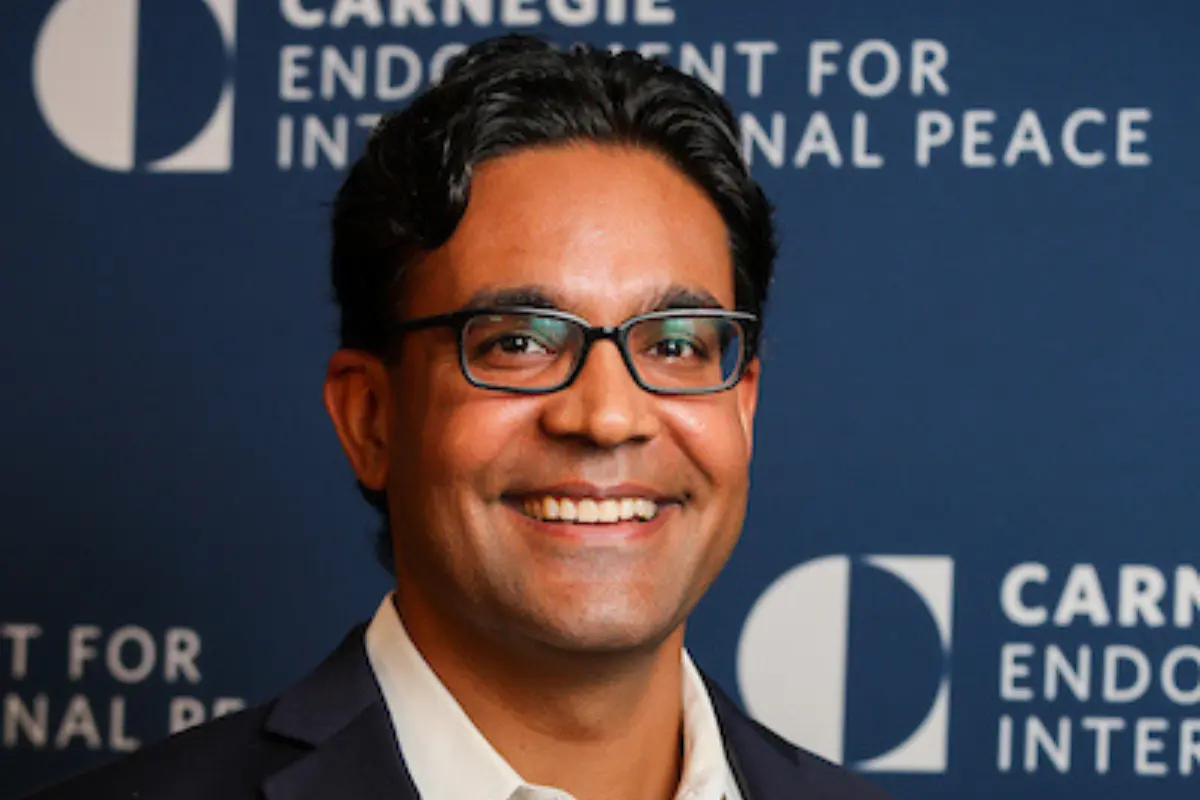
The intellectual path of Milan Vaishnav was shaped by an early fascination with political institutions and how democracies function in diverse societies. Determined to understand the complexities of governance, he pursued advanced studies in political science, culminating in a Ph.D. from Columbia University.
During his academic training, Milan Vaishnav honed an interdisciplinary perspective, blending political science with economics and sociology. This approach enabled him to examine Indian democracy not merely as a system of elections but as a living ecosystem shaped by social forces, economic incentives, and institutional design.
Professional Growth of Milan Vaishnav: From Think Tanks to Global Influence
Before taking on a leadership role at the Carnegie Endowment, Milan Vaishnav gained invaluable experience at several prominent policy institutions. He worked as a postdoctoral research fellow at the Center for Global Development and held research positions at the Center for Strategic and International Studies and the Council on Foreign Relations. These roles sharpened his ability to translate academic insights into policy-relevant analysis.
His work at these organizations focused on issues ranging from democratic institutions to global development and foreign policy.
Leadership at Carnegie: Advancing the Study of South Asia
As director of the South Asia Program at the Carnegie Endowment for International Peace, Milan Vaishnav leads research initiatives that explore India’s political evolution, regional security dynamics, and socio-economic challenges. Under his leadership, the program has become a hub for serious discussion on democratic governance, policy reform, and regional cooperation.
He has also fostered interdisciplinary collaboration, bringing together scholars, policymakers, and practitioners to analyze pressing issues such as state capacity, political finance, and institutional reform. His leadership reflects a commitment to fostering nuanced conversations that move beyond ideological divides.
Milan Vaishnav: Groundbreaking Scholarship and Authorship
One of Milan Vaishnav’s most influential contributions is his book When Crime Pays: Money and Muscle in Indian Politics (2017). The work offers a groundbreaking analysis of why candidates with criminal backgrounds often succeed in elections, challenging conventional narratives about corruption and democracy. The book earned the prestigious Kamaladevi Chattopadhyay New India Foundation Book Prize, cementing his reputation as a leading thinker on contemporary India.
In addition to this landmark publication, Milan Vaishnav has co-edited several important volumes, including Costs of Democracy: Political Finance in India and Rethinking Public Institutions in India. These works have provided scholars and policymakers with new frameworks for understanding political finance, governance structures, and institutional reform.
His research has appeared in top scholarly journals and has influenced debates on democracy, governance, and public policy. Through rigorous analysis and accessible writing, Milan Vaishnav has helped bridge the gap between academic research and real-world political challenges.
Research Focus: Political Economy, Governance, and Electoral Behavior
At the heart of Milan Vaishnav’s scholarship lies a deep commitment to understanding how democracy operates in complex societies. His research explores corruption, distributive politics, state capacity, and electoral behavior, offering fresh insights into the incentives and constraints shaping political actors.
He has also examined the Indian diaspora and its evolving role in global politics, shedding light on how overseas communities influence foreign policy debates and bilateral relations. His work on diaspora attitudes toward U.S.-India relations has contributed to a deeper understanding of transnational political engagement.
Teaching and Mentorship: Shaping Future Leaders
Alongside his research, Milan Vaishnav has made significant contributions as an educator. He has served as an adjunct professor at Georgetown University’s Edmund A. Walsh School of Foreign Service and has previously taught at Columbia and George Washington Universities. Through his teaching, he has inspired students to think critically about governance, policy design, and democratic accountability.
Media Presence and Public Engagement
Milan Vaishnav’s commitment to public scholarship extends beyond academia. As the host of the Grand Tamasha podcast, he engages with leading thinkers, policymakers, and analysts to explore Indian politics, culture, and policy in depth. The podcast has become a respected platform for nuanced discussions, offering listeners an insider’s view of political developments.
He is also a regular columnist and commentator, contributing analyses on electoral reforms, foreign policy shifts, and institutional challenges. Through these platforms, Milan Vaishnav ensures that scholarly insights reach a wider audience, fostering informed public debate.
Recent Research and Contemporary Impact
Between 2024 and 2026, Milan Vaishnav expanded his research to address emerging trends in Indian politics and global relations. His work on democratic backsliding examined the resilience of institutions and the evolving balance of power within India’s political system. He also analyzed the complexities of U.S.-India relations, including defense cooperation and strategic diplomacy.
In addition, he edited a major volume on voter behavior following India’s massive 2024 general elections and co-authored a comprehensive survey on Indian diaspora attitudes toward foreign policy. These projects demonstrate his ability to adapt his research to rapidly changing political landscapes.
Milan Vaishnav: Honors, Grants, and Recognition
Milan Vaishnav’s work has received support from prestigious international foundations and institutions. Grants from organizations such as the United Kingdom Foreign, Commonwealth & Development Office, the Henry Luce Foundation, the Smith Richardson Foundation, and the International Growth Centre have enabled him to pursue research on state capacity, religious nationalism, gender and urbanization, and democratic resilience.