
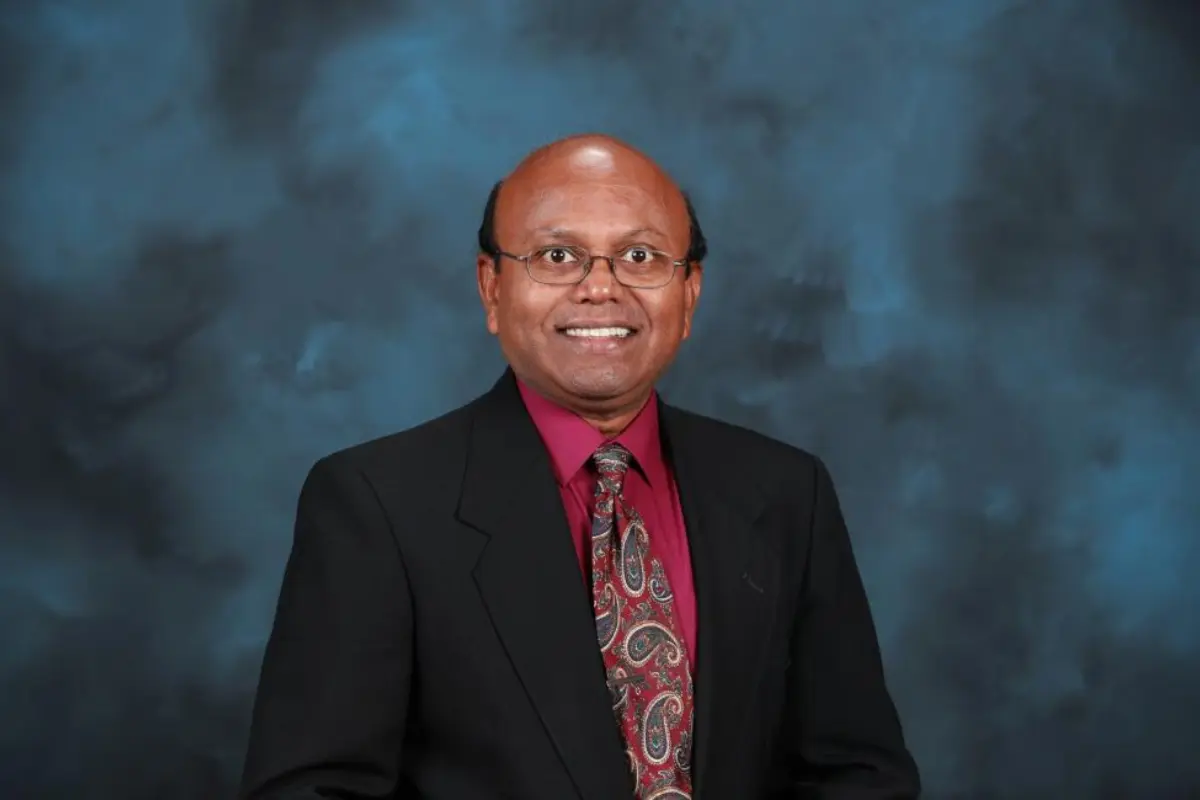
In the world of advanced materials and sustainable energy innovation, few names command the respect, influence, and admiration earned by Mariappan Parans Paranthaman.
Early Foundations of Mariappan Parans Paranthaman: Where Curiosity Took Root
Born and educated in India, Mariappan Parans Paranthaman’s scientific foundation was laid at Madurai Kamaraj University, where he earned his BSc and MSc in Chemistry. His academic curiosity deepened at the Indian Institute of Technology (IIT) Madras, where he completed his PhD in solid-state chemistry and materials science in 1988.
These early years shaped more than technical expertise—they instilled a mindset of disciplined inquiry and global ambition. His postdoctoral research experiences at The University of Texas at Austin and the University of Colorado, Boulder, including work with Nobel Laureate John Goodenough, placed him at the frontier of materials science during a period of rapid technological evolution.
Building a Legacy at Oak Ridge National Laboratory
In 1993, Mariappan Parans Paranthaman joined Oak Ridge National Laboratory, a decision that would define the next three decades of his life—and influence the future of energy technology worldwide.
Today, he serves as:
-
Corporate Fellow at ORNL (since 2017)
-
Group Leader, Materials Chemistry Group
-
Joint Faculty Professor at the Bredesen Center, University of Tennessee, Knoxville
Over the past 25+ years, he has emerged as one of the world’s foremost experts in materials synthesis, scale-up, and commercialization. His work bridges the critical gap between laboratory discovery and industrial deployment—an area where many innovations fail to cross.
Mariappan Parans Paranthaman: Scientific Leadership with Real-World Impact
What truly distinguishes Mariappan Parans Paranthaman is his ability to translate fundamental science into technologies that matter.
Key Research Focus Areas (2025 and Beyond)
-
Direct lithium extraction from geothermal brines and recycled batteries
-
Additive manufacturing (3D printing) of permanent magnets and motors
-
Advanced lithium-ion and sodium-ion battery materials
-
Recovery of critical materials, including platinum group metals
-
Carbon recovery from recycled tires for next-generation energy storage
-
Radiation-resistant polymer composites
-
Flexible silicon-based solar cells
-
Superhydrophobic, optically transparent coatings
These innovations are not theoretical exercises—they are licensed, deployed, and actively shaping industries ranging from clean energy and transportation to defense and manufacturing.
Pioneering Breakthroughs that Changed the Field
Among his most influential contributions is his role in advancing high-temperature superconductor wires and tapes, achieved through the development of epitaxial buffer layers on textured substrates. This work helped unlock new possibilities in power transmission and energy efficiency.
More recently, his leadership in lithium separation technologies and sustainable battery materials addresses one of the most urgent global challenges: securing critical minerals while reducing environmental impact.
His work exemplifies a powerful principle—innovation must serve sustainability.
Honors, Recognition, and Global Influence
The scientific community has recognized Mariappan Parans Paranthaman’s contributions at the highest levels:
-
9 R&D 100 Awards
-
Corporate Fellow, ORNL
-
Fellow of:
-
National Academy of Inventors
-
Materials Research Society (top 0.2% of members)
-
American Physical Society
-
American Association for the Advancement of Science (AAAS)
-
American Ceramic Society
-
ASM International
-
Institute of Physics, London
-
-
Lockheed Martin Scientist of the Year
-
UT-Battelle Inventor of the Year
-
Multiple DOE Outstanding Mentor Awards
-
Federal Laboratory Consortium Awards for technology transfer
With 60+ U.S. patents, 475+ publications, and technologies licensed to eight industries, his influence extends far beyond academic citations.