
Marco Rubio Defends Visa Crackdown, Indians Face Scrutiny
“A Visa Is Not a Right”: US Tightens Post-Arrival Scrutiny for Indian Students
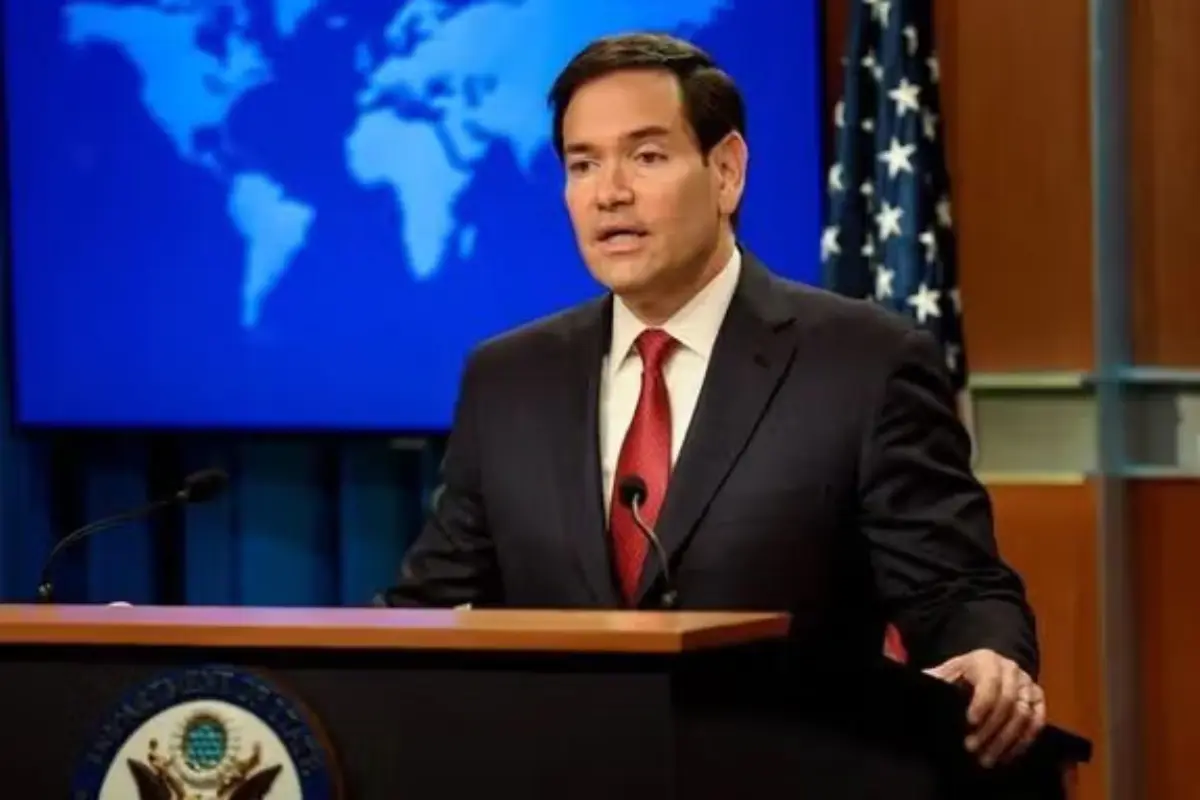
The language was firm, deliberate, and unmistakably clear. Speaking at a news conference in Washington, United States Secretary of State Marco Rubio offered a blunt defence of the Trump administration’s tightening of visa and refugee policies, framing entry into the country not as a guarantee, but as a conditional privilege.
“A visa is a visitor. It’s not a right,” Rubio said, according to IANS.
For Indian students and professionals — among the largest and most visible groups within the US temporary and skilled migration system — the statement carries particular weight. It signals a policy environment where scrutiny does not end at the airport immigration counter, but continues throughout one’s stay in the country.
Marco Rubio: Tens of Thousands of Visas Revoked or Denied
Rubio revealed that between 60,000 and 70,000 visas have been revoked or denied over the past year for a wide range of reasons. The affected individuals, he confirmed, include students, researchers and visitors — some stopped before entry, others already inside the United States.
“Our visa system should reflect the national interest,” Rubio said, adding that US law grants the government “the right, and in fact the obligation” to revoke visas when an individual’s actions conflict with American interests.
The remarks underscore a growing emphasis on enforcement after arrival — a shift that could redefine how foreign nationals experience life in the US.
From Approval to Ongoing Oversight
For decades, the primary challenge for international students and skilled workers was securing a visa: navigating interviews, paperwork, background checks and years-long backlogs. Once approved, many assumed a degree of stability, provided rules were followed.
Rubio’s comments suggest that assumption no longer holds.
“If you have the power to deny someone a visa before they get one, you most certainly have the power to revoke it once they get one and then do something they shouldn’t be doing,” he said, as quoted by IANS.
For Indian students on F-1 visas and professionals on H-1B and other employment-linked permits, the US visa revocation policy for Indian students introduces a more uncertain landscape. Academic activism, research partnerships, social media activity, or even minor administrative errors could now be examined through a broadly defined national security lens.
Rubio dismissed claims that visa revocations are politically motivated, arguing instead that they are rooted in law and security considerations. “Who you allow to visit your country should reflect the national interest,” he said.
Marco Rubio: Why Indian Nationals Are Watching Closely
Indian citizens form one of the largest international student populations in the United States, particularly in science, technology, engineering and mathematics (STEM) programmes. They also make up a significant share of the skilled workforce in technology, healthcare, academia and research.
For many, years of education, substantial financial investment and long-term career planning depend on legal continuity. Rubio’s emphasis on revocation authority — and on what he described as past vetting failures — raises concerns that immigration status may be more fragile than previously assumed.
The policy direction suggests that scrutiny may extend beyond new applicants to those already studying, researching or working in universities, laboratories and corporate offices across the country.
Programme Suspensions and Their Ripple Effects
Addressing student and diversity-based visa programmes, Rubio said recent suspensions were intended to reassess whether vetting systems had overlooked warning signs.
“You suspend the programme to figure out whether something should have been a red flag but wasn’t identified,” he said, according to IANS.
For students, such pauses can mean deferred admissions, disrupted research schedules, funding uncertainty and housing complications. For professionals, they can translate into delayed renewals, restricted international travel and challenges for dependants.
A Broader Immigration Tightening
Rubio also defended limits on refugee admissions, including those affecting religious minorities, citing years of insufficient screening. “We know for a fact there are people in this country who got in through some form of vetting that was wholly insufficient,” he said.
While refugee policy operates separately from student and work visas, the underlying approach is similar: restrict first, review systems, and then recalibrate. Rubio maintained that the US would remain “the most generous country in the world” for legal immigration, noting that nearly one million people are expected to receive green cards this year.
At the same time, he warned that what he called “reckless migratory incompetence” would no longer be tolerated.